

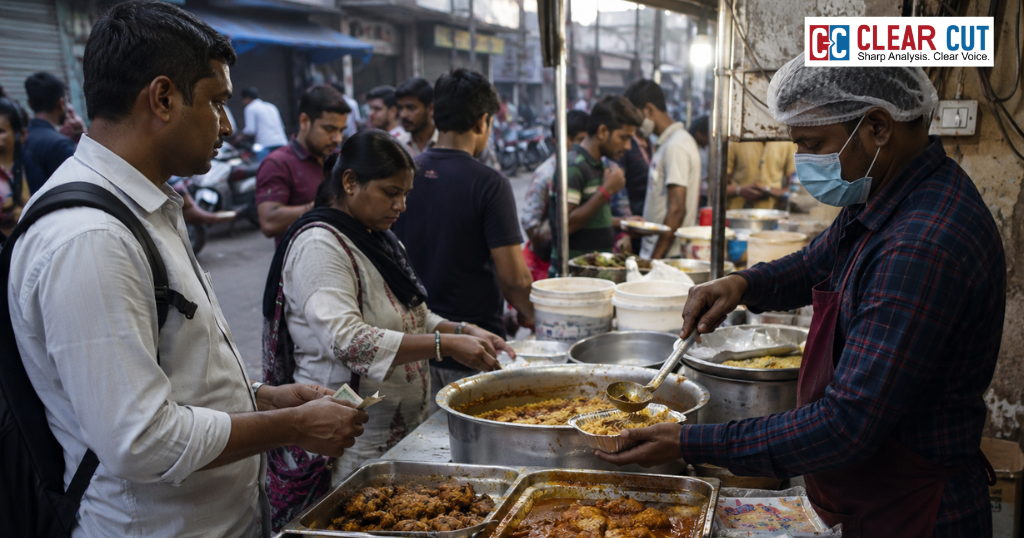
- India’s food safety system has made progress through FSSAI’s inspections, testing facilities, and food safety standards, but uneven state-level enforcement continues to create gaps in consumer protection.
- The rapid expansion of quick commerce, recurring food adulteration, and misleading food labels highlight the need for stronger inspections, mandatory front-of-pack labelling, digital traceability, and greater accountability from food businesses.
In June 2025, the Food and Drugs Administration of Maharashtra revoked the food license of one of Zepto’s dark stores in Dharavi, Mumbai, following an inspection that discovered spoiled food and improper storage conditions. This case was not an exception, as hygiene failures have later been reported in the Blinkit and Swiggy Instamart stores across different cities. With the changing trends in grocery and food delivery from local markets to ten-minute delivery services in India, the issue raises the pertinent question about the safety of the food we eat.
Quality Versus Safety, and Why the Distinction Matters
Food quality can be described as the nature of the food as far as taste, freshness, and nutrients, among other features, are concerned, while food safety is a situation whereby the food is not contaminated by any adulterant or pathogen that might lead to health problems. It is possible for the food to be of poor quality yet safe and, at the same time, to be unsafe yet of good quality; nonetheless, both of them have an effect on people’s health. The size of the problem involved is significant; according to the global burden estimates done in 2026 by the World Health Organisation, unsafe food leads to the illnesses and deaths of 866 million and 1.5 million people respectively on a yearly basis; the highest number of these cases occurs in Africa and South-East Asia, which is the region where India is located and whose young people are most affected.
FSSAI: Standard-Setter, Not Sole Enforcer
This organisation was constituted under the Food Safety and Standards Act, 2006 to establish standards and provide licenses, but the function of inspection and enforcement is primarily a state task, as nearly 98% of the total food business operators have a state licensing system rather than the central license granted by the FSSAI. This mechanism carried out 3,97,009 inspections and examined over 1.65 lakh samples during the year FY 2025-26. FSSAI has also added more testing capacity by announcing 18 new labs, including those in Sikkim and Andhra Pradesh. It has been implementing a mandatory training program, FoSTaC, which requires one food safety supervisor for every 25 food handlers. The Food Safety on Wheels mobile labs are operated by FSSAI during the festival season. All these are some real success stories of the organisation. However, the problem lies in the structure of the mechanism as the enforcement power of the organisation depends on the state governments, whose staffing and laboratory capacities are not uniform, and as a result, the extent of protection from food safety hazards that a citizen gets depends as much on geography as it depends on laws.
Adulteration, Labels, and the Quick-Commerce Blind Spot
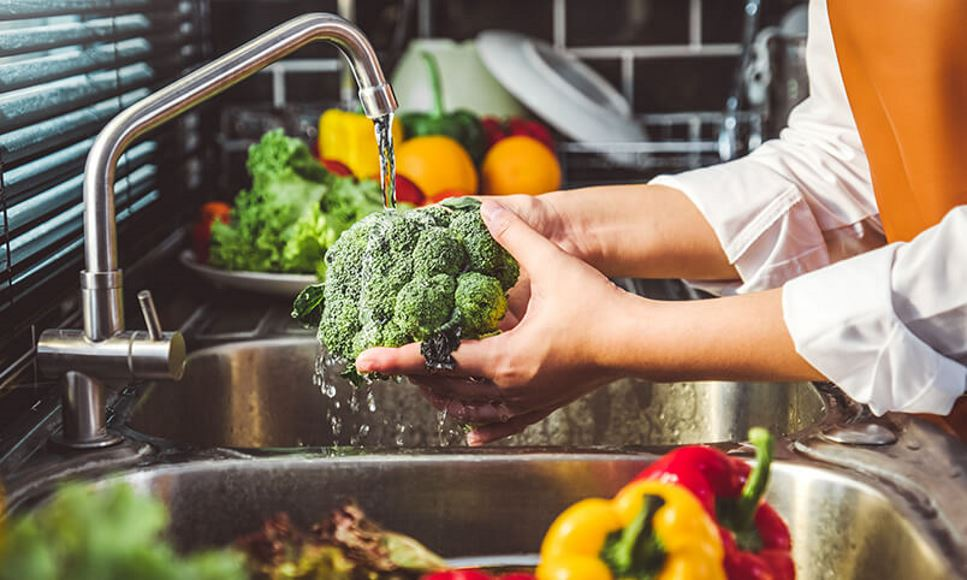
It is also highly prevalent. Tests conducted by FSSAI itself between 2021 and 2023 show that nearly a fourth of the 4.29 lakh food samples tested did not conform to the standards. Additionally, separate studies in the case of milk – which is the most adulterated product in India – have shown very high rates of either dilution or contamination. This is made worse by the labelling issues in packaged foods, for which FSSAI has issued notices recently against various firms like Marico and Ferrero regarding claims like “100% Natural” and “No Added Sugar,” and even separately noticed that the “100 % Atta” claim of one of the biscuit brands was misleading because the product consisted of only 72.33 % atta. Quick commerce presents another challenge. As of October 2025, India had already exceeded 2,500 operational dark stores, and it is expected that this number will continue to grow; however, there are no separate inspection requirements for them. They are simply inspected as any other food business would be inspected, but only after a complaint from consumers.
What Enforcement Data Reveals
FY 2025-26 enforcement statistics – 23,580 cases of adjudication, 1,756 criminal prosecutions, penalties totalling Rs 154.87 crore, and 945 product recalls – indicate a proactive regulator. The festive season campaigns to curb adulteration of milk, khoya, and paneer led to the inspection of over 25,000 units during September to October 2025 alone, and there were more than 300 prosecutions. However, the annual repetition of these violations, especially during festivals, indicates a regulatory regime that is reactive in nature: increased scrutiny occurs during high-demand periods rather than continuous efforts throughout the year, and the unorganised sector, which accounts for most of India’s milk production, is the toughest nut to crack.
The Road Ahead
One of the most evident examples of pending issues is front-of-pack nutritional labelling, which was first proposed in 2018 but is yet to be finalised eight years later. In fact, the Supreme Court heard the case in person and stated in February 2026 that all the attempts by FSSAI so far have not “yielded any positive or good result,” and the organisation asked for additional time to resolve the issue via an affidavit filed in March 2026. Reforming the country’s food safety system is likely to involve multiple approaches, including risk-based inspection of fast-growing industries like quick commerce, more laboratories in the states, digital traceability tools like FoSCoS, obligatory rather than voluntary front-of-pack warning labels, and consumer education.
A Shared Responsibility
The Indian food safety system is neither dysfunctional nor perfect. It remains unfinished – strong in theory but weak in practice, reactive rather than proactive, and inconsistent from state to state and sector to sector. The challenge ahead is one of bridging this gap through consistent effort on the part of regulators, real responsibility on the part of food firms, and active consumer vigilance. Food safety ultimately is an exercise in collective endeavour.
Clear Cut Health Desk
New Delhi, UPDATED: July 23, 2026 09:00 IST
Written By: Dr. Jyoti Aggarwal
Designation: Senior Research Associate at Devinsights