
- The ₹743 crore Bhaniyawala-Jolly Grant-Rishikesh highway project has sparked protests over the proposed felling of thousands of century-old sal trees, highlighting the conflict between infrastructure development and environmental conservation.
- While NHAI argues the road expansion will improve connectivity and safety, environmentalists warn it could damage vital wildlife corridors, reduce biodiversity, and cause irreversible ecological loss in Uttarakhand.
Most mornings see a rush on the road linking Dehradun to Rishikesh. Religious pilgrims proceed in search of Char Dham, tourists travel to reach the yoga hub of the globe, and planes arrive at Jolly Grant Airport to unload travellers who come to visit Uttarakhand’s mountains. This road serves as an epitome of connectivity and development. But this summer saw another picture emerge from the same stretch, where people were desperately trying to save sal trees by embracing them.
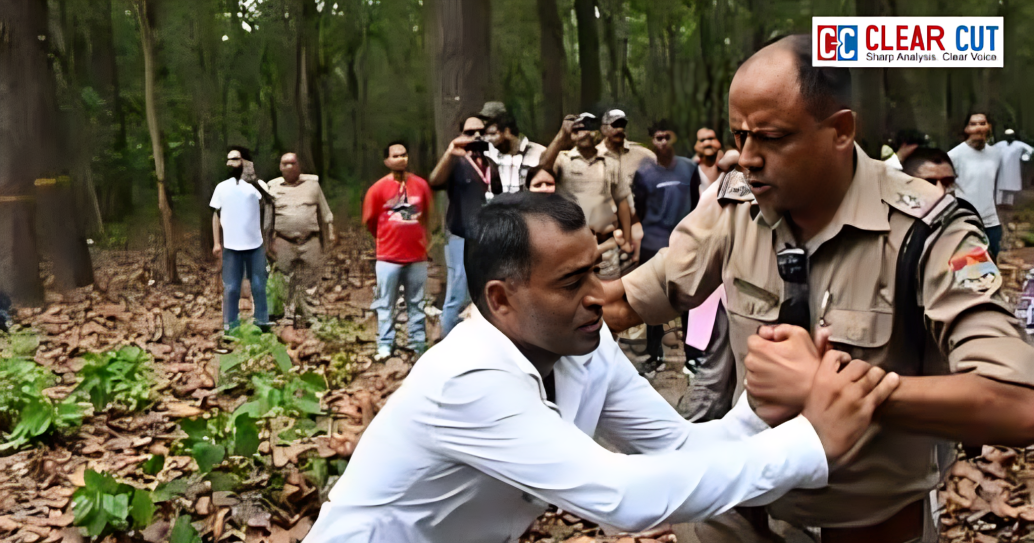
Saat Mod, which means “seven bends” on National Highway 7, had a feeling unlike any normal demonstration. People sat under sal trees that had stood for more than a century, tying threads onto the trunks as protection. The occasion of Kala Harela, a festival which marked the arrival of new plants and prosperity, brought mourning to many locals. A young woman with her two-and-a-half-year-old daughter captured the essence of the mood in one sentence: “It takes at least a hundred years to grow a tree but just half an hour to cut it down.”
It is hard to imagine that these pictures do not evoke memories of the Chipko movement of the 1970s, where villagers hugged the trees in order to resist commercial deforestation in the Himalayas. Now, the dispute is no longer about cutting down trees for wood but for infrastructure purposes. The question raised in this dispute is becoming relevant to India, which needs to decide whether it is able to construct the roads it needs and at the same time keep its people and animals safe by not destroying the forest.
This issue concerns the 20-km Bhaniyawala-Jolly Grant-Rishikesh highway development project initiated by the National Highways Authority of India (NHAI). The project is valued at an estimated ₹743 crore. Currently, there is a two-lane road between Dehradun, Jolly Grant Airport and Rishikesh.
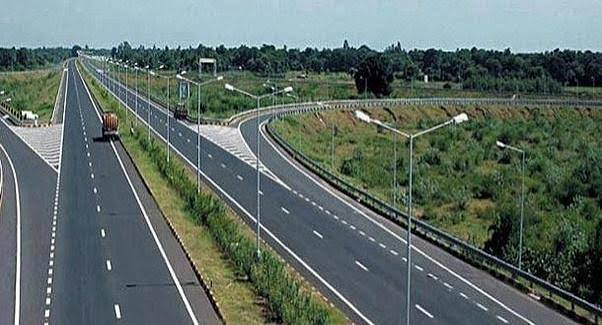
As per NHAI, the necessity for expansion is attributed to the increasing traffic on the road, which has more than 18,000 vehicles passing through it per day and is expected to see more due to increased tourist activity, airport traffic, and the annual Char Dham Yatra. According to them, the current alignment is now posing safety issues due to its sharp turns and heavy traffic, along with light vehicles. From the government’s point of view, expansion of the road is necessary not only to make travel easy but also to reduce traffic and accidents.
On the other hand, the new alignment passes through dense sal forests, which are part of the Shivalik Elephant Reserve and are linked to Rajaji National Park and known as an important wildlife corridor.
In fact, the legal process has not been any less complicated. Public interest litigation seeking clarification regarding environmental impacts of the project has found its way to the Uttarakhand High Court in recent months. Even though the Court has made it clear that there has been no ongoing legal stay on the cutting down of trees, the matter has also found its way into Supreme Court hearings.
However, the discussion goes much further than just the legalities.
The biggest issue revolves around the number of trees that would have to be felled. There are several figures that have been presented by both officials and the media. In general, these numbers range from 3,000 to over 4,300 trees, taking into consideration the number of trees being transplanted and the stage of the project. The number of trees to be cut down has thus been the primary issue of public concern.
The concern for local residents and environmentalists does not simply lie in the destruction of the trees. This is an ecosystem which has developed over many years and is home to many species including elephants, leopards, deer, and various birds, while also being carbon sinks and controlling the temperature of the area. The roads that cut through such areas serve not only to destroy plant life but also to break up habitat and increase chances of human-wildlife conflict.
Such problems have been repeatedly noted in India. Various studies on Asian elephants show that the fragmentation of the habitat due to the construction of roads and railways and other development projects leads to disruption of the migration route for elephants and increased contact with people, which increases chances of accidents and deaths for the elephants.
In addition to biodiversity-related benefits, the forests themselves have a wide array of other roles to play. The forests in the Himalayas together take up millions of tons of carbon every year, which not only helps counteract global warming but also regulates local temperature levels through shading and transpiration. Fully grown sal forests, like those around Saat Mod, cannot be replicated instantly through afforestation drives. It must be noted that ecologists are constantly warning people that compensatory afforestation may help plant more trees,
But saplings cannot provide ecological services like century-old forests have provided.
According to NHAI, the project has been made keeping the environment in mind. As per NHAI officials, wildlife experts and officials of the Uttarakhand Forest Department have also been consulted during the process of planning. Elephant underpasses and box culverts along with other facilities for animal movements have been provided as part of the road. It has also been said that the right-of-way of the road has been minimised and that compensatory afforestation would be done at non-forest areas.
These steps are very important since there has been an increased realisation that infrastructure projects cannot turn a blind eye towards ecological considerations. In India, there have been some successful examples of wildlife crossings where there has been reduced roadkill and better habitat connectivity. But environmentalists say that these steps are effective only when coupled with the protection of the existing forests and wildlife corridors.
Scepticism on the part of the public is also influenced by their past experience. The expansion of Sahasradhara Road in Dehradun, which took place in 2022, and where thousands of trees were felled, and several hundred trees were to be planted elsewhere, serves as an example. It has been found out that most of these trees did not survive the transplanting, thus resulting in rows of dead tree trunks rather than a green forest.
Thus, the Bhaniyawala-Rishikesh conflict is far more than just an issue regarding one road construction project. In fact, it is indicative of the perpetual problem that confronts India’s path to development. India is making significant investments in its infrastructure development for purposes of fostering growth, connecting people, and generating employment opportunities. On the other hand, it is also dedicated to conserving biodiversity, increasing its forest area and achieving its climate targets.
Environmental clearances in India, on the other hand, tend to be done on a project-to-project basis. Forests, rivers, and wildlife corridors, however, are interrelated landscapes. What might seem to be a relatively harmless project, like the construction of a road, may not appear to have any significant ecological consequences until it is considered in tandem with other projects such as mining and urban development. Such an approach is being stressed more and more by scientists and conservationists, especially in ecologically sensitive areas like the Himalayan foothills.
It is evident from the case of Saat Mod, too, that environmental issues are not being resolved in courts and expert committees alone. The local community has started participating actively in decisions related to the landscape they live in. They are not against development as such but merely seek development that is both scientific and environmentally conscious.
For now, cutting down trees has been put on hold while new rounds of discussion happen between the government and other interested parties. It is hard to tell whether construction would continue as per the existing plans, be modified or go under more legal review. However, in any case, the protest has already done one thing, which is making the country reconsider the real definition of progress.
Indeed, India needs better roads. Improved roads mean better connection, increased tourism, improved local economy, and reduced number of deaths. Nevertheless, forests are not just land to develop but rather are complex systems that help in regulating weather conditions, biodiversity, groundwater recharge and the livelihoods of millions of people. Once mature forests have been destroyed, it becomes impossible to recreate them with planting and engineering.
Bhaniyawala vs. Rishikesh is thus no longer merely an example of local environmental activism. Instead, it serves as a reminder that the decisions being made in India now will determine the transportation networks of the future, as well as the land that future generations will be living on. The real issue is no longer whether or not the country is capable of constructing its infrastructure. It is whether or not it can construct its infrastructure and develop sustainably in the process.
Clear Cut Climate Desk
New Delhi, UPDATED: July 23, 2026 04:33 IST
Written By: Dr. Jyoti Aggarwal
Designation: Senior Research Associate at Devinsights