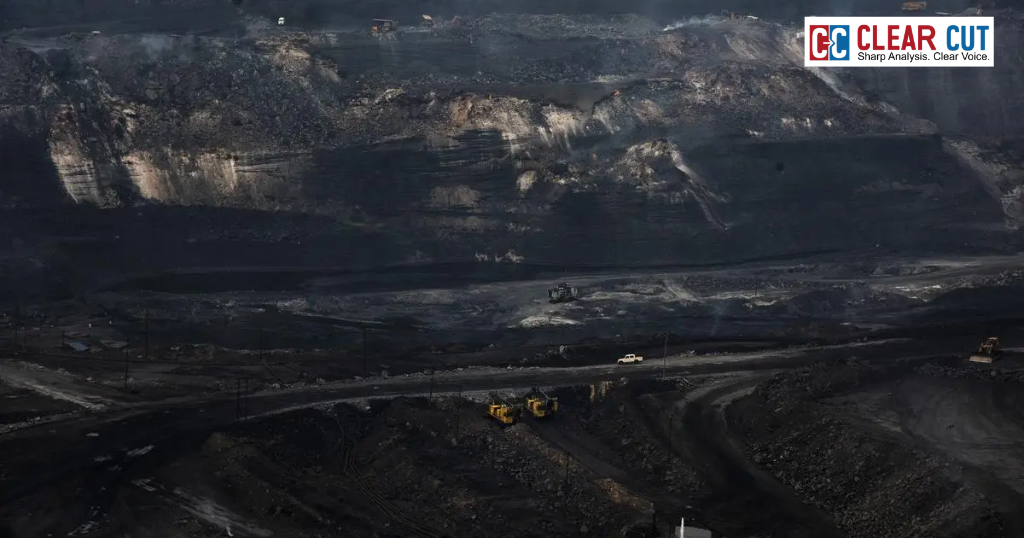
- India’s National Coal Gasification Mission targets 100 MTPA by 2030 to reduce fuel imports and expand domestic production of synthetic gas, fertilizers, and hydrogen.
- Experts caution that coal gasification still generates significant emissions, demands large volumes of water, and may worsen pollution unless supported by effective carbon capture and a just transition for coal-dependent communities.
India’s National Coal Gasification Mission aims to increase the annual conversion of about 2 million tonnes of coal into synthetic gas to a massive 100 million tonnes by 2030. On 27 July 2026, Satish Chandra Dubey, minister of state for Coal and Mines, informed Rajya Sabha, that an investment of 22.6 MTPA capacity has been already achieved or is under way in India – comprising Jindal Steel Limited’s 8 MTPA facility in Odisha, the Talcher Fertilizers Ltd’s 2.6 MTPA capacity of Odisha and other eight supported under the incentive scheme of an amount Rs 8,500 crore. Under a recently initiated incentive scheme of 37,500 crore approved on 13 May 2026, an additional capacity of 75 MTPA is expected to boost import savings by around Rs 1.5 lakh crores on imports of petroleum and other products at a much faster rate.
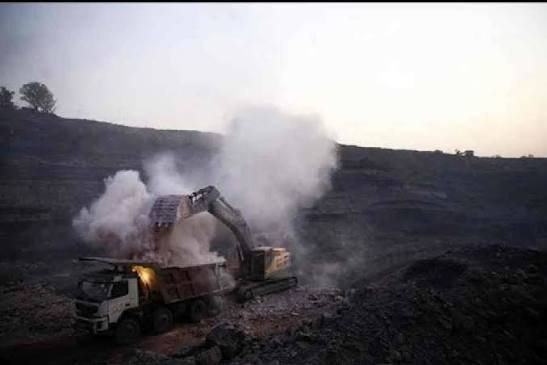
Government officials explain gasification as burning less coal to produce fertilizer feedstock, synthetic gas, chemicals, and hydrogen instead. The flagship location for these initiatives, the Talcher-Angul belt in Odisha, has also experienced well-documented public health damage from coal combustion for over a decade. Particulate levels are regularly 3-5 times the acceptable level (according to Central Pollution Control Board data), and a household survey of coalfield-village homes finds that respondents report respiratory illness in almost 90% of homes, compared with the non-mining village norm of 52%. Local mining is “violating norms and not being held responsible,” says Jagadanada Pradhan, convenor of the Talcher-Angul Banchao Andolan, who holds the district administration responsible for its failure to enforce the law.
Even independent experts are not convinced gasification is a clean alternative to combustion. “CO2 emissions associated with making chemicals from coal via this path are no better than direct combustion and worse than making it from oil/gas,” observe analysts writing in Chemical & Engineering News, as quoted by NDTV. “When used this way, hydrogen generated will remain ‘grey’ or ‘brown’ and definitely not ‘green,’ until used with carbon capture, a piece that is missing from India’s agenda”.
R.R. Sonde of IIT Delhi is said to have cited failure of various previous state-owned gasification projects (including one at Talcher) as a direct outcome of “forcing inappropriate imported technologies” on India’s higher-ash coal – a cautionary note today as many private players are aspiring to commercialise the gasification route to as large a scale as fiftyfold over just ten years.
India’s dilemma is no isolated one. South Africa’s Sasol facility in Secunda – currently the world’s single biggest point emitter – has been running coal-to-liquids since the 1970s and provides about a third of the country’s fluid fuel using more than 30 million tonnes of coal annually – 23,364,834.20 to be precise, which in 2023 pumped around 64 million tonnes of carbon into the atmosphere – according to various reports – and at least one health study suggests the plants and mines contribute up to 72 premature deaths annually in the surrounding Highveld area. But even there, in the nearby eMbalenhle Township, residents depend on Sasol.
“Sasol is in a way a big help to us as a community,” a resident who works at a crèche to look after workers’ children, told local outlet News24. At the same time, she continues to count the pollution and its consequences to the local community’s lungs as a compromise she sees too well is hard to break. This is also the kind of trade-off, dependence on livelihood at the cost of health, that villagers near Talcher reported feeling with their ties to coal-related jobs.
China’s is an even more chilling warning. It pushed for constructing 50 coal gasification plants, placing roughly 80% of them in the relatively dry northwest (Xinjiang, Inner Mongolia, and Gansu), a climate where gasification’s hefty water requirements only compound already severe shortages (the World Resources Institute has documented that numerous approved plants are located in already water-stressed areas). The problematic placement is amplified by the fact that much of the capacity is directed to the Uyghur heartland, an area long subjected to human rights scrutiny. Beijing has “poured enormous resources into developing the coal gasification industry in the Uyghur region,” says Peter Irwin of the Network for Uyghur Rights, one of many clues that the distribution of ‘clean’ coal capacity is rarely politically neutral.
For Odisha’s coal belt, that lesson is already starting to shift minds. Now, Angul-Talcher has a blueprint for a coal transition – or at least an idea for one: the pollution cleanup model, presented by iFOREST, a New Delhi environmental research foundation, which promises a richer, less polluting local economy to boot. “A comprehensive long-term just transition plan across three decades.” That’s how the organisation’s president and CEO, Chandra Bhushan, describes it, adding that coal can be phased out while new, higher-quality jobs are created. India is currently racing towards the 100-million-ton mark; the genuine test for ‘clean coal’ is not necessarily either saving or bringing back that much in dollar value, nor its synthetic gas output. But will India manage to see villages like Secunda in South Africa, or Xinjiang in China, getting the sort of air that policy implications?
Clear Cut Climate Desk
New Delhi, UPDATED: July 28, 2026 16:40 IST
Written By: Yatharth Pathak