

- India’s startup ecosystem has grown from around 350 startups in 2014 to nearly 2.3 lakh recognised startups in 2026, creating about 25 lakh jobs.
- Policy reforms, digital infrastructure, and initiatives like Startup India and BHASKAR have driven this rapid expansion.
- RISE Conclave 2026 highlights the next phase—shifting focus from scale to deep-tech, research-led, and sustainable innovation.
THE NUMBER THAT DIDN’T EXIST 12 YEARS AGO
In 2014, India had approximately 350 to 400 startups. The concept itself was relatively unfamiliar in policy circles. When Prime Minister Narendra Modi highlighted the startup ecosystem in his Independence Day address from the Red Fort in 2015. This was formalised through the Startup India initiative in January 2016. It set in motion one of the most rapid entrepreneurial transformations any large economy has recorded.
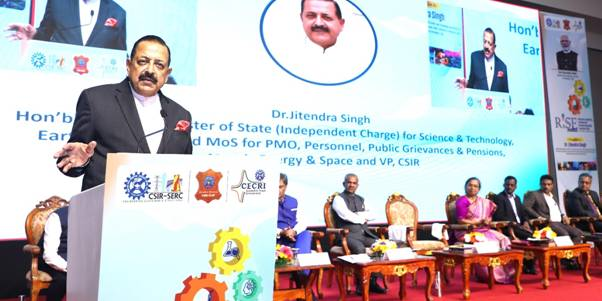
At the RISE Conclave 2026, hosted by CSIR and its laboratories including CSIR-NAL, CSIR-CFTRI, and CSIR-4PI in June 2026, Union Minister Dr. Jitendra Singh placed the current figure on record: India now has close to 2.3 lakh recognised startups, making it the third-largest startup ecosystem in the world. These startups have together generated nearly 25 lakh jobs.
| ~350 Startups in 2014 | 2.3 Lakh Recognised Startups (2026) | ~25 Lakh Jobs Created | 3rd Global Rank |
RISE AND THE SCIENCE CONNECTION
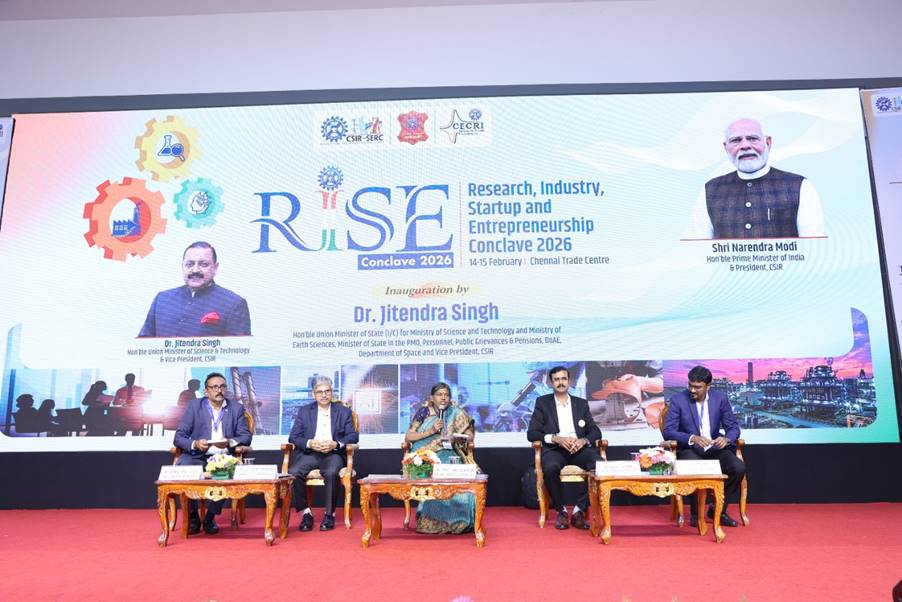
The RISE Conclave 2026 is significant in its framing. Research, Innovation, Science, and Entrepreneurship (RISE) bridges the gap of laboratory discovery and market deployment. Sessions covered Aerospace Technologies for Growth, Artificial Intelligence for societal transformation, and Agri-Food innovation. The conclave included technology transfer agreement exchanges and structured interactions between innovators and industry leaders.
This matters because India’s startup ecosystem, despite its impressive scale, has historically skewed toward consumer internet, fintech, and edtech. Deep-tech like hardware, materials science, defence technology, biomedical devices remains underrepresented. CSIR’s involvement in RISE is a direct attempt to route more of India’s formidable scientific research capacity into the startup pipeline.
THE INFRASTRUCTURE BEHIND THE NUMBERS
India’s startup growth did not happen spontaneously. It was engineered through a sequence of policy decisions: the SPICe+ form simplifying company incorporation into ten integrated procedures; the Jan Vishwas Act, 2023 decriminalising 183 provisions across 42 laws; MCA21 Version 3 processing 3.33 crore filings through AI-enabled Straight Through Processing between 2021 and 2025; and UPI providing frictionless payment rails that no emerging economy has replicated at this scale.
The BHASKAR platform (Bharat Startup Knowledge Access Registry) now connects ecosystem participants through a single digital interface. The Startup India Seed Fund provides early capital to startups unable to attract private investment at pre-revenue stages. Together, these form a scaffolding that many governments spend decades building. India built most of it in ten years.
THE ACCOUNTABILITY QUESTION
Growth at this scale carries hidden inequalities. The geographic concentration of India’s startup ecosystem in Bengaluru, Delhi NCR, Mumbai, Hyderabad, and Pune is well-documented. Tier 2 and Tier 3 cities remain peripheral. The 25 lakh jobs are real, but their distribution must be made transparent, sector-by-sector and district-by-district. DPIIT must publish granular annual startup data disaggregated by state, gender of founders, and sector.
The next frontier is not more startups. It is more sustainable ones. India needs deep-tech unicorns, not just consumer app unicorns. It needs startups that export products, not just services. RISE 2026 pointed toward that future. The policy architecture must now reward the scientists who leave their labs to build it.
Clear Cut Startups Desk
New Delhi, UPDATED: June 19, 2026 01:00 IST
Written By: Tanmay Urs