How mushroom cultivation in Gaya ji is quietly reshaping rural livelihoods in Bihar
In the fields of Gaya ji, Bihar, the post-harvest season looks different. There is no hurry to clear fields by fire. No smoke curling into the winter sky. Instead, paddy straw is being stacked. Stored. Processed. Not as waste, but as an input.
The purpose is simple and economic. Mushroom cultivation.
This is not a pilot experiment or a passing fad. It is the result of sustained policy support, institutional backing, and a production system that is technically proven and widely documented. In Gaya ji, crop residue is slowly being reimagined. Not as a liability, but as a resource.
Gaya ji’s position in Bihar’s mushroom economy
Bihar has, over the last decade, emerged as one of India’s leading mushroom-producing states. This is supported by state horticulture data, agricultural market reporting, and national livelihood assessments. Within Bihar, Gaya ji district occupies a central position.
Under the Government of India’s One District One Product (ODOP) initiative, Gaya ji has been officially identified as a mushroom-focused district. This designation goes beyond being symbolic. It determines where instruction resources flow, which crops receive promotion, and how district-level horticulture plans are structured.
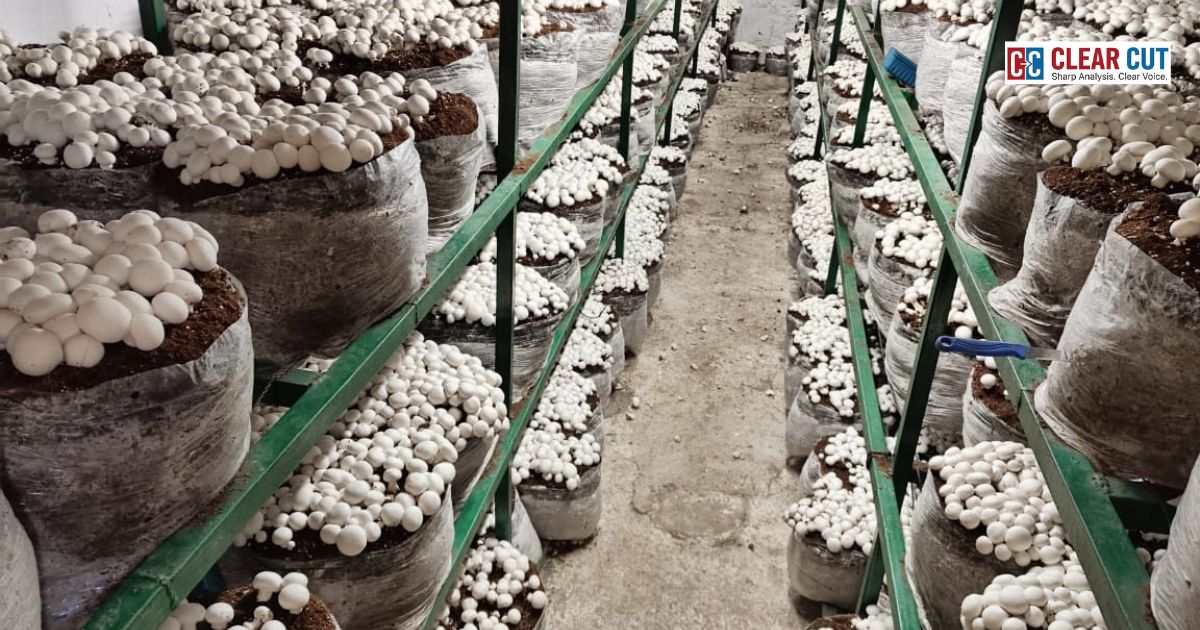
For more than a decade, Krishi Vigyan Kendras and state extension systems in Gaya have promoted oyster and button mushroom cultivation. Varieties well suited to local climate conditions and small-scale production systems.
Why mushrooms work for small farmers
Mushroom cultivation fits the realities of Bihar’s agrarian structure. Landholdings are small. Capital is limited. Risk tolerance is low.
Mushrooms require no cultivable land. They grow indoors or in shaded structures. They mature quickly, often within 30 to 45 days. Production can be scaled gradually. Losses, when they occur, are contained.
Most importantly, mushrooms rely on what farmers already have: agricultural residue.
The role of crop stubble
Paddy straw and wheat straw are the primary substrates used in mushroom cultivation across India. This is not a local innovation. It is standard practice recommended by the Indian Council of Agricultural Research and documented in multiple technical manuals and training curricula.
The logic is well established:
- Straw is nutrient-rich for fungal growth
- It is abundantly available after harvest
- It has limited competing uses in many regions
In districts like Gaya ji, where paddy dominates the kharif cycle, straw availability is predictable and seasonal. Mushroom cultivation converts this residue into a productive input rather than a disposal problem.
Livelihood outcomes that are well documented
The most robust evidence from Gaya ji relates to income generation.
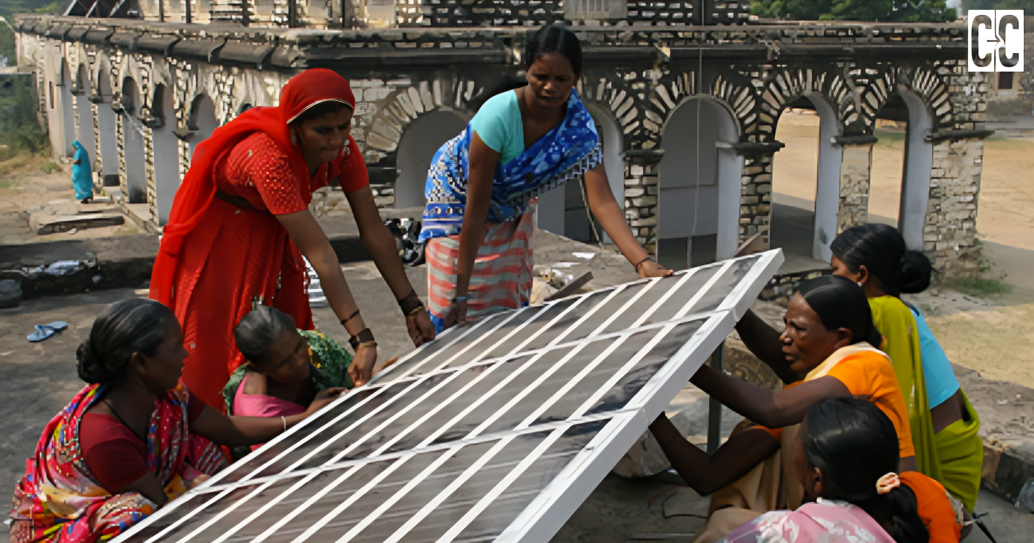
Livelihood organisations such as SumArth and Microx Foundation, along with self-help group federations and NABARD-supported initiatives, have documented mushroom cultivation as a supplementary income activity adopted by a large number of small and marginal farmers, particularly women.
Programme reports regularly emphasize similar outcomes:
- Low initial investment
- Short production cycles
- Regular cash flow
- Income diversification beyond cereals
While income levels vary by scale, market access, and season, case studies show that mushrooms often provide a steady monthly addition to household earnings when combined with paddy and wheat farming.
This is not prosperity in headline numbers. But in rural economies, reliability matters as much as magnitude.
The stubble-burning question, addressed carefully
Does mushroom cultivation eliminate stubble burning in Gaya ji? No credible source makes that claim. What is supported by evidence is more precise.
Mushroom cultivation creates economic value for crop residue. When straw has value, the incentive to burn it declines. This principle is widely recognised in sustainable agriculture and residue-management literature.
Bihar already reports lower stubble-burning intensity compared to north-western states, due to differences in mechanisation, farm size, and cropping patterns. In this context, residue diversion through mushrooms is feasible and increasingly practiced at the farm level.
It can be most accurately described as a residue-utilisation pathway, not a pollution-control silver bullet.
Soil and sustainability effects
Claims that mushroom cultivation directly improves soil fertility are often overstated. The evidence advocates a more measured interpretation.
Indirect benefits are well recognised:
- Reduced open burning helps preserve soil organic carbon
- Spent mushroom substrate can be returned to fields as organic matter
- Recycling farm waste improves overall resource efficiency
These are gradual, cumulative effects. They align with established principles of sustainable agriculture rather than trial results.
Why this model holds credibility
The strength of the Gaya ji experience is found in its realism.
It does not ask farmers to abandon cereals.
It does not depend on expensive machinery.
It does not rely on speculative environmental markets.
It works within existing systems:
- Small landholdings
- Family labour
- Residue already present on farms
That is why adoption has sustained beyond pilots and projects.
A quiet but important lesson
In public discourse, stubble is frequently portrayed as a crisis. In parts of Gaya ji, it is increasingly treated as an input. Not everywhere. Not uniformly. But enough to matter.
The lesson is not technological. It is economic.
When waste acquires value, behaviour changes. Incrementally. Quietly. Reliably.
And sometimes, that is how agricultural transitions actually take root.
Clear Cut Livelihood Desk
New Delhi, UPDATED: Dec 20, 2025 02:16 IST
Written By: Paresh Kumar