
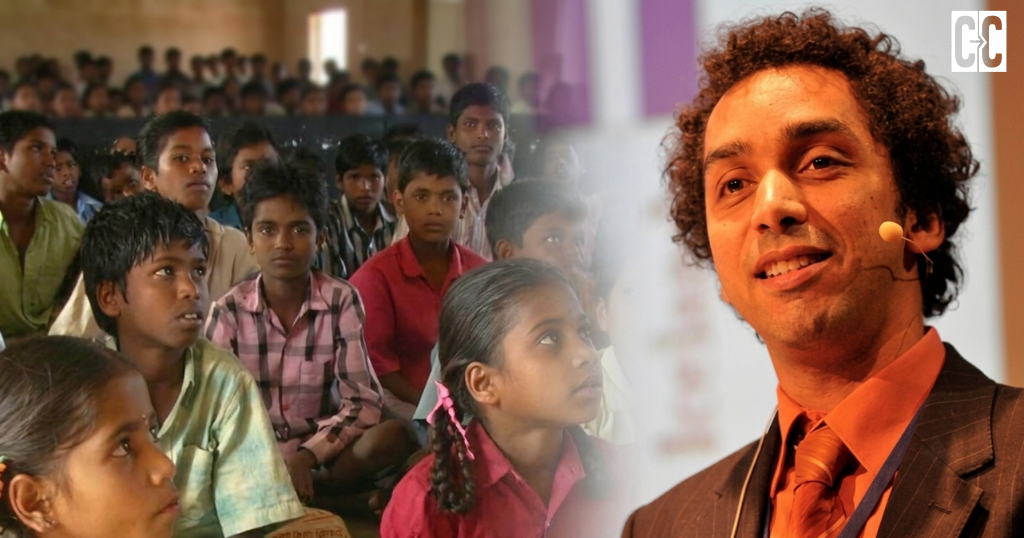
OECD’s Stephan Vincent-Lancrin emphasises at the Clear-Cut Education Summit that competency-based curricula and the skill to judge AI outputs are the next frontier
NEW DELHI: Speaking at the inaugural session of the Clear-Cut Education Summit 2026, Dr. Stephan Vincent-Lancrin, keynote speaker in the opening plenary alongside Dr. Kiren Bedi, Ms. Kaveree Bamzai, Dr. Rishikesh Patankar and Mr. Paresh Kumar, underlined the evolving priorities in education reform.
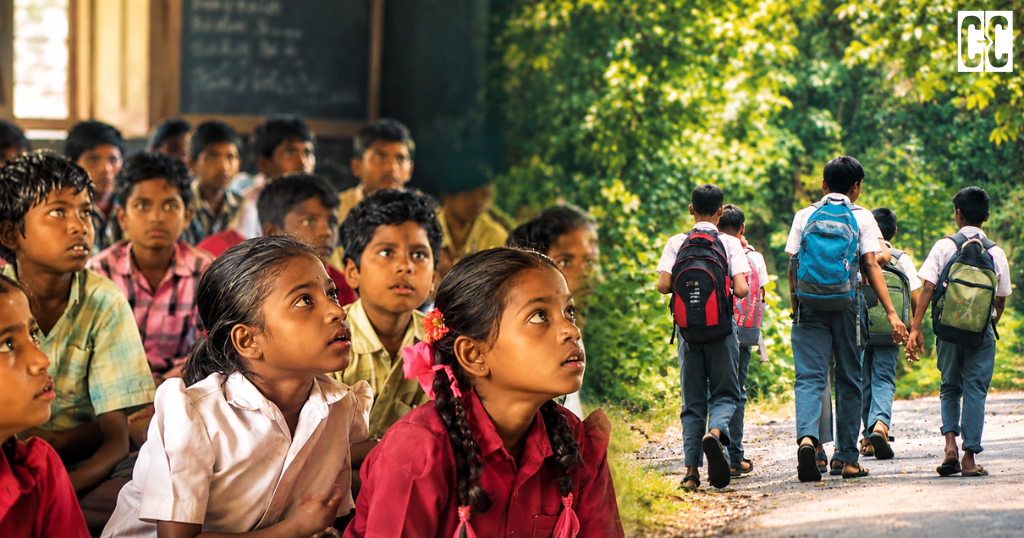
Education systems are now being asked to make a second leap, shifting focus from children learning to enabling them to think critically. The first revolution, he said, was the move from schooling to learning, the realisation that “Just spending a lot of time in school did not necessarily imply that there was a lot of learning happening”. He credited the OECD’s PISA programme with driving that lesson home. For India, it remains alive. Enrolment among six- to 14-year-olds has exceeded 95 per cent for nearly two decades, yet ASER 2024 found that only 23.4 per cent of Std III children in rural India could read a Std II-level text.
The second revolution, Dr Vincent-Lancrin explained, involves competency-based curricula that integrate “creativity, critical thinking, communication, collaboration, digital competencies” into subject knowledge. He stressed these should be firmly rooted in disciplines to avoid distraction.
Generative AI, he said, has “totally changed the way we have to think about education”. A correct answer no longer proves what a student can do alone. Students perform much better with AI, but once the tool is removed, “we cannot be sure that they have actually acquired the skill”. This highlights the opportunity for educators and students to feel empowered and confident in integrating AI thoughtfully into learning.
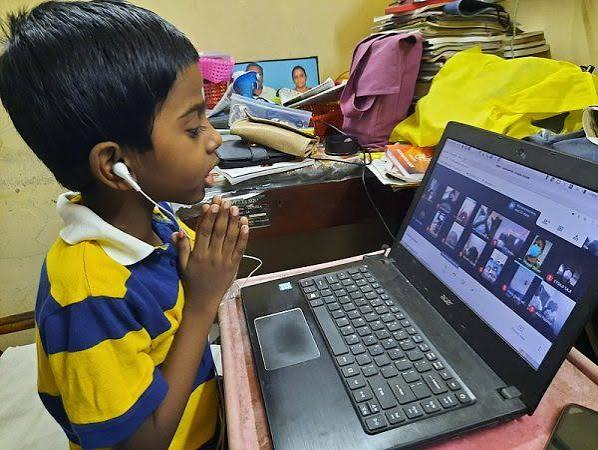
Research points the same way. In a randomised trial at a Turkish high school, students given unrestricted access to a general-purpose chatbot scored 48 per cent higher on practice problems, but 17 percent lower on exams than peers who never used one. The OECD’s Digital Education Outlook 2026 reaches a similar conclusion: such tools can lift task performance without producing learning gains unless guided by sound pedagogy.
In his answer it is not a prohibition. Generative AI should be embraced “at certain stages of learning”, but students must develop “the skills to judge and evaluate the outputs of generative AI” before using them. In fields such as computer programming, “there is no choice”, so learners must be able to tell whether an output is any good.
Access alone will not close that gap. ASER 2024 data show that almost 90 per cent of 14- to 16-year-olds report having a smartphone at home. Among those who can use one, 57 per cent had used it for an educational activity in the previous week, against 76 per cent for social media. Of those who can use a smartphone, 27 per cent of 14-year-olds and 37.8 percent of 16-year-olds have their own phone. The OECD says governments should ensure equitable digital infrastructure and support so that all students and teachers can benefit from generative AI. This call can inspire stakeholders to feel hopeful and responsible for inclusive digital progress.
The OECD has produced resources to help. Its project on creativity and critical thinking, which lists India among its participants, worked with school networks in 11 countries to develop rubrics and sample lesson plans showing teachers what these skills look like in practice. Dr Vincent-Lancrin said the organisation had also run a “big project” to implement competency-based curricula with Indian partners, and that resources are available to Indian educators.
“We really have learned a lot from India,” he said, adding that in a country so “large and diverse”, learning from one another brings a great deal. He looked forward to hearing what the summit produced so that it could enrich international discussion. For a system still completing the first revolution, the challenge is to build the second without leaving the first unfinished.
Clear Cut Education Desk
New Delhi, UPDATED: October 05, 2026 18:00 IST
Written By: Yatharth Pathak