

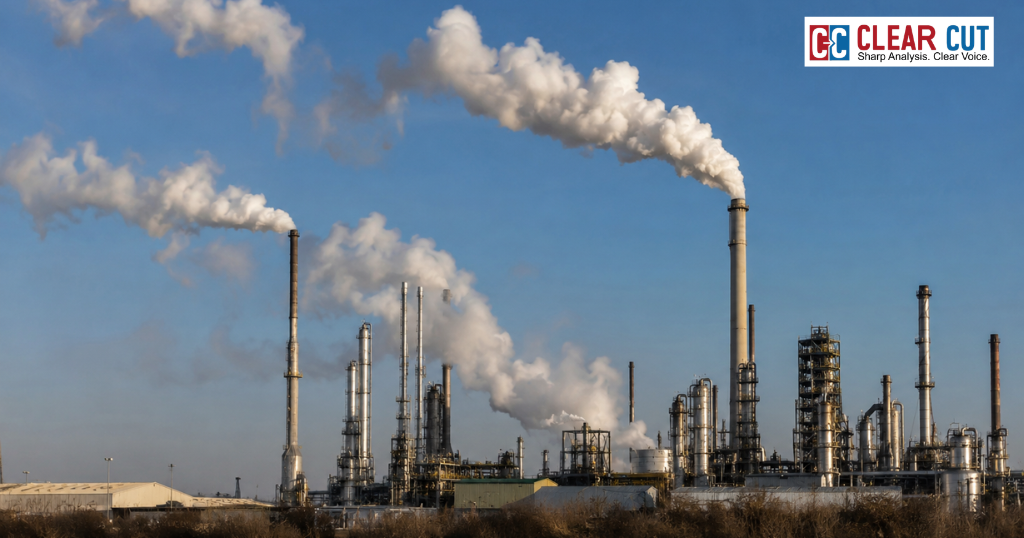
- The UN has launched a 2030 methane reduction roadmap to curb one of the most powerful greenhouse gases, but India has not joined the Global Methane Pledge, citing concerns over protecting farmers and food security.
- Nearly half of India’s methane emissions come from agriculture, especially livestock and rice cultivation. While the UN highlights that cleaner farming practices can reduce emissions and increase productivity, financing remains the biggest challenge for scaling these solutions.
World Meteorological Organization data indicate that concentrations of atmospheric methane were 1,942 parts per billion in 2024 – 266% higher than they were before the Industrial Revolution, and the highest in at least 800,000 years. Methane, approximately 80 times more potent than CO2 over 20 years, currently accounts for about one-third of the global warming observed so far. This June 23, at London Climate Action Week, United Nations Secretary-General António Guterres introduced the Call to Action on Methane an action plan with nine policies on fossil fuels, farming, and garbage that governments and corporations pledge to complete by 2030.
Methane also provides significant advantages. Following every such policy action would avoid a 32% decrease in annual methane emissions in 2030 compared to 2020, saving 0.1 – 0.2 C (0.2 – 0.4 F) of global warming in 2050; would prevent close to 19 million tons of food loss annually; would avoid about 180,000 deaths annually before they are due; and would generate savings in the range of about $330 billion annually. In the U.S., 42% comes from agricultural activities, 38% from fossil fuel production (mainly methane leaks and flares), and the remainder from waste production mostly in landfills.
And the current commitments are way short. Signed by 159 countries plus the European Union, the Global Methane Pledge aims for a 30% reduction in methane by 2030 – and, based on existing national commitments, would only get us 8%. “Reducing methane is the single fastest brake we can pull on a warming planet,” said UN Secretary-General António Guterres in London this week during the city’s Climate Action Week, pushing for a common near-zero-methane goal for oil and gas producers.
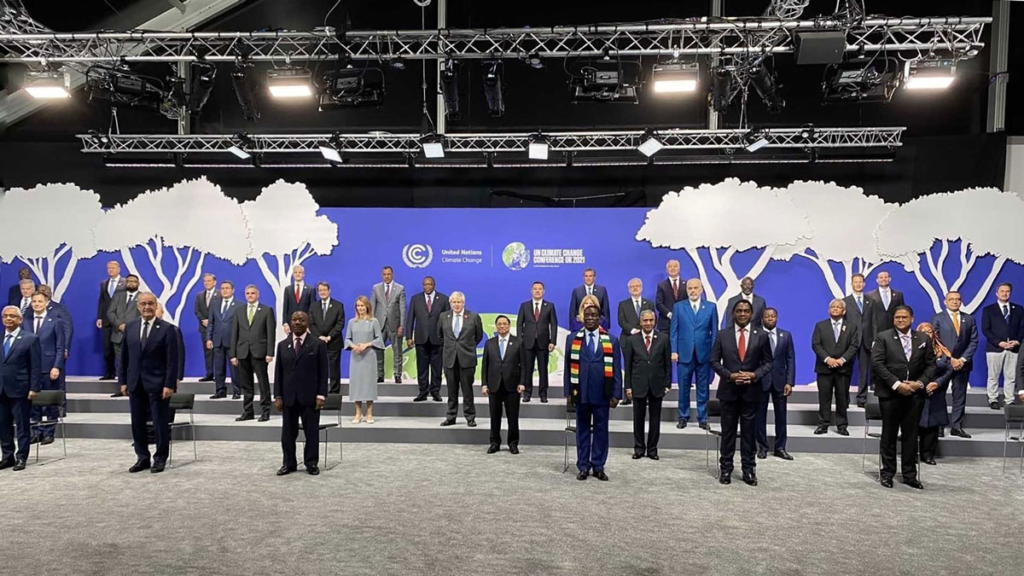
India is absent from the Global Methane Pledge. India is the world’s third-largest methane producer, but given its large population of dairy farmers and rice growers, it is unwilling to commit to this new voluntary pledge. “This is about our survival emissions, not like luxury emissions produced in the industrialized farm economies of other countries,” India’s Union Environment Minister said this May. India’s second methane inventory, mapped and gridded in 2026, shows that about half of India’s methane emissions come from agriculture, compared to a global average of 42%, forcing India to work at home through domestic policies such as the GOBARDHAN scheme and its National Livestock Mission. New Delhi claims that “voluntary measures like Global Methane Pledge, not framed within the ambition of the UNFCCC framework,” don’t align with its own strategy for cutting methane.
But the UN report itself doesn’t facilitate such a neat separation between climate enthusiasm and farmers’ welfare. It cites India’s World Bank-funded “National Dairy Support Project” as an example. A scheme that used improved breeding and nutritional techniques increased milk yields by 20 percent and reduced methane emissions by 14 percent among more than three million smallholder farmers. “What we need is already there, so the issue is less about finding technologies, but about how we share the benefits of upscaling to a national level,” according to Zerin Osho, director of India operations at the Institute for Governance and Sustainable Development.
This contrasts sharply with the situation in the fossil fuel sector. In 1971, Norway banned the routine flaring of gas. In 1991, it started to tax methane produced in the oil and gas sector, now operates some of the least methane-intensive oil and gas facilities in the world, and estimates that a 90 percent reduction in the sector is possible globally by adopting the country’s standards.
Unlike in agriculture, climate abatement in fossil fuels is largely a question of political intent, because up to 75 percent of methane in the sector could be eliminated with current technologies, often at negative cost (because some captured gas could be sold). In 2024, about 150 billion cubic meters of gas were flared in the world – that is enough gas to meet the needs of an entire continent (Africa), being used instead of fuelling houses and industries.
Financing is the constraint in all regions. The UN’s report projects that an annual $127 billion is needed in these three sectors up to 2030, compared with around $13.7 billion in currently identified financing – a financing gap that the UN co-convened countries Canada and the EU hope all countries can begin to fill ahead of the COP31 climate talks. For India and other developing countries that are walking the line between emissions reduction targets and food security, the UN’s own dairy data is likely to offer evidence that the issue isn’t whether to tackle agricultural methane, but how to finance it to ensure smallholders, and not the world, carry the cost.
Clear Cut Climate, Research Desk
New Delhi, UPDATED: July 15, 2026 09:00 IST
Written By: Yatharth Pathak