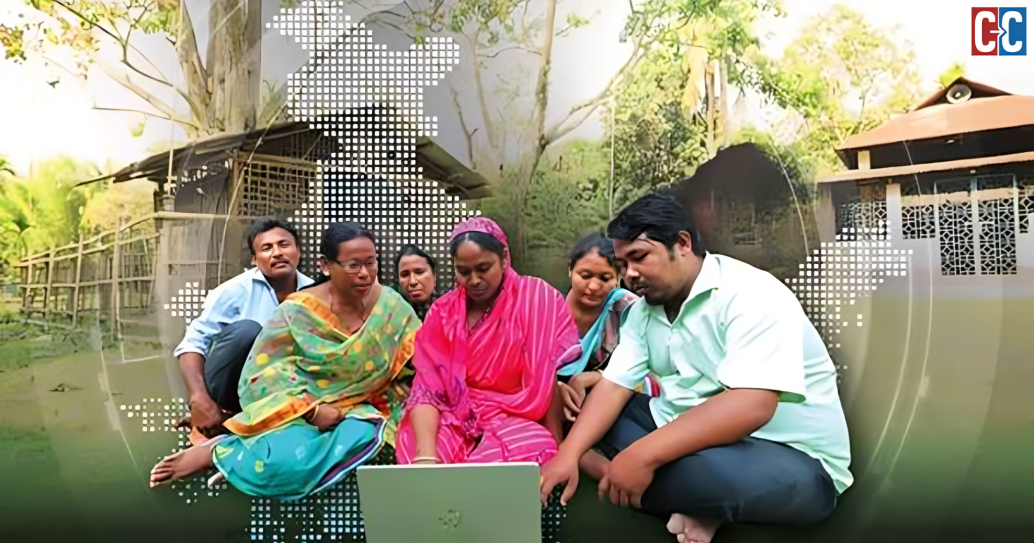

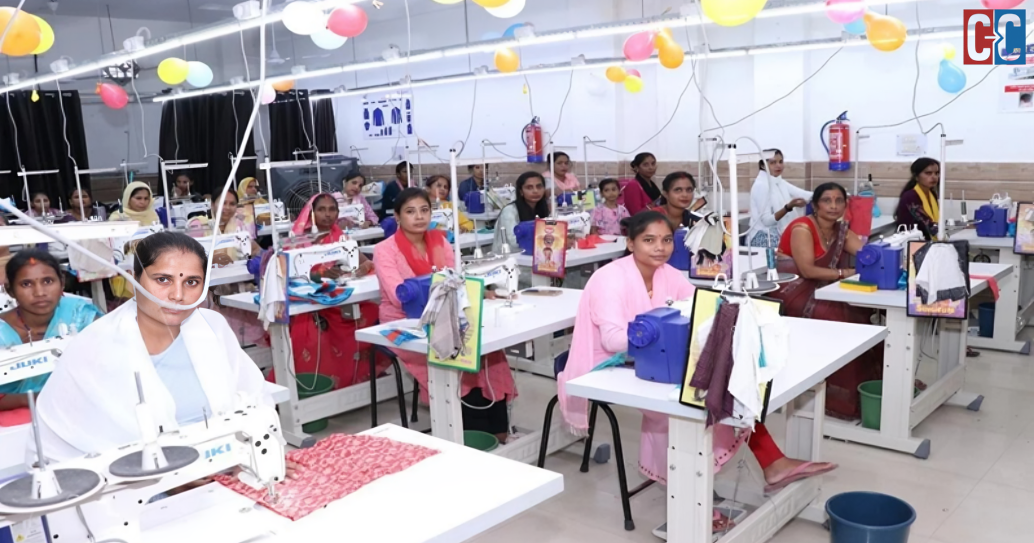
- CSR programmes are helping Indian women through entrepreneurship, healthcare, livelihoods and self-help groups, but their real impact needs stronger measurement.
- Training numbers and beneficiary counts alone do not prove empowerment; income growth, business survival and decision-making power are more meaningful indicators.
- The article calls for long-term tracking and third-party monitoring to ensure CSR creates lasting change rather than just photo opportunities.
Each CSR annual report from India now includes a photograph of women at a training centre holding certificates and smiling into the camera. In fact, the real question is what happens when the lens clicks off? Female labour force participation has, for example, risen from 23.3 percent to 41.7 percent in India from 2023-24 to 2023; however, adult female literacy still languishes at around 59.3 percent (compared to 78.8 percent for men), and the labour force participation rate continues to rise. However, it remains highly concentrated among unskilled workers and low-wage workers. It is at the distance between appearances and impacts, between observable actions and impactful change, that CSR focused on women must truly lie.
Where the Money Is Working
ITC’s Women Empowerment programme – probably the most established and the best-reported program there is. Nearly 29,000 ultra-poor women from across the identified communities were brought to sustainable non-farm employment and 1, “00-odd “Super Rainers were trained to train 19,000+ more women and then cascade to Self Help Groups, impacting about 1.95 lakh women across 1,700+ villages. The “ayerd, “trainer of “rainers” approach is seen most consistently where programmes tend to be successful – leveraging reach without increasing the size of the corporation itself, while still investing in local capability that is far more sustainable than singular events.
Health as an Empowerment Lever
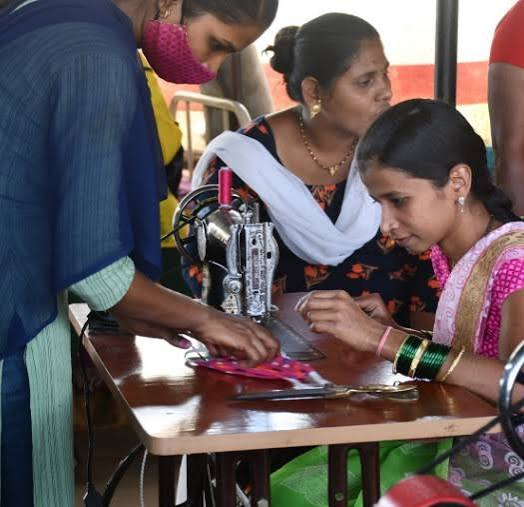
Programmes are taking the understanding that women’s economic empowerment is impossible without access to healthcare. India’s community health worker skilling programmes, conducted with partners such as GE Healthcare and IPE Global have scaled up to upskill as many as 4,000 community health workers across Uttar Pradesh and Rajasthan; building in livelihoods into preventive healthcare delivery as a direct complement. The model achieves two development goals in one investment.
The Indigenous and Remote Community Gap
Some of the most operationally difficult and most necessary CSR work is happening in the hardest-to-reach communities. EFoundation’s Women’s Empowerment Centre in Edamalakudi, built for the indigenous Muthuvan community, was deliberately designed as a culturally sensitive space rather than a generic training hall, reflecting a more sophisticated understanding that empowerment programmes designed for urban or peri-urban women often fail when transplanted into tribal or remote contexts without adaptation.
What Measurement Still Misses
By the 2026 rollout, women’s programmes, participant numbers, hours of training provided, and self-help groups set up are reliably cited, often as the only or leading metrics. Much more sporadically reported are income changes, business survival rates beyond year one, and leaders’ growth into decision-making roles. Academic studies on the impact of CSR on women’s empowerment generally show wide differences in outcomes across regions and sectors. Size of investing isn’t quality of outcome and designs that respond to local conditions significantly outperform shelf rollouts.
The Scale Some Programmes Are Now Targeting
The few large multi-women’s livelihood programs that are setting real, inspiring targets. One program is set to uplift 250,000 women to become sustainable micro-entrepreneurs, covering 15+ states. Bringing thousands of women into sustainable micro-entrepreneurship will require an outcome-monitoring structure that the sector currently lacks.
Until the income impacts of a sample of households receiving services can be verifiably documented, nothing prevents the beneficiary numbers of an empowerment program target from being nothing more than another marketing claim.
Which programs will genuinely bring empowerment are those that include third-party monitoring in their design from year one, rather than bolting it on before a deadline report.
Future Action
A photo of a woman holding a training certificate is proof of attendance, not empowerment. The next obligation of the CSR sector is to bridge the gap between activity-based and impact-based outcomes. Companies should be mandated to disclose business survival rates and income trajectories of women entrepreneurship programs at the one-year and three-year marks, not at their graduation. India’s women now actively work outside their homes, and CSR has indeed played a role.
Will the story of the empowerment of Indian women continue or revert to being a mere photo-opportunity, or will it be ready to gauge what transpires after the lenses disappear?
Clear Cut CSR Desk
New Delhi, UPDATED: August 21, 2026 10:10 IST
Written By: Tanmay J. Urs