


- Five states—Rajasthan, Karnataka, Bihar, Jharkhand and Tamil Nadu—are introducing welfare measures to provide social security for gig and platform workers.
- Karnataka’s 2025 law stands out with a welfare levy, worker registration, dispute resolution and a dedicated Gig Workers’ Welfare Board.
- The success of these reforms will depend on effective registration, transparent fund distribution, worker participation and gender-inclusive policies.
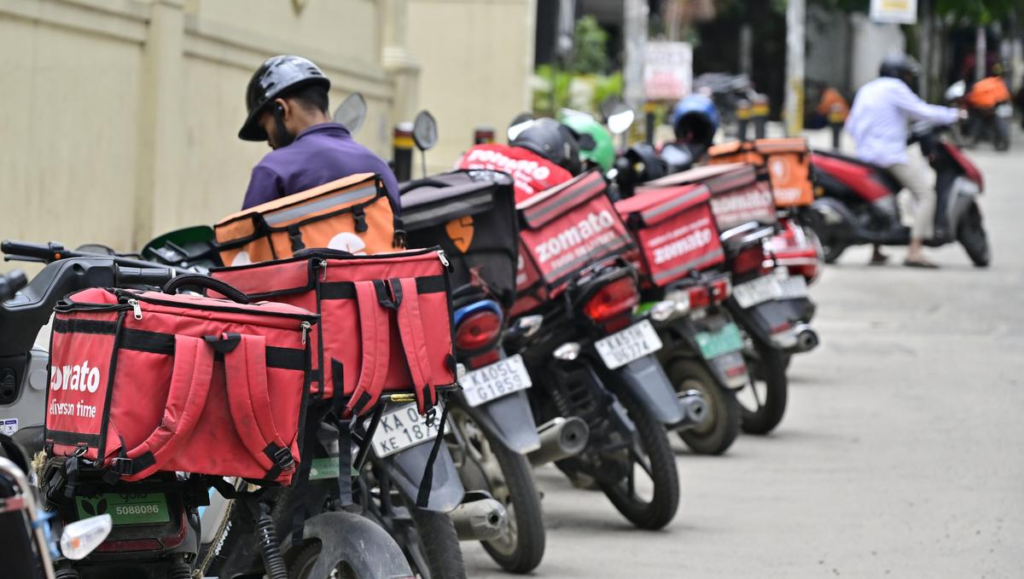
In the space of little over a year, Rajasthan, Karnataka, Bihar, Jharkhand, and Tamil Nadu have moved to legislate social security protections for platform-based gig workers. It is a workforce that NITI Aayog estimated at 7.7 million in 2020, and that has almost certainly swelled into the tens of millions since, as young workers turn to app-based work amid limited formal employment opportunities. Karnataka’s law, the most comprehensive in the group, mandates a 1-5% welfare levy on platform commissions to fund a dedicated Gig Workers’ Welfare Board. Whether this state-by-state patchwork amounts to genuine worker protection or simply a new compliance layer that platforms will find ways around remains an open question for 2026.
What the Laws Actually Provide
The Karnataka Platform-based Gig Workers (Social Security and Welfare) Act, 2025, guarantees gig workers the right to registration through a universal ID applicable across platforms, a two-tier mechanism to resolve disputes, and the right to access social security schemes funded through a welfare levy. Platforms, including major food-delivery and ride-hailing aggregators, have been mandated to register gig workers and ensure they have signed a contract and a work report, and to transfer the levy deductions through digital verification within six months. Rajasthan’s 2023 law also inspires the legislation’s framework, the first of its kind in the country, and, in many respects, Karnataka has improved on it.
The Economics of Who Actually Pays
Economic analysis of Karnataka’s law has raised a pointed concern: platforms may simply pass the welfare levy on to workers via reduced commission pay-outs or to consumers via higher prices, rather than absorbing the cost themselves. Compliance costs could also disadvantage smaller aggregators relative to larger, better-capitalised platforms, potentially reinforcing market concentration rather than distributing welfare costs fairly across the industry. The law’s rights-based intent is not in question; its real-world redistributive effect is still being tested.
State-by-State Momentum
The Tamil Nadu labour department has already formed its own Platform-Based Gig Workers Welfare Board. It anticipates that more than 1 lakh workers from e-commerce delivery and cab-aggregator platforms will register. Meanwhile, the social security framework proposed by Maharashtra covers more than 5 lakh gig workers across 320+ platforms with cess drawn from the tax and GST paid by companies (on the lines of the existing construction-worker welfare cess, which contributes over 100 crore per annum to the state kitty). Haryana too has recently moved to set up a welfare board for what government officials’ term “close to 52.7 lakh ‘mobility workers’ of the state”.
Found Nadu’s Data as the First Deliverable
In Legal Circles tracking these boards, “The central government and advocates say it is this mandatory registration and resultant database of gig workers that becomes the bedrock, without which no additional benefits that have been announced can be effectively targeted or distributed. So, until each state has a robust, cross-platform list of its gig workers, each collection box becomes potentially a place where welfare funds can be collected, but without any distribution mechanism, which means registration compliance will be the state to keep a close eye on across states during the first year of the scheme.”
The Gender-Blind Spot in Gig Welfare Design
A 2026 gig workforce study by Redseer found that women make up only about 1 percent of India’s gig workforce overall, a striking gap, given their comparatively strong participation in the home-services segment. None of the current state welfare boards has provisions specifically targeted at closing this gap, whether through safety-focused onboarding, flexible-hour categories, or childcare-linked welfare fund allocations. As these boards move from legislation into operation, replicating home-service states’ gender-based policies across food-delivery and ride-hailing categories will require deliberate policy design, not simply extending the same generic welfare package uniformly across a workforce with very different participation patterns by gender.
Conclusion
Legislating a welfare board is the easier half of this reform: making it run transparently, ensure worker input and voting rights on its decisions and use collected levy funds actually to fund the registered workers and not leave the levy money uncollected is the harder half that will be the deciding factor if 2026 goes down state’s annals of Indian labour history as the year the country’s gig workers got actual rights or only actual papers. States yet to implement legislation would do well to use Karnataka’s rights-focused framework and acknowledge its quantified economic costs as a work case rather than start afresh. As for the Centre, its opportunity is to scale up this state-led tinkering into a uniform floor of protection applicable across India, so that social security for a gig worker is not a matter of location within our borders.
Clear Cut Livelihood Desk
New Delhi, UPDATED: August 24, 2026 09:00 IST
Written By: Tanmay J Urs