
- SeSTA is empowering women across Assam, Meghalaya and Tripura by strengthening livelihoods through farming, livestock, self-help groups and women-led enterprises.
- Its household-focused approach has reached 160,000 families across 2,540 villages, while also supporting communities facing floods and climate challenges.
- SeSTA’s women-centred model could serve as a scalable approach for rural development across Northeast India.
India’s Northeast rarely features in national development conversations the way the Hindi heartland does. Seven Sisters Development Assistance, known as SeSTA, was built specifically to close that gap. Since 2011, the organisation has grown from a single-district pilot in Assam into a network working with 160,000 families across 2,540 villages in 24 districts spanning Assam, Meghalaya, and Tripura, almost entirely through one deliberate choice: putting women at the centre of every intervention.
Born out of PRADAN’s northeast expansion
SeSTA began in 2011 when PRADAN, one of India’s largest rural development NGOs, explored expanding its self-help group model into the Northeast, starting in Assam’s Chirang district. Early work focused on promoting the System of Rice Intensification farming method with around 8,500 farmers, alongside forming women’s self-help groups and their federated structures. By 2014, the organisation had settled on what it calls ‘agency enhancement,’ building women’s confidence and decision-making power, as its core strategic approach.
From rice fields to livestock and beyond
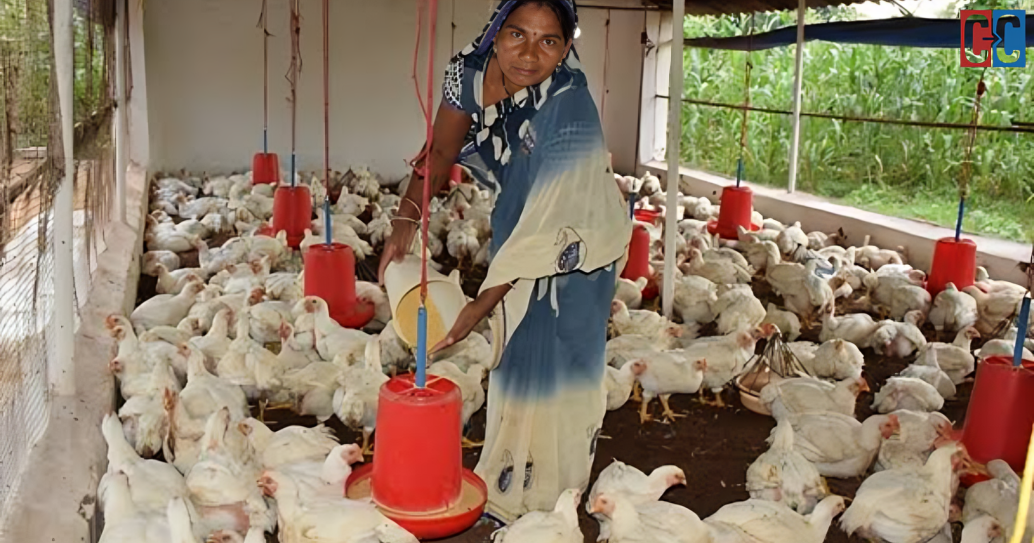
SeSTA’s work today spans scientific farming, livestock rearing, natural resource management, and non-farm enterprise, all built around organised women’s collectives. A newer initiative in Assam’s Udalguri district uses a data tool called LEAF, combining geospatial technology and artificial intelligence with local knowledge, to help officials plan livestock clusters more effectively for women-led enterprises. One beneficiary, Puja Singh, used a ₹10,000 seed grant under Assam’s women’s entrepreneurship scheme to rebuild her goat-rearing business after selling livestock to repair her home. In June, 34 officials from the Assam State Rural Livelihoods Mission were trained to use the LEAF system themselves, a sign that SeSTA’s tools are being absorbed into state government planning, not just used inside its own project areas.
A household-first approach
Unlike programmes that target individuals in isolation, SeSTA works through household-level surveys to understand each family’s specific constraints before designing an intervention. This grounded, door-to-door approach is slower than a blanket rollout, but SeSTA’s own data suggests it produces more durable results: over 1 lakh women farmers across its working areas have strengthened, sustained livelihood systems, not just one-time income boosts.
A region that keeps flooding
SeSTA’s work has repeatedly collided with the region’s disaster cycle. In 2026, catastrophic Assam floods displaced over 445,000 people. The organisation’s field teams pivoted quickly into relief and rehabilitation work in Sivasagar and other severely affected districts, a reminder that livelihood-building in the Northeast cannot be separated from the climate and flood resilience challenge the region faces almost every monsoon.
Bringing young professionals into the villages
SeSTA has also built a distinct model for bringing educated young professionals directly into grassroots fieldwork, something the organisation describes as one of the first efforts of its kind in the Northeast. These recruits work alongside women from poor and marginalised groups on livelihoods, local governance, and gender justice, embedding graduate-level skills into villages that would otherwise rarely see them, while giving young professionals a grounded, long-term understanding of rural realities most urban careers never expose them to.
The Way Forward
The Northeast’s development gap is partly a data gap. National schemes are frequently designed around the plains states and only loosely adapted for the hill and flood-prone terrain of Assam, Meghalaya, and Tripura. SeSTA’s household-by-household model is proof that this gap can be closed, but proof at 160,000 families is still a fraction of the region’s need. The Northeast’s state rural livelihood missions and national CSR funders should treat SeSTA’s approach as a template worth replicating at far greater scale, rather than as a regional curiosity, because a region that floods every year cannot afford livelihood programmes that only reach it in fragments.
Clear Cut Livelihood Desk
New Delhi, UPDATED: August 30, 2026 09:00 IST
Written By: Tanmay J. Urs