
- PRADAN’s self-help group model has empowered rural women by building confidence, financial resilience, leadership, and stronger village institutions.
- From transforming Teliya village in Jharkhand to reaching around one million families, PRADAN combines livelihoods, nutrition, skilling, and community-led development.
- The model shows that lasting rural transformation depends on women-led organisations, trust, and long-term community engagement.
In 1998, Teliya, a remote village in Jharkhand’s Gumla district, had almost nothing going for it: severe food insecurity, high rates of malnutrition, and barely any cash circulating in the local economy. Twenty-five years later, the same village has year-round crop planning, renovated roads, working irrigation, and a sanitation system with toilets for its 77 families. The organisation behind that shift, PRADAN, did not build any of it directly. It built something less visible but more durable: the confidence and organisational skill of the village’s women, working together in self-help groups.
An idea from 1987 that became a national blueprint
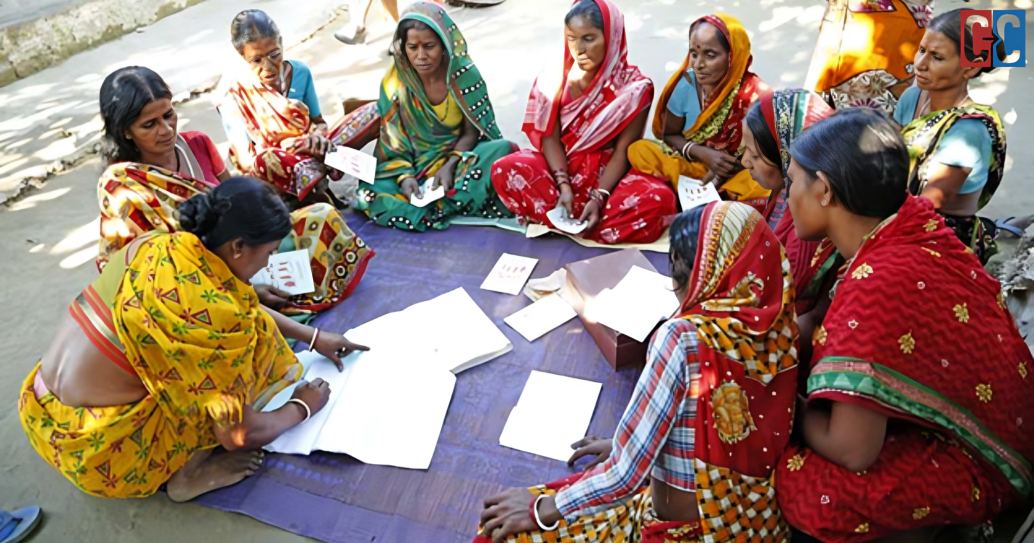
PRADAN, short for Professional Assistance for Development Action, pioneered the self-help group model for community mobilisation in 1987. Small groups of 10 to 20 women would meet regularly, save modest amounts together, and use the pooled fund to support each other during emergencies and to provide small loans. The approach worked well enough, and consistently enough, that it eventually became the core mobilisation strategy for India’s National Rural Livelihoods Mission, the government’s flagship rural development programme, now reaching an estimated 100 million women nationwide through state and NGO-led efforts combined.
Beyond savings: Building federated institutions
As SHGs mature under PRADAN’s model, they federate upward, from individual village groups to Village Organisations, then to Gram Panchayat and Block-level Federations. These higher federations take on community mobilisation and larger-scale development activities themselves, meaning the structure doesn’t depend on PRADAN staff forever, it is designed to run itself eventually. Near Teliya, this federation has grown into a network representing 36,000 families across the wider district.
Layering Nutrition onto an Existing Platform
Rather than building a separate nutrition programme from scratch, PRADAN partnered with the Public Health Resource Society in 2014-15 to design behaviour-change interventions to be delivered through its existing agriculture-focused SHG platform. Research on this layered approach found that while SHG membership consistently improved women’s decision-making around agriculture and reduced empowerment gaps within households, its effect on actual production diversity was more limited, evidence that group membership helps, but does not automatically translate expertise into changed practice on its own.
Focusing on the age group everyone else misses
PRADAN’s newer skilling initiative specifically targets rural women between 18 and 30, an age group it says ‘falls through the cracks’ of India’s mostly gender-neutral national skilling schemes. According to the Periodic Labour Force Survey 2017-18, the work participation rate of rural women fell from 25 percent to 18 percent in recent years. PRADAN’s youth programme, running in Bihar, Chhattisgarh, and Jharkhand, works through Cluster Level Federations to mobilize young women towards entrepreneurship, formal employment, or a return to education.
The scale PRADAN operates at today.
Across seven of India’s poorest states, PRADAN now runs livelihood programmes that generate a combined gross annual output of roughly $80 million, achieved through work in sectors such as tasar silk, vegetables, fruit, and poultry, helping community organizations become genuine, competitive players in those markets. The organisation also supports 116 partner NGOs, extending its self-help group methodology well beyond the villages its own staff can directly reach.
Future perspective
PRADAN today works directly with around one million families across seven of India’s poorest states, and its self-help group model has been absorbed so completely into national policy that most people no longer remember it started as one NGO’s experiment in Jharkhand. That success carries its own risk: as SHGs scale nationally under government programmes, the patient, relationship-heavy work that made Teliya’s transformation real, professionals living in villages for years, not months, can get lost in the push for faster rollout. State Rural Livelihood Missions scaling this model everywhere should protect that slow, trust-building core, because a self-help group that exists only on paper for loan disbursement is not the same as the one PRADAN spent three decades building.
Clear Cut Livelihood Desk
New Delhi, UPDATED: August 31, 2026 10:30 IST
Written By: Tanmay J. Urs