
As legal adoptions rise, child rights advocates warn illegal placements still exploit gaps in oversight — with India’s most vulnerable children bearing the greatest risk.
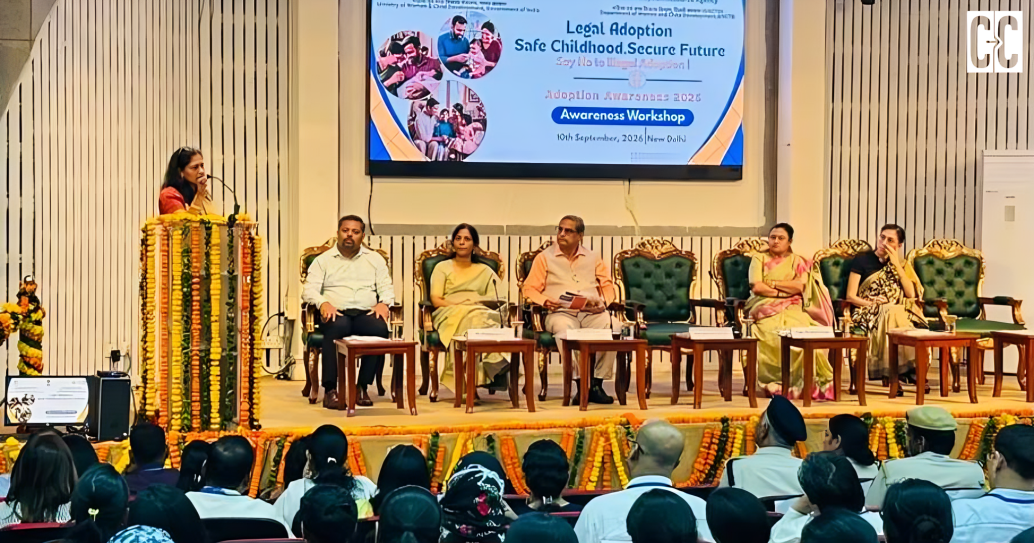
New Delhi’s Secretariat hosted nearly 200 representatives from hospitals, police departments, Child Welfare Committees, and grassroots health workers on September 10 at a government-led workshop aimed at closing the gaps that allow illegal adoption to persist across India’s child protection system.

The event was organised by the Central Adoption Resource Authority (CARA), under the Ministry of Women and Child Development, together with Delhi’s Department of Women and Child Development and the State Adoption Resource Agency (SARA). It forms part of Adoption Awareness 2026, themed “Legal Adoption. Safe Childhood. Secure Future. Say No to Illegal Adoption.” Unlike previous years, when outreach was confined to November, this year’s drive runs state by state through the full year, according to the Press Information Bureau.
CARA CEO Bhavna Saxena told participants that vigilance across the entire child protection ecosystem was essential, adding that “there can be no shortcuts when it comes to adoption.” Delhi’s Women and Child Development Secretary, Rashmi Singh, said the presence of stakeholders spanning ANMs, Anganwadi workers, District Child Protection Units and CWCs marked a step toward wider sensitisation of frontline functionaries who are often the first to encounter at-risk children.
The stakes are set out in law: illegal adoption — placing a child outside CARA’s regulated process — violates the Juvenile Justice (Care and Protection of Children) Act, 2015, stripping children of legal safeguards, identity documentation and protection against exploitation.
Independent child rights advocates say enforcement, not awareness alone, remains the harder problem. Ravi Kant, National Convenor of Just Rights for Children, has said illegal adoptions “continue to be a serious concern in India,” warning that children remain vulnerable to being sold or trafficked through networks exploiting gaps in oversight of hospitals, nursing homes and children’s homes. He has called for clearer accountability among all stakeholders in the adoption chain — precisely the coordination that the Delhi workshop sought to build.
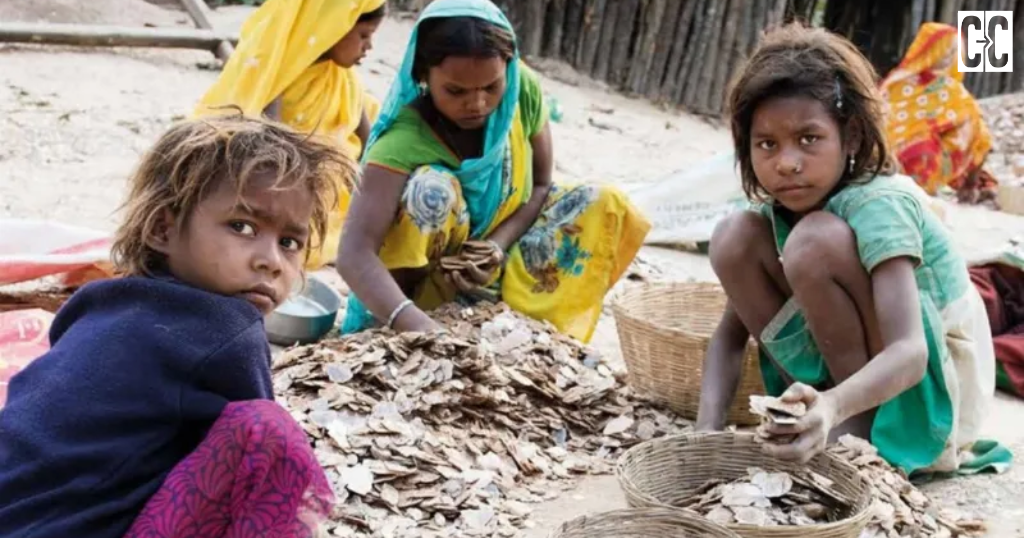
That vulnerability is well documented. Delhi Police has broken up new-born-trafficking rings that used forged paperwork to bypass CARA’s oversight. Illegal placements surged during the pandemic, when the National Commission for Protection of Child Rights recorded over 3,600 children fully orphaned and more than 26,000 who lost one parent between April 2020 and June 2021 — prompting the Supreme Court to bar any adoption that skipped CARA entirely. Such cases disproportionately involve children from low-income families routed through informal networks — precisely the gap this year’s expanded, state-level campaign is designed to close.
India’s approach follows an international framework: it approve the 1993 Hague Convention on Inter-Country Adoption in 2003, which requires every signatory state to route cross-border placements through one designated central authority — CARA’s mandate domestically — specifically to prevent trafficking disguised as adoption. That treaty structure means India’s challenge lies less in policy design than in enforcement at the hospital, police station, and village level, where this month’s workshops are aimed.
Legal adoptions processed through CARA have risen for three straight years even as the illegal market persists in parallel, according to authority data reported by ETV Bharat:
| Fiscal Year | In-Country | Inter-Country | Total Adoptions |
| 2023–24 | — | — | 4,029 |
| 2024–25 | — | — | 4,515 |
| 2025–26 | 4,603 | 419 | 5,022 |
Source: CARA portal data, as reported by ETV Bharat. Category-wise break-up unavailable for FY2023–24 and FY2024–25 in the cited data.
The Delhi session ran three technical tracks: emerging trends in illegal adoption and the state response; the role of hospitals, police and the judiciary in prevention; and strengthening coordination among SARAs, Child Welfare Committees, District Child Protection Units and Child Care Institutions. District Child Protection Officer Arun Sharma shared field experience on identifying and intervening in suspected illegal-adoption cases. Organisers also launched a short fiction film on legal adoption, and the day closed with a quiz and a child-rights play performed by the DMRC Salam Baalak Trust.
Senior officials present included DCP Neha Yadav, Additional Commissioner of Police (Crime) Monica Bharadwaj and Delhi Commission for Protection of Child Rights chief O.P. Vyas — underscoring the cross-departmental reach the campaign is trying to build as it rolls out to states through the rest of the year.
Clear Cut Child Protection Desk
New Delhi, UPDATED: September 16, 2026 18:30 IST
Written By: Yatharth Pathak