
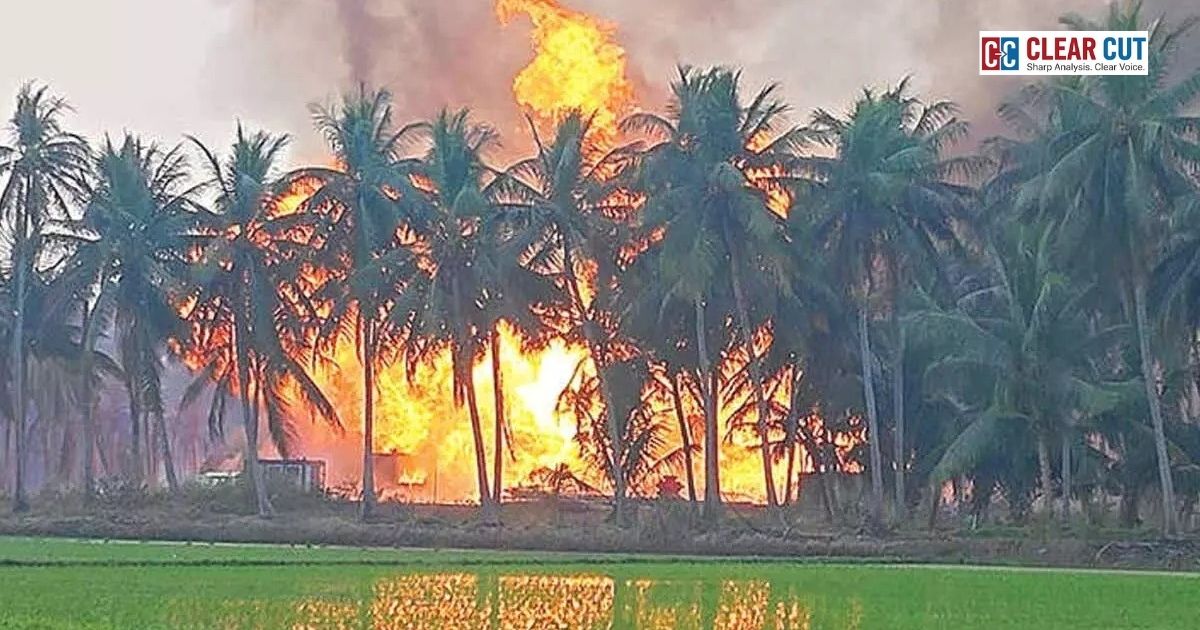
A major fire and gas leak occurred at Oil and Natural Gas Corporation (ONGC) oil well in the Dr BR Ambedkar Konaseema district of Andhra Pradesh. It caused widespread disturbance and fear. The event happened at the Mori-5 well, which is close to Irusumanda village, when a private contractor was drilling. The gas leak occurred on 5th January, 2025 (Monday) at approximately 12:20 pm, according to ONGC. The gas leak expanded across a 500-meter radius in less than 20 minutes, and at around 12:40 pm, it caught fire, resulting in a massive disaster. Flames with a diameter of 25 meters and a height of 20 meters were reported by district officials.
As a precaution, about 600 people from the neighbouring villages of Irusumanda, Gudapalli, and Lakkavaram—all within a four-kilometer radius—were evacuated. Several locals sought refuge in safer places, such as a church in Gudapalli, after two schools were shut down. Using water from an irrigation canal 200 meters away, at least ten fire tenders were sent to the scene. Within a day, authorities said, it would be clear how to limit the blowout fire.
A thick white gas cloud enveloped the surrounding coconut groves and rice fields. The gas later ignited fire, triggering a large blaze that damaged and destroyed several nearby palm trees. Fire tenders were seen on standby as videos circulated online showing local police and workers in orange, red and blue uniforms running to safety. The fire erupted in an area with newly sown rabi paddy fields and palm plantations.
Immediate Health Risks from Gas and Smoke Exposure
Such gas leaks raise grave worries about the quality of the air and the health effects on adjacent residents, even if no fatalities or injuries have been reported thus far.
Toxic gasses, tiny particles, and combustion products are released into the atmosphere when gas leaks and fires occur. The World Health Organization (WHO) states that the main method of exposure in these situations is inhalation. The respiratory system is primarily impacted by these contaminants.
Typical transient symptoms consist of:
i) Breathlessness and coughing
ii) Irritation of the throat, nose, and eyes
iii) Uncomfortable sinuses and runny nose
iv) Headaches and nausea
v) Triggers asthama in patients
Pregnant women, children, the elderly, and those with pre-existing lung or heart diseases are all more vulnerable. Their bodies are less equipped to swiftly heal and filter contaminants.
Role of Volatile Organic Compounds (VOCs)
Volatile Organic Compounds (VOCs) like benzene and other hydrocarbons are frequently released during oil and gas burns. These substances can travel short distances via the air and readily evaporate.
VOC exposure for a brief period of time can result in:
- discomfort of the throat and eyes
- Headaches
- Breathing difficulties
- Weariness
Even at low concentrations, prolonged exposure-especially to benzene-is linked to organ damage and an elevated risk of cancer. The overall health burden is increased by cumulative exposure to smoke particles, volatile organic compounds, and gases, even though individual chemical amounts may differ.
Need for Stronger Safety Oversight
The Konaseema tragedy serves as a reminder of the dangers involved in oil and gas drilling, particularly when it takes place close to populated areas. To avoid such tragedies, regular safety audits, stringent contractor supervision, and open emergency response procedures are crucial. In this instance, prompt evacuation and clear communication from the authorities helped prevent casualties. For impacted populations, however, long-term monitoring of air quality and health effects is essential. Fire safety is just one aspect of industrial safety. Additionally, it involves safeguarding public health prior to, during, and following such incidents.
Clear Cut Health Desk
New Delhi, UPDATED: Jan 06, 2026 02:26 IST
Written By: Nidhi Chandrikapure