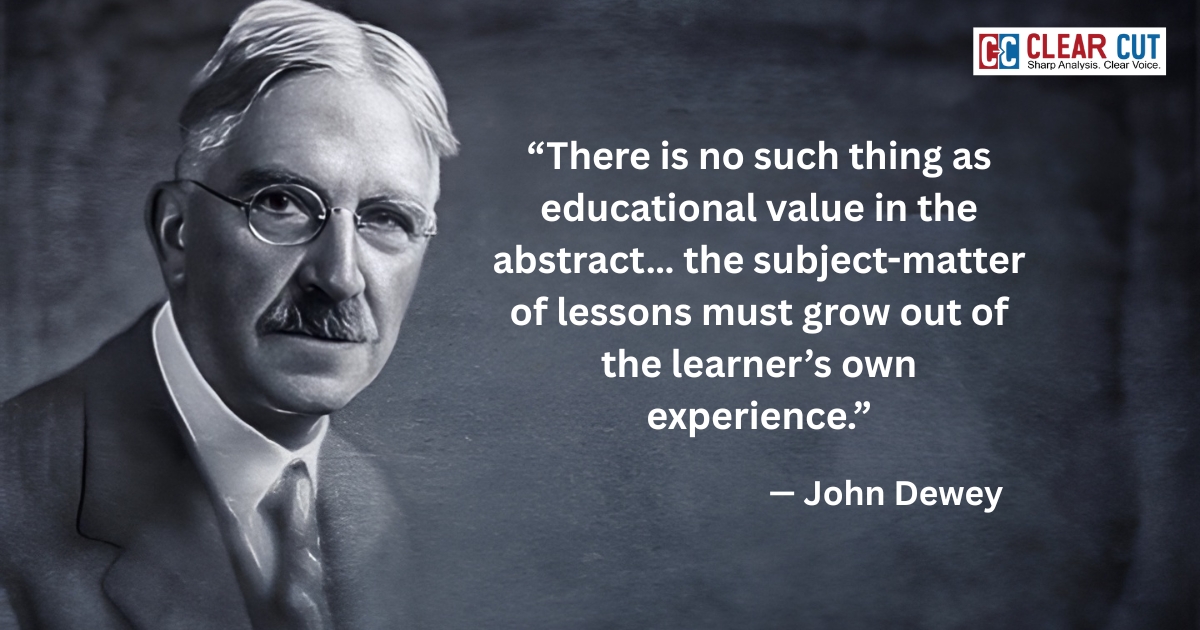
Over a hundred years since John Dewey wrote these words, classrooms still mirror the very issue that he cautioned against. In most education systems, including India’s, education is not usually integrated into learners’ lives. For many learners, particularly the marginalised, schooling is not so much a place of exploration but a fixed framework that requires adapting to. The curriculum life gap does not only deal with pedagogy, but also the lives of those deemed worthy of knowledge.
Understanding the Curriculum Life Gap
Within traditional schooling, knowledge is often introduced as fixed information to memorise and repeat. Examination performance is measured as a success metric relative to understanding and application. This model presupposes that the educational process occurs evenly and does not address disparities in students’ social, cultural, and economic backgrounds.
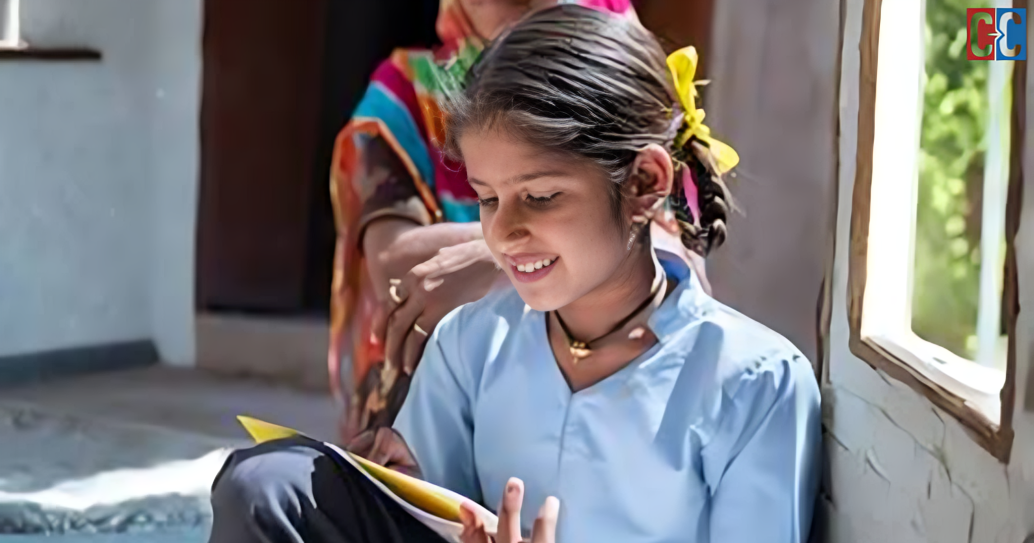
This disparity is clearly evident in India, where students are exposed to textbooks and examples that are well beyond their reality. A child in a farming family might be expected to understand abstract concepts that are not related to farming or local knowledge. Such disconnections over time solidify the notion that education is something outside of life, and that it is only the signs of the knowledgeable who possess familiarity with its language and conventions. This causes a sense of disengagement, anxiety, and blatant loss of confidence among the learning learners.
What Dewey Said and Why It Matters Today
John Dewey opposed the idea that education passive transmission of information. His point was that experience has to be the source of learning, but not abstraction. To Dewey, the classroom was supposed to be a social area where children ask, ponder, and relate the knowledge to the world they live in.
When the curriculum entails imposing without relating to the context of learners, he cautioned that it is mechanical. Students are taught to receive information, but not to question, interpret, and put it into practice. Dewey also held the view that schools should be miniature democracies, allowing students to form habits of participation, dialogue, and critical thinking.
More importantly, Dewey never opposed structure or discipline. In fact, he proposed the re-organisation of knowledge based on the lives of students. Science, mathematics, history, or civics, he thought, should be built on actual problems and experience, and this will enable learners to perceive education as not so distant or dominant but as something meaningful and close to them.
Real Developments in India: Progress and Problems
Education reforms in India over recent years indicate increased awareness of this gap in the curriculum. The National Education Policy (NEP) 2020 is aims for experiential learning, an interdisciplinary approach, and less focus on rote memorisation. The vision of the policy is flexible, learner-centred education, and one which links to real-life skills and challenges.
These ideas are now being experimented with in some schools and universities. PBL, design thinking, and flexible/nonlinear degrees signify the beginning of relevance and application. Efforts to provide bilingual textbooks and digital learning tools, as well as locally contextualised content, are intended to make education more accessible, particularly for students not elite urban environments. Programmes such as PM SHRI schools are placed as examples of how these reforms can be implemented.
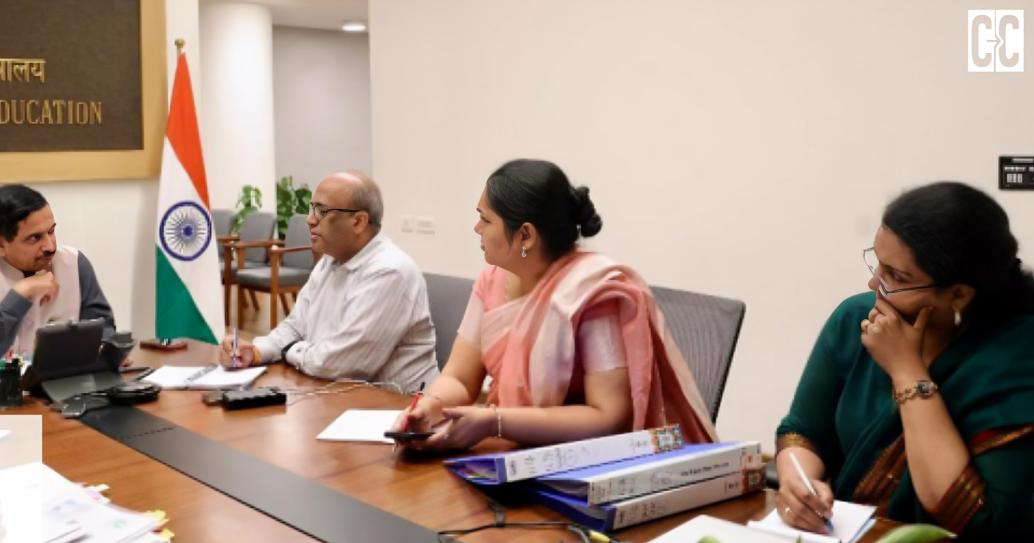
Yet progress remains uneven. Debates over curriculum change are usually influenced by political and ideological factors rather than pedagogical necessities. Disagreements between state priorities and national structures have led to execution gap. Most importantly, most government schools do not have sufficient teacher training, infrastructure, and institutional support to implement the vision of policy into classroom reality. Therefore, the practice of lecture-based instruction and exam-oriented learning persists, especially in areas most in need of such reform.
How This Gap Affects People – Especially the Marginalised
The impact of a curriculum that is not connected to life is not evenly spread. Students with privileged backgrounds typically make their way through private college tuition, computer access, and encouraging family setups. The marginalised learners have to bear a disproportionately high price.
First, relevance defines interactions. When the content taught in the classroom does not hold any similarity to the reality of students, it becomes hard to learn and discouraging. Repeated national tests indicate weaknesses in the foundations of literacy and numeracy, reflecting more fundamental problems of curriculum and classroom delivery.
Second, there is the issue of cultural invisibility. When the truth about and realities of caste are not taught in curricula, and various languages of the regions, and local systems of knowledge are not included, students from marginalised communities develop the perception of being side-lined within the education system. The historical experiences of caste-based exclusion and discrimination still influence schooling, which are sometimes not recognized in textbooks or in teaching practice.
Third, disparities in access to the experience of learning exacerbate current disparities. Mostly, project-based and technology-enabling approaches are employed in many privatized schools; however, government schools are not always able to provide the necessary resources. Education consequently strengthens social hierarchies rather than confronting them.
Meanwhile, when learning ties to life through community projects, local examples and practical problems, students display a higher level of confidence and engagement. These techniques can assist the learners to consider education as a means of making sense of their world and broadening their opportunities.
Looking Ahead
The gap in the curriculum life, which Dewey cautioned against, exists not because there is no solution, but because the solution is inequitably distributed. The policy reforms in India recognize the value of experiential and contextual learning, but these concepts cannot be invested in without a long-term commitment to teachers, infrastructure, and inclusive curriculum development; they may end up being mere symbols.
When education reflects on the lives of learners, then it is a meaningful process. The bridging of the curriculum life gap is not just about the enhancement of teaching practices. It is recognising whose experience is valued, whose knowledge is valued and who education is ultimately supposed to serve. The caution of Dewey is still apparent, education must start with life, and go back to life, otherwise it is not going to be democratic and just.
Clear Cut Education Desk
New Delhi, UPDATED: Jan 06, 2026 04:30 IST
Written By: Samiksha Shambharkar