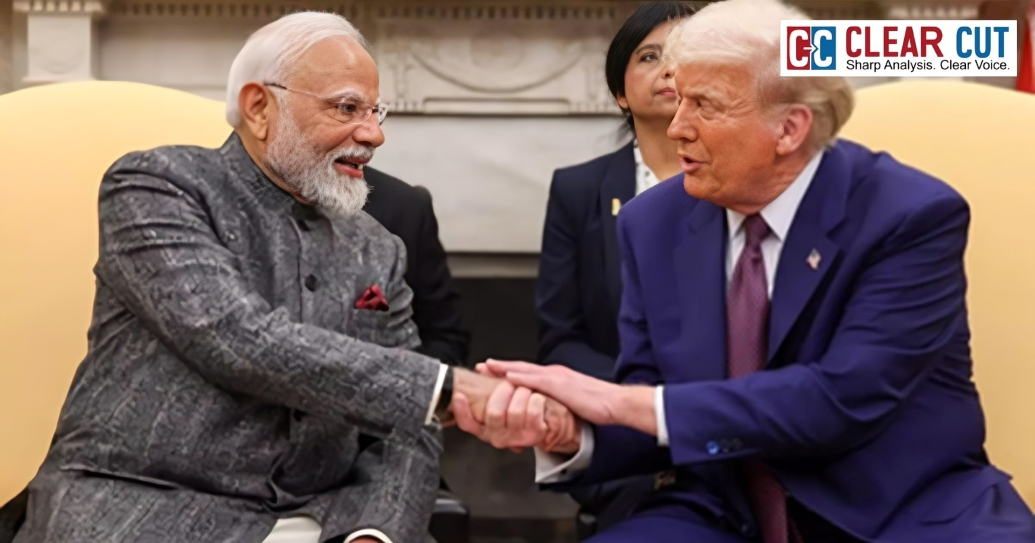
A recent diplomatic development has brought India into focus within global peace discussions. The United States, under President Donald Trump, has invited India to be part of a proposed international mechanism informally referred to as a “Board of Peace” for Gaza. The proposal has drawn attention within diplomatic and humanitarian policy circles because it addresses post-conflict reconstruction, governance, and civilian welfare in a region marked by prolonged instability.
Officials familiar with deliberations within the US administration have indicated that the idea is still at a conceptual stage. The invitation to India reflects recognition of New Delhi’s growing diplomatic stature and its capacity to engage with complex geopolitical challenges beyond its immediate region.
The Institutional Logic Behind the Proposed Board
According to officials associated with the US National Security Council and the US Department of State, the proposed board is envisaged as a civilian, advisory body, not a military or enforcement mechanism. Its primary focus would be to support Gaza’s post-conflict recovery through coordinated efforts in humanitarian assistance, infrastructure rebuilding, administrative oversight, and security-sector reform.
The proposal emerges against repeated assessments by United Nations humanitarian agencies, which have highlighted severe damage to civilian infrastructure, breakdowns in healthcare and water systems, and the absence of a sustainable political framework in Gaza. The board is intended to bring together a small group of influential countries capable of mobilising resources and administrative expertise.
India’s inclusion suggests that Washington views it as a country with both governance experience and political credibility in the Global South.
India’s Position in West Asian Affairs
India’s invitation must be understood in the context of its evolving West Asia policy. Over the past decade, India has strengthened strategic and technological cooperation with Israel, expanded defence and economic ties with the United States, and continued diplomatic engagement with Arab states.
Officials in India’s Ministry of External Affairs (MEA) have consistently articulated India’s support for the Palestinian cause, including its endorsement of a two-state solution. At the same time, India has avoided rigid alignment, opting instead for strategic autonomy and dialogue across political divides.
This balanced approach has enhanced India’s credibility as a pragmatic actor capable of engaging multiple stakeholders without being perceived as ideologically driven.
Likely Areas of Indian Engagement
If India chooses to participate, its role is expected to remain advisory. Officials involved in India’s development cooperation programmes note that India could contribute expertise in institution-building, public service delivery, and capacity development, areas where it has supported post-conflict and developing regions in the past.
India has previously extended assistance in the form of healthcare infrastructure, educational facilities, housing projects, and humanitarian aid in conflict-affected contexts. In Gaza, such engagement could focus on restoring essential services, provided the framework respects international law and local participation. The policymakers stress that participation would require careful calibration to avoid association with any unilateral political agenda.
Foreign Policy Implications for New Delhi
Participation in a Gaza-focused board would represent a shift from India’s traditionally cautious approach to West Asian conflicts. Indian diplomacy has generally preferred addressing such issues through United Nations platforms and bilateral diplomacy.
Strategically, the proposal offers India an opportunity to reinforce its image as a contributor to global peace and governance. At the same time, senior foreign policy analysts caution that Gaza remains a deeply polarising issue. Any perception that India is legitimising a contested peace framework could complicate relations with parts of the Arab world and with domestic constituencies sympathetic to the Palestinian struggle.
Indian officials are therefore expected to examine whether the board’s mandate aligns with international humanitarian law and India’s long-standing policy positions.
Humanitarian Considerations at the Centre
The humanitarian dimension remains the most critical aspect of the proposal. Gaza has faced years of blockade and repeated military confrontations. Assessments by UN relief agencies and international humanitarian organisations consistently show that civilians, particularly women, children, and the elderly, suffer the most.
India has often framed its external engagements around human development, dignity, and capacity-building. If the proposed board genuinely prioritises reconstruction, access to basic services, and accountable governance, India’s participation could help amplify these concerns within policy discussions.
However, human rights advocates caution that durable peace cannot be imposed externally. Any mechanism that sidelines Palestinian representation risks undermining its own legitimacy, a principal India has historically emphasised in multilateral forums.
India’s Deliberate Diplomatic Posture
So far, India has not issued any formal statement accepting or rejecting the invitation. Officials within the MEA have maintained a cautious posture, reflecting the sensitivity of the issue. This restraint aligns with India’s diplomatic practice of evaluating long-term consequences before committing to complex international initiatives.
Policy discussions in New Delhi are expected to focus on the board’s legal standing, its relationship with existing UN mechanisms, and its potential impact on regional stability. These factors will likely shape India’s final position.
Key Points to Note
- The US administration has proposed a civilian “Board of Peace” to guide Gaza’s post-conflict recovery.
- India has been invited due to its growing diplomatic credibility and balanced West Asia engagement.
- The board would focus on humanitarian aid, reconstruction, and governance support.
- Participation could enhance India’s global role but carries diplomatic and political sensitivities.
- The humanitarian outcome for Gaza’s civilians remains the central measure of success.
A Strategic Moment for India’s Global Role
The invitation to join the proposed Gaza “Board of Peace” places India at an important juncture. Accepting would signal a willingness to engage more directly in global conflict-resolution efforts. Remaining cautious would reflect concerns about neutrality, legitimacy, and long-term implications.
Either way, the development underscores a broader shift in global perceptions. India is increasingly viewed not merely as a regional power but as a country whose voice matters in shaping international peace and security frameworks. How it navigates this proposal will influence both its West Asia policy and its evolving role on the global stage.
Clear Cut Research Desk
New Delhi, UPDATED: Jan 21, 2026 02:10 IST
Written By: Samiksha Shambharkar