
The UN warns it could take 286 years to achieve legal equality for women worldwide, as International Women’s Day 2026 highlights the global justice crisis and the urgent need for access to justice.
As International Women’s Day approaches, the United Nations sounds its loudest alarm yet on the global legal gap threatening half the world’s population.
Right now, in 2026, women hold only 64 per cent of the legal rights that men do worldwide. Not in one country. Globally. Not one nation on earth has fully closed the legal gap between men and women. And if progress continues at its current sluggish pace, experts warn it will take 286 years to fix that.
“Without justice systems that work for women, rights become a promise that never arrives,” UN Women stated ahead of International Women’s Day 2026, whose theme this year is “Rights. Justice. Action. For ALL Women and Girls.”That theme is not a slogan. It is an indictment.
The Report That Cannot Be Ignored
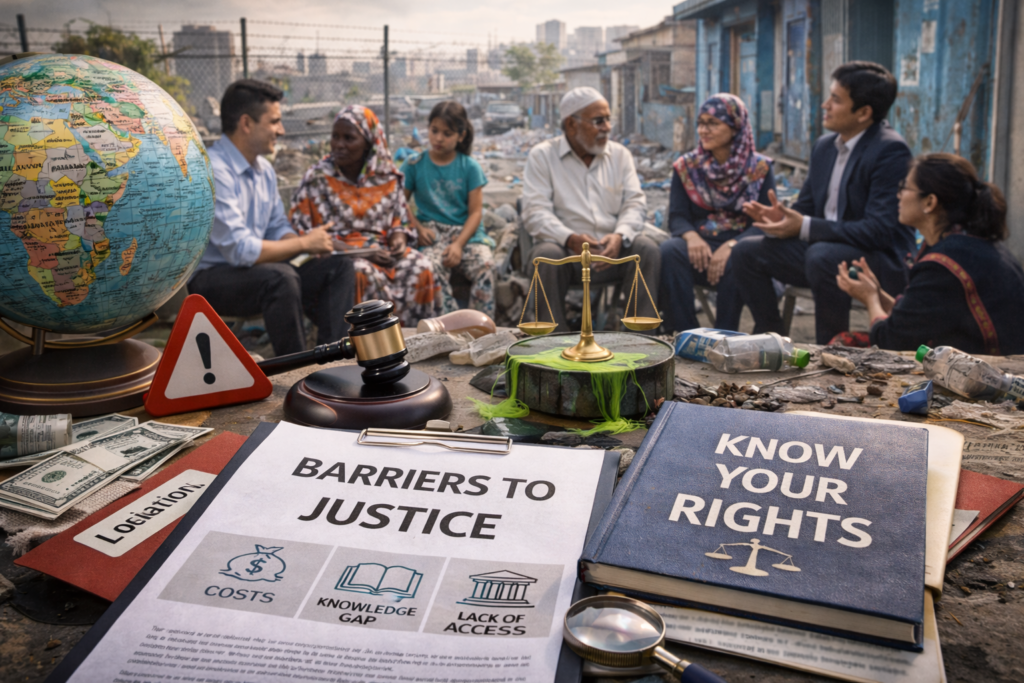
On March 4, UN Women launched the Secretary-General’s report, “Ensuring and Strengthening Access to Justice for ALL Women and Girls,” at a press briefing at UN Headquarters in New York. The report warns that the systems meant to protect women and girls are failing, leaving millions exposed to discrimination, violence, and impunity as backlash against gender equality intensifies and violations of fundamental rights rise worldwide.
The findings arrive just days before CSW70, held from 9 to 19 March at United Nations Headquarters in New York, which serves as the largest annual forum dedicated to advancing gender equality and women’s rights.
In fundamental areas of life, including work, money, safety, family, property, mobility, business, and retirement, the law systematically disadvantages women.These are not abstract categories. They govern whether a woman can own land, inherit property, open a bank account, or leave an abusive marriage without losing her children.
Sima Bahous: This Is a Defining Test
UN Women Executive Director Sima Bahous has been unambiguous in her assessment. Speaking at the CSW multi-stakeholder hearing in January, she declared that “upholding international law and our rules-based UN institutions is fundamental to multilateralism’s foundation of justice and accountability, especially for women and girls around the world.”
She added that the scale of what access to justice can accomplish is proven. Since 1970, more than 600 million women gained access to economic opportunities as a result of family law reform. Legal change works. The problem is that the world has stopped pushing hard enough for it.
Addressing the UN Women Executive Board in February, Bahous stated plainly: “Justice is the foundation of rights. Yet women and girls do not enjoy equal protection under the law in any country.”
Her message to governments was direct: “CSW70 is a defining test: whether the world chooses to act together and deliver equality before the law for all women and girls, or allow injustice to persist with impunity.”
What Equal Justice Actually Means
The UN is not asking for something complicated. Equal justice means laws do not just sit on paper. They get enforced. It means legally protected access to education for girls and an end to child marriage. Women’s freedom to choose to work, participate, and lead in society, including in political and justice systems. Strengthened protection and prevention to end gender-based violence in all its forms. Family, labour, and healthcare laws that do not discriminate against women. Justice systems that are free of bias, centred on survivors, and backed by zero tolerance for abuse and impunity.
Bahous outlined what structural reform must look like: ensure the justice system has women leading at every step, from lawyers to judges to police officers, and guarantee accessible legal aid and justice mechanisms.
A Crisis Made Worse by Funding Cuts
The legal gap is one crisis. The funding crisis is making it worse. One in three women’s rights and women-led organizations surveyed warn they may only survive six months or less with current funding levels.
In Ukraine, where the conflict has now entered its fifth year, the numbers are devastating. More than 5,000 women and girls have been killed and 14,000 injured, with 2025 being the deadliest year yet. Women-led organizations are projected to lose at least USD 52.9 million by the end of the year, and those organizations warn they will be forced to stop life-saving services to at least 63,000 women and girls in 2026.
Sima Bahous called for immediate international support, saying “this is the only way women and girls can have a full and meaningful role in shaping gender-responsive recovery and building a just and lasting peace.”
She also warned that more than 676 million women and girls now live within 50 kilometres of deadly conflict, the highest number recorded since the 1990s.
CSW70: The World Gathers to Act
Members of Parliament from around the world will share perspectives and practices on legislative, oversight, and budgetary actions to achieve parity representation in decision-making, eliminate discriminatory laws, address gaps between legal frameworks and their implementation, combat impunity for violence against women, and strengthen accountability and enforcement across justice systems.
Key events surrounding CSW70 include the global launch of the Secretary-General’s report on access to justice for women and girls, a youth forum amplifying young feminist leadership, and the UN Observance of International Women’s Day, which highlights justice as the bridge between rights on paper and rights in practice.
The hashtag #ForAllWomenAndGirls and #IWD2026 are already driving the global conversation online, with civil society groups, governments, and activists using them to amplify calls for legal reform.
The Clock Is Running
286 years is not a projection to accept. It is a challenge to reject. The Universal Declaration of Human Rights is unambiguous: “All are equal before the law and are entitled without any discrimination to equal protection of the law.”
At the current pace, it would take a staggering 286 years to close the legal protection gap. That is ten generations of women living with laws that treat them as less than equal.
As UN Women put it: that is not a timeline. It is surrender.
Clear Cut Gender, Research Desk
New Delhi, UPDATED: March 2, 2026 09:00 IST
Written By: Ayushman Meena