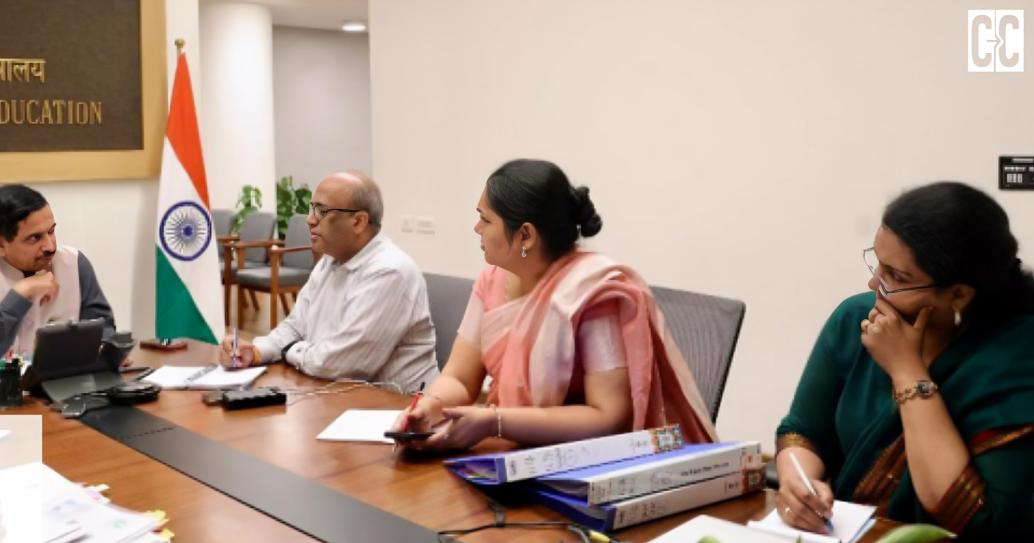


MAHE hosted MAGSCON 2026 in Manipal, bringing together global leaders to accelerate progress on all 17 UN Sustainable Development Goals through collaboration, innovation, and education. The conference highlights the growing role of universities in driving sustainable development, AI integration, and global partnerships.
The Manipal Academy of Higher Education (MAHE) opened its doors to the world this week. The Manipal Global SDG Convergence 2026, or MAGSCON 2026, kicked off on March 24 at the Dr. TMA Pai Auditorium in Manipal, Karnataka. The three-day international conference runs until March 26 and brings together academics, policymakers, NGO leaders, industry executives, and researchers from across the globe.
The conference directly targets all 17 United Nations Sustainable Development Goals. It is one of the most ambitious academic-led SDG platforms to emerge from India in 2026.
Why This Conference Matters
MAGSCON 2026 aims to showcase and strengthen collective commitment to advancing the UN SDGs by bringing together a diverse spectrum of stakeholders including academicians, policymakers, NGO leaders, community representatives, students, researchers, media professionals, industry partners, and government officials.
Panel discussions cover critical areas including reimagining higher education for inclusive, future-ready learning; climate action, biodiversity conservation and food security; health, well-being and community resilience; youth leadership, ethics and social innovation; CSR, sustainable technology, AI and innovation; and global partnerships and knowledge networks for accelerating the SDGs.
The timing is significant. The 2030 deadline for the UN’s SDG framework is now just four years away. Progress on several goals has stalled or reversed. Platforms like MAGSCON 2026 are increasingly important as governments and institutions race to recover lost ground.
Leaders Speak at Inauguration
The inaugural ceremony drew a high-profile gathering of vice-chancellors, sustainability leaders, and international academics.
Inaugurating the event, Dr. H.S. Ballal, Pro Chancellor of MAHE, set the tone for the three days. He said: “MAGSCON 2026 reflects MAHE’s enduring commitment to fostering responsible leadership and sustainable development. As institutions of higher learning, we must go beyond knowledge dissemination to actively contribute to solutions that address global challenges and improve the quality of life.”
Presiding over the ceremony, Lt. Gen. (Dr.) M.D. Venkatesh, Vice Chancellor of MAHE, emphasised: “At MAHE, we believe universities play a pivotal role in shaping a sustainable future. MAGSCON 2026 brings together diverse stakeholders to collaborate, innovate and drive impactful change aligned with the Sustainable Development Goals.”
Dr. Line Joranger of the University of Southeastern Norway brought a global academic perspective. She stated: “Global challenges demand global collaboration. Platforms like MAGSCON 2026 enable meaningful exchange of ideas and partnerships across borders, empowering institutions to work collectively towards achieving the Sustainable Development Goals.”

Quality as the Driver of Impact
Dr. Christopher Sudhakar, Director of Quality at MAHE and the organising committee chair, said: “The Sustainable Development Goals offer a universal framework to address the world’s most pressing challenges, and quality is the common thread that determines their impact. Through MAGSCON-26, we are creating a rigorous and dynamic platform that aligns academic excellence with measurable, real-world action. This is a defining moment for higher education to demonstrate its transformative power through quality, accountability, and impact.”
A University Already Walking the Talk
MAHE’s credibility at this forum is backed by recent institutional action. MAHE is home to over 35,000 students from 60 plus countries, supported by 3,000 plus faculty and 10,000 plus staff across disciplines including Health Sciences, Engineering, Management, Communication, Humanities, Liberal Arts, and Social Sciences.
Earlier this year, MAHE made a major move on the technology front. MAHE partnered with OpenAI to integrate advanced artificial intelligence tools across teaching, research, and academic administration, with the collaboration aimed at enhancing learning outcomes, accelerating research productivity, and equipping students and faculty with critical AI skills for a rapidly evolving global workforce.
Lt. Gen. Venkatesh commented on that partnership: “MAHE has always been guided by academic excellence and innovation. Our partnership with OpenAI represents a strategic step toward embedding AI as a transformative enabler across teaching, research, and administration.”
That AI-for-education push connects directly to MAGSCON 2026’s thematic sessions on sustainable technology and AI for people and the planet.

Distinguished Dignitaries and Global Representation
The event brought together distinguished dignitaries including Prof. C. Muthamizhchelvan, Vice Chancellor of SRM Institute of Science and Technology, Tamil Nadu; Dr. Atul Khosla, Vice Chancellor of Shoolini University; Prof. Puttaswamy, Director (Technical) at the Department of Ecology, Environment and Forests, Government of Karnataka; and Mr. Vik Singh, Consul (Commercial) and Trade and Investment Commissioner for Austrade in South Asia.
Dr. Ananya Mukherjee, Vice Chancellor of Shiv Nadar University, Delhi NCR, also graced the inaugural session alongside Dr. Satish Kumar, President and Executive Director of the Alliance for an Energy Efficient Economy (AEEE).
What Comes Next
The convergence will culminate in a valedictory session that goes beyond reflection, capturing not only key insights but also shared commitments and a forward-looking agenda shaped by three days of dialogue.
What emerges from this gathering is expected to extend far beyond the conference itself, fostering enduring collaborations, dynamic knowledge ecosystems, and partnerships that drive sustainable development and future-ready education.
MAGSCON 2026 is not just a conference, it is a turning point. It signals that India’s universities are stepping forward as catalysts of global sustainability, ready to shape solutions at scale. With only four years remaining on the SDG timeline, this moment calls for bold leadership, and MAGSCON positions academia at the forefront of that global response.
Clear Cut Health Desk
New Delhi, UPDATED: March 27, 2026 05:00 IST
Written By: Ayushman Meena