

- India’s 3,686 protected monuments face neglect despite ASI’s growing budget and digital conservation efforts.
- Climate change, encroachment, and limited staffing are accelerating damage to lesser-known heritage sites.
- The article calls for stronger funding models, community involvement, and expanded heritage tourism to protect India’s cultural legacy.
The Temple That Nobody Photographed
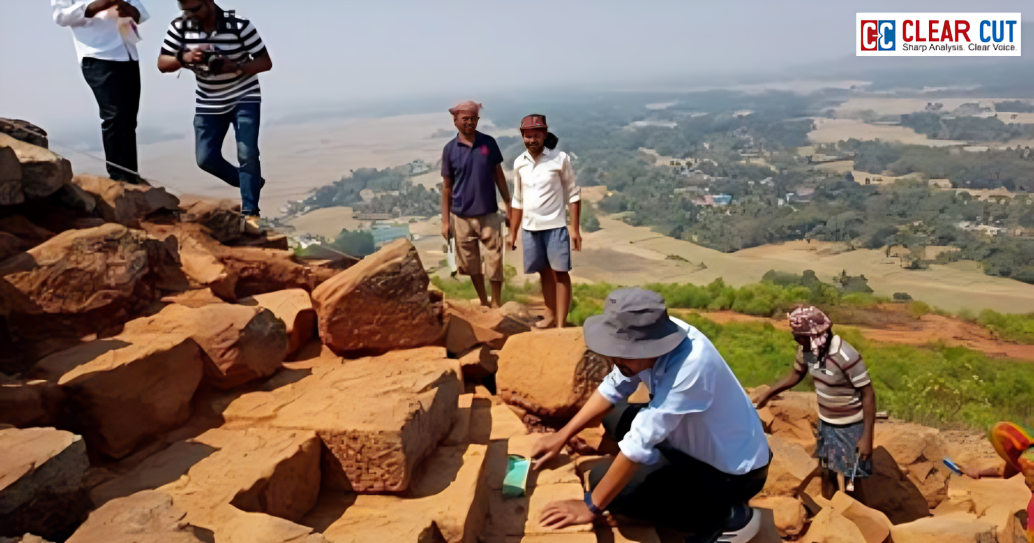
There is a 9th century temple in a village in Odisha that receives no tourist buses, no CISF security detail, and no World Heritage plaque. Its sanctum holds a damaged but intact icon. Its walls carry inscriptions that have not been fully transcribed. Twice in the past decade, local residents have found damage that they suspect is from unauthorised excavation nearby. They filed a complaint. The response, when it came, was months later. The temple is listed as a protected monument under the Archaeological Survey of India. What it is not is prioritised. There are 3,686 like it.
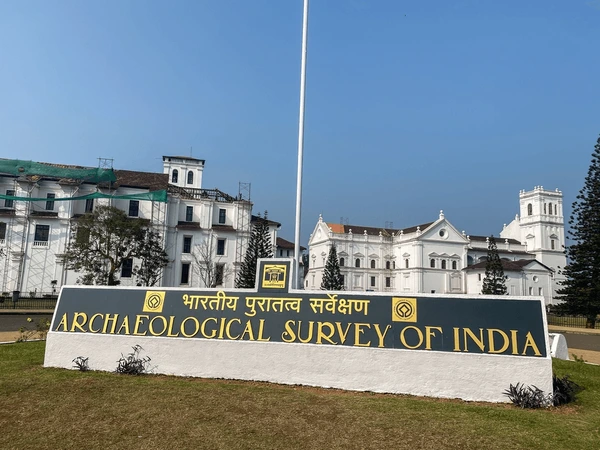
India’s heritage conservation challenge is a problem of extraordinary scale at inadequate resource levels. The Archaeological Survey of India (ASI), established in 1861 under the Ministry of Culture, is responsible for 3,686 centrally protected monuments and archaeological sites, including India now has 44 UNESCO World Heritage Sites as of 2025 — 36 Cultural, 7 Natural, 1 Mixed. Every year, more than 800 monuments are identified for structural repairs of a special nature.
What the Money Shows
ASI’s conservation and maintenance budget rose by 70% over three years: from ₹260.90 crore in 2020-21 to ₹443.53 crore in 2023-24. India has documented 11,406 built heritage sites and 12.48 lakh antiquities through the National Mission on Monuments and Antiquities. [PIB / ASI / Ministry of Culture, 2026]
The National Mission on Monuments and Antiquities (NMMA), established in 2007 under ASI, has documented 11,406 Built Heritage and Sites and 12.48 lakh antiquities. The Indian Heritage in Digital Space (IHDS) initiative is extending this work through immersive digital tools and online catalogues. The ASI’s ‘Must-See Monuments’ portal showcases nearly 100 prominent sites with panoramic access. India has also returned 655 antiquities from foreign countries since 1976, reclaiming stolen cultural property through diplomatic and legal channels.
Internationally, India’s heritage diplomacy is gaining momentum. Three of India’s literary treasures such as Ramcharitmanas, Panchatantra, and Sahrdayaloka-Locana were inscribed in the MOWCAP Regional Register in 2024. The Humayun’s Tomb World Heritage Site Museum, inaugurated in July 2024 across 100,000 square feet, represents the standard of institutional commitment that India’s heritage sites can aspire to when investment is matched with vision.
The Threats That Are Accelerating
Climate change is not abstract for India’s monuments. Rising sea levels threaten coastal heritage sites including the Shore Temple at Mahabalipuram and the Goa churches. Extreme heat episodes are accelerating the deterioration of sandstone and limestone surfaces at Rajasthan’s medieval forts. Torrential monsoon events are destabilising hill-fort structures and causing waterlogging in excavation sites. The IIT Chennai’s structural assessment of the Kedarnath Temple after the 2013 disaster demonstrated excellent scientific intervention using Multi-Channel Analysis of Spectral Waves to evaluate the foundation. That level of technical attention cannot remain confined to famous sites.

Encroachment remains the most persistent threat. Under the Ancient Monuments and Archaeological Sites and Remains Act, Superintending Archaeologists have authority to issue eviction notices. This authority is exercised unevenly, constrained by political sensitivity and bureaucratic capacity. The 3,686 monuments are simply too many for 37 circle offices to protect adequately at current staffing levels.
The Policy Demand: Scale Up, Digitise Down, Empower Communities
Three interventions are urgent. First, the heritage budget must be tied to a proportional share of tourism revenue: sites generating significant annual visitor revenue should channel a defined percentage back into conservation at the site and across the circle. Second, the Adopt-a-Heritage scheme, where private and corporate partners fund conservation and amenity development at ASI sites, must be expanded beyond marquee monuments to include Tier-3 and rural protected sites. Third, local community custodianship models such as training village communities adjacent to ASI-protected sites in basic conservation monitoring, cleaning, and unauthorised-entry reporting must be formalised with documented protocols and small stipends.
Heritage as Living Economy
The Odisha temple that nobody photographs is not merely a conservation problem. It is an economic opportunity. Heritage tourism, when managed sustainably, generates income for adjacent communities, incentivises conservation, and creates the cultural capital that makes India legible to the world. Every ₹1 invested in heritage conservation generates documented multipliers in local tourism, craft, hospitality, and education economies. India has 3,686 reasons to invest more. It has 1.4 billion reasons to do so now.
Clear Cut Climate Desk
New Delhi, UPDATED: May 22, 2026 09:00 IST
Written By: Tanmay J Urs