
- India is facing a growing antimicrobial resistance (AMR) crisis where antibiotics are becoming ineffective due to overuse, self-medication, weak healthcare systems, and poor regulation.
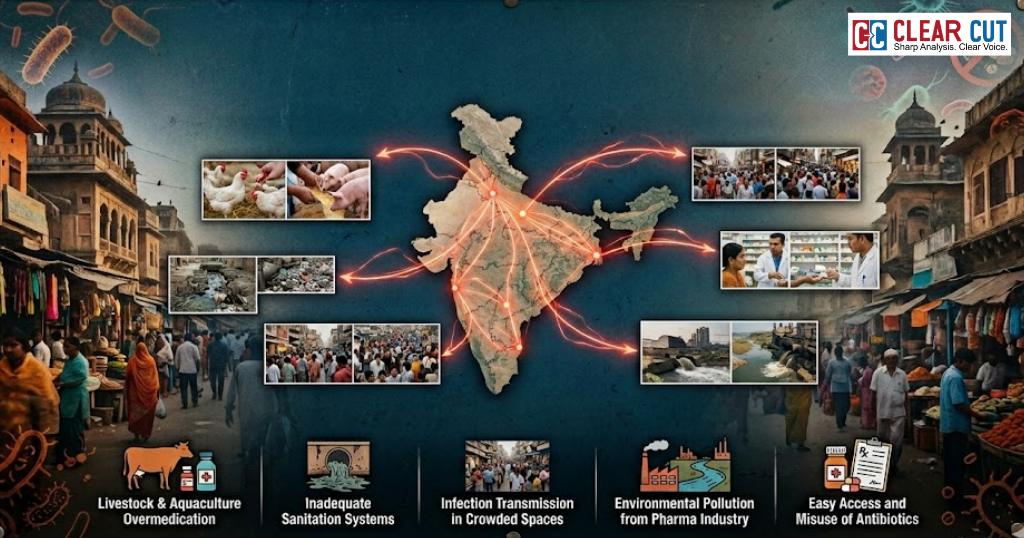
- Factors like pharmaceutical pollution, urban sanitation issues, and excessive antibiotic use in livestock are accelerating the spread of drug-resistant infections across the country.
- Experts warn that without stronger policies, better diagnostics, stricter antibiotic control, and a “One Health” approach, AMR could become one of India’s biggest public health emergencies.
Imagine visiting a medical facility for a common urinary tract infection, an infection treatable for years, only to be informed that the antibiotic which are usually prescribed no longer work effectively. No dramatisation, no alarmist escalation, just a quiet clinical statement that the drug cannot help. This is not the stuff of futuristic dystopias, but reality, and is very much happening in hospitals across India – and all indications are that it will get worse before it gets better.
The resistance of bacteria, viruses and fungi to the medicines which are meant to kill them is called antimicrobial resistance (AMR). The World Health Organisation says it is one of the 10 biggest threats to global public health facing humanity today. In 2019, there were 1.27 million deaths directly related to bacterial AMR, and almost five million deaths where it contributed (The Lancet, 2023).
Nearly 297,000 among those deaths occurred only in India. By 2050, according to the WHO estimates, there could be about 10 million deaths due to drug-resistant infections per year all over the world, with India’s share being around two million.
India is particularly vulnerable to this threat because of its multiple weaknesses that, while individually concerning enough, become catastrophic in their collective effect.
The Antibiotic Counterculture
In any local pharmacy in India, one will find that it is quite common practice to receive antibiotics over the counter. Even when these laws make these drugs prescription-only, implementation remains highly inadequate. In many cases, pharmacists sell these drugs over the counter due to pressure from business interests and demands from patients who come with symptoms like fever, cough, and loose motions, despite the fact that all of these problems could be viral and hence would cure themselves even without the need for any antibiotics. As per a study published in the Antibiotics journal in 2021, pharmacists in Haryana and Telangana dispensed both Access and Watch-category antibiotics in as few as one or two days, far below the effective treatment threshold (Kotwani et al., 2021).
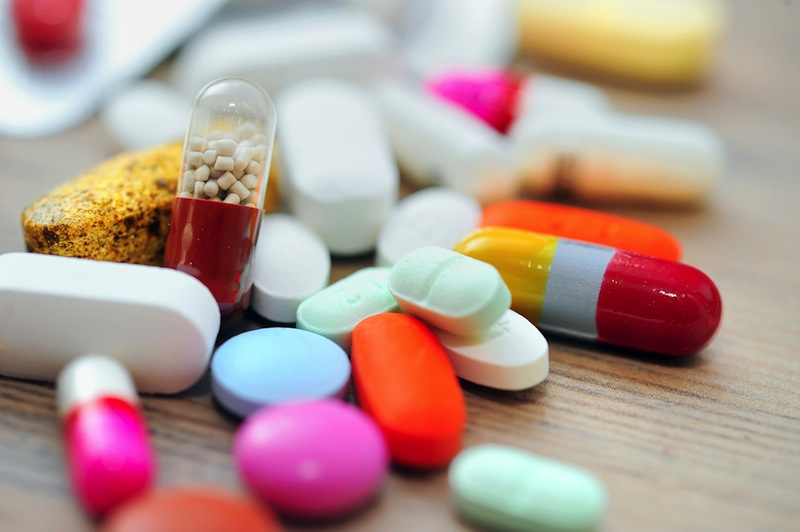
The culture of using antibiotics casually is worsened by self-medication. Over half of the antibiotics in a national survey done between 2021 and 2022 by ICMR were prescribed as precautionary measures against possible infections, not to treat actual infections. If a patient takes the antibiotics to completion, even if they are feeling better or stop the course midway, the body’s bacteria are exposed to sufficient levels of the drug for resistance to develop without eliminating the bacterium itself.
An Unequal Healthcare System
The issue of healthcare inequality in India holds significance for the AMR problem and goes unacknowledged. In places where there is little public health infrastructure, informal caregivers, such as those who are not licensed and rural pharmacists, do not know how to differentiate between viral and bacterial infections, and act as primary sources of care. The lack of diagnostic tests forces them to resort to antibiotics. Moreover, due to the lack of microbiological diagnostic capabilities, doctors themselves are left guessing about the bacteria involved in a patient’s infection.
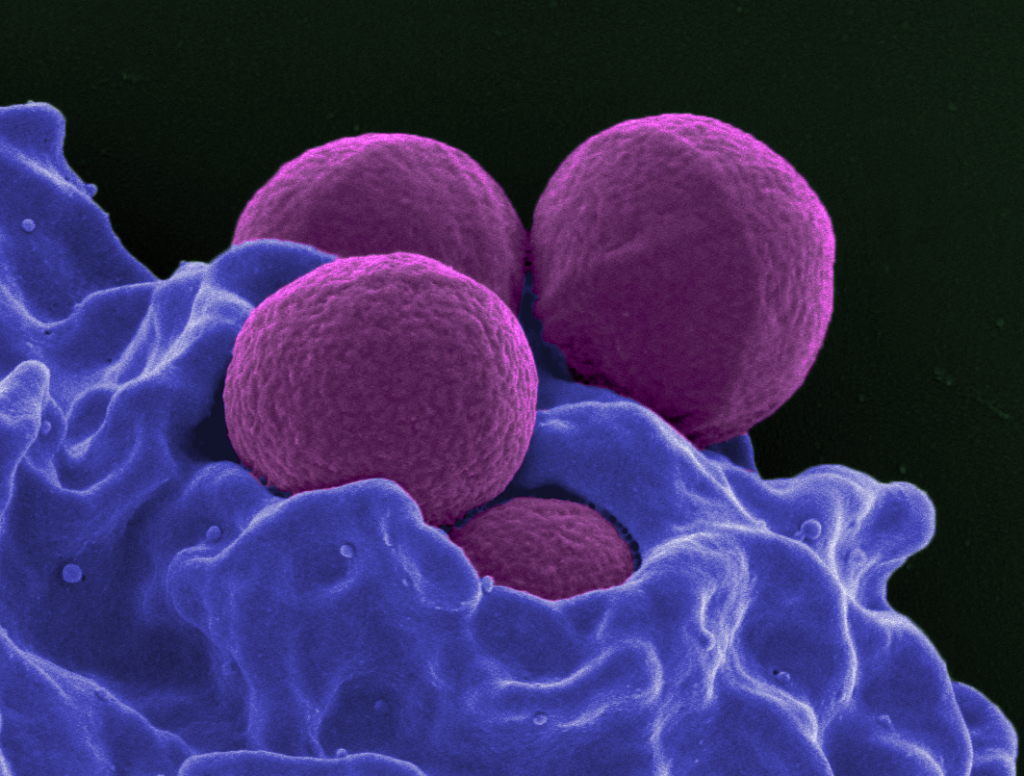
In overstretched government hospitals, health care professionals dealing with large numbers of patients due to a lack of time cannot afford to wait for culture sensitivity testing, which takes several days. The easiest approach would be that of using a broad-spectrum antibiotic. From a recent 2023 AMR Surveillance Report issued by the ICMR, it has emerged that E. coli, the pathogen responsible for a myriad of illnesses ranging from UTIs to sepsis, had exhibited resistance levels of over 80% to commonly prescribed drugs such as cefotaxime and ciprofloxacin. Carbapenems, which are among the last resort of antibiotics, are increasingly exhibiting resistance patterns in various organisms. As per the latest findings of the 2025 taskforce report of the National Academy of Medical Sciences, the proportion of Methicillin-resistant Staphylococcus aureus (MRSA) increased from 33% to 44.5%.
The Urban Density Problem
The fast-paced and unplanned urbanization seen in India has provided the perfect scenario for resistant bacteria to thrive. Densely packed slums lacking proper sanitary facilities, open drains, polluted ground water, and improper disposal of wastes provide perfect channels for the movement of resistant microbes from one person to another. Resistant bacteria will not be contained within hospital walls alone; they will flow in the sewers, in the water and even within the body of the person who consumes the contaminated water.
Industry’s Hidden Footprint
One aspect that can be considered as the most underreported accelerant of AMR in India is the contamination of wastewater by antibiotics. India is among the countries in the world producing the highest amounts of antibiotics. However, the environmental consequences of their production are severe. At the industrial zone of Patancheru-Bollaram, which houses a considerable number of bulk drug manufacturers, investigations have identified alarming rates of contamination of water resources by antibiotics. In a study by German scientists conducted in 2016, environmental samples obtained from 28 sampling locations inside and around pharmaceutical manufacturing plants were found to contain antimicrobial contaminants. In sewers of the Patancheru-Pashamylaram zone, some antibiotics were discovered at concentrations thousands of times above therapeutic limits. As was identified by a survey carried out in 2009, wells located in six villages surrounding the industrial zone were found to be contaminated with pharmaceutical substances.
In the instances where antibiotics are found to be present in the river, soil, and groundwater in these amounts, there is a possibility of bacteria developing resistance genes. The amount of antibiotics is quite small in these environments, providing the ideal conditions for bacteria to adapt to antibiotics.
Agriculture and the Last Frontier
The issue doesn’t stop at human medicine; in India, the livestock and poultry industry uses antibiotics both to treat animal diseases and, in many cases, to promote growth. The total estimate of antimicrobial use in animals in India for 2020 was more than 2,160 tonnes, a figure that is projected to stay high till 2030. When resistant pathogens from animal guts enter the human food chain or from agriculture into the human environment, people who have never consumed any antibiotics become vulnerable. The “One Health” approach is founded on the realisation that human health, animal health, and environmental health cannot be treated separately. Tackling AMR separately or treating it as only a human medicine issue is doomed to failure.
A Policy Gap That Cannot Be Ignored
Indeed, India does have an action plan for AMR. However, as many critics and public health scientists continue to highlight, there has not been much success at the ground level. According to a report from the year 2022, three states out of twenty-eight, which are Kerala, Madhya Pradesh, and New Delhi, have a State Action Plan on AMR, but only at the implementation stage. Even the national surveillance system, while improving over time, still has some serious loopholes. The surveillance system developed by the ICMR is still unable to test pathogens resistant to drugs from industrial effluents.
A Crisis of Governance, Not Just Medicine
AMR may appear to be a health issue, but it is more of a political, infrastructural, and economic issue. AMR will flourish under poor regulation, inaccessible diagnostics, poor sanitation, and the imperative to prescribe rather than not prescribe based on available scientific knowledge. Each over-the-counter antibiotic sold without interference, each unmanaged stream of industrial waste, each hospital that can’t conduct the simplest of tests due to a lack of resources, adds just a little more to the debt of resistance, which our descendants will have to repay with their lives.
The way forward must necessarily involve a systemic response: stricter prescription controls, better diagnostic facilities at the community level, proper surveillance that also considers communities and ecosystems, strict punishment of pharmaceutical pollution, and above all, the embracing of the One Health philosophy. The most critical thing that is required now, however, is political will to address antimicrobial resistance (AMR) as an emergency that already exists today, not as some future concern to be dealt with in the coming seasons.
Size, the prevalence of infectious diseases, India’s massive pharma industry, and health disparities in the country position India as having the potential to become the epicentre of drug-resistant pathogens or be a beacon of global hope for fighting resistance. For now, the choice is available, but the time is running out.
Clear Cut Health, WASH Desk
New Delhi, UPDATED: May 26, 2026 03:30 IST
Written By: Jyoti Aggarwal