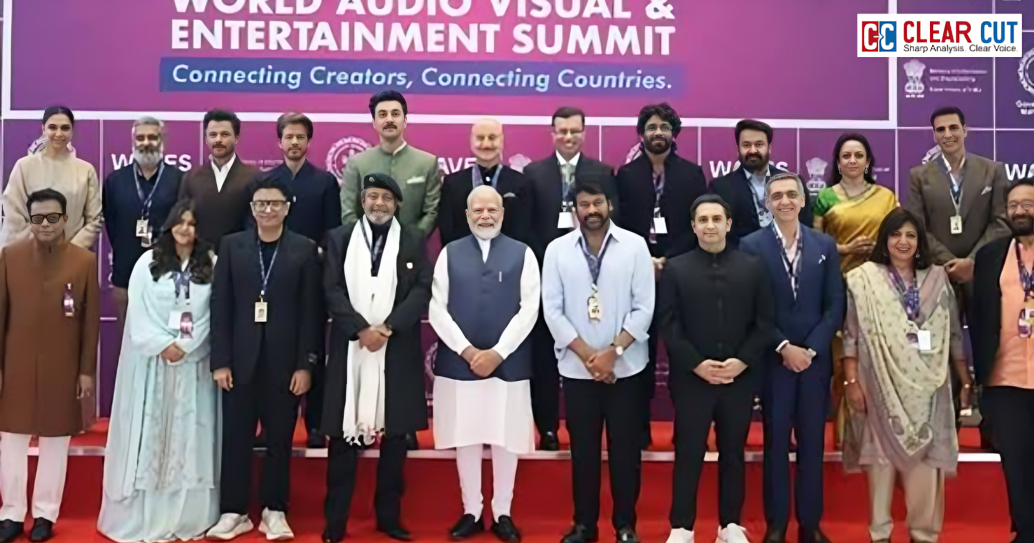
- WAVES 2025 in Mumbai generated over USD 1 billion in business deals, connecting Indian creators, studios, and global buyers while showcasing the potential of India’s creative economy.
- India’s rapidly growing media, entertainment, animation, VFX, and gaming sectors attracted international attention, highlighting the country’s strength in creative talent and content production.
- The article argues that sustained growth will require stronger intellectual property protection, co-production partnerships, skills development, and year-round industry support beyond a single summit.
The Summit That Was Also a Market
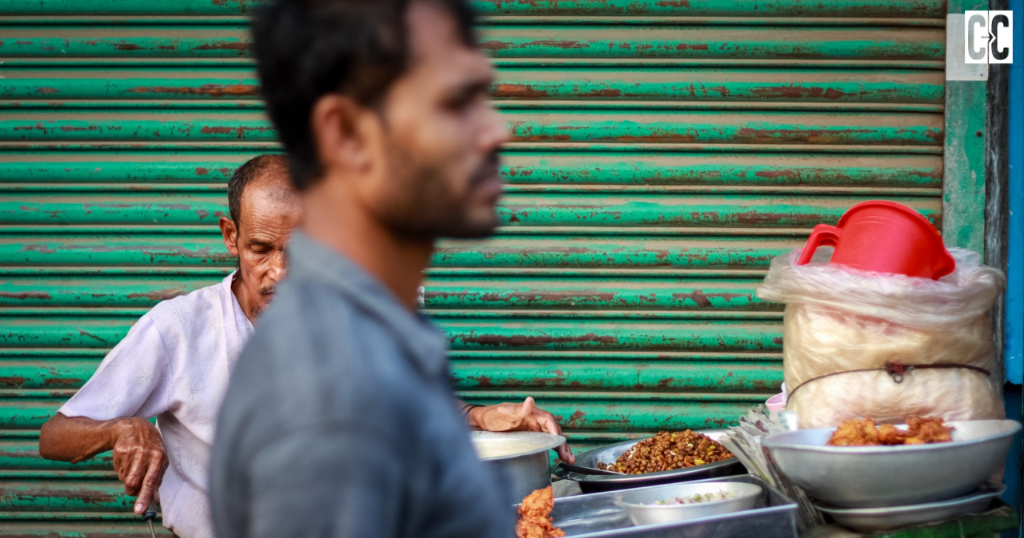
Arjun Mehta arrived at WAVES 2025 in Mumbai with a portfolio of three animated short films made with his eight-person studio in Hyderabad. He had never pitched to an international buyer before. On the second day of the summit, he met a content acquisition executive from a Southeast Asian OTT platform, showed her the work, and left with a letter of intent for a co-production deal worth USD 180,000. He is 27. His studio was founded 2 years before with personal savings and a MSME loan. He describes WAVES as the moment his studio became a business.
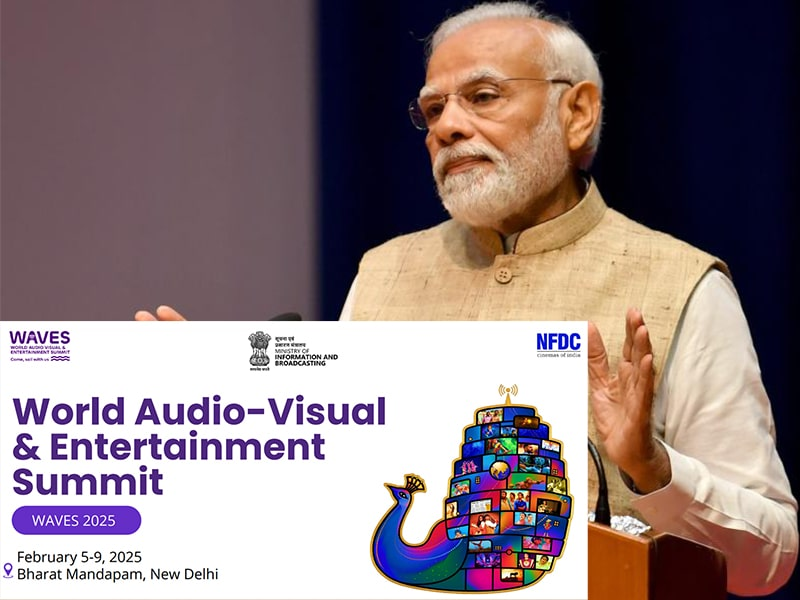
The World Audio Visual and Entertainment Summit 2025, held in May 2025 in Mumbai, generated over USD 1 billion in business transactions, content deals, licensing agreements, and investment commitments. This is a figure that PIB highlighted in the context of government reviews assessing India’s creative economy potential and the outcomes of major policy-backed events. The summit brought together over 5,000 delegates, 100 countries, content creators, technology companies, broadcasters, streaming platforms, and government policy architects for five days of deals, demonstrations, and discourse.
The Sector Behind the Summit
India’s media and entertainment sector: USD 29.4 billion in 2024, projected USD 36.1 billion by 2027 at 7% CAGR. India produces the world’s largest number of films. Animation and VFX market: USD 1.3–1.5 billion in 2023-24, projected USD 2.2 billion by 2026, growing at approximately 20% CAGR. Online gaming: USD 3.8 billion market in 2024, projected USD 9.2 billion by 2029, with approximately 591 million gamers. (FICCI-EY India Media & Entertainment Report 2025, ey.com/en_in; Lumikai-Google India Gaming Report 2024; IBEF, August 2024)
[FICCI KPMG India Media Report 2025 / WAVES 2025 data]
India’s creative economy is among the most significant and most systematically undervalued in the world. The country produces more films annually than any other nation. It has 600 million online gamers, one of the world’s largest gaming markets by user count, though not yet by revenue. Its animation and visual effects industry, producing work for global studios including Disney, Sony, and Netflix, is growing at approximately 20% annually and is projected to reach USD 5 billion by 2028. Its music industry, powered by the combination of Bollywood, regional cinema, and independent digital artists, reached USD 400 million in 2024.
WAVES 2025 was designed to make this sector legible to global investors and buyers in a single concentrated forum. The USD 1 billion in business generated during the event stands for the market’s response to that legibility. The Indian creative talent has a structured platform to present its work to international buyers, transactions follow. The question now is whether the one-week summit has created momentum that sustains itself for the remaining 51 weeks of the year.
The Policy Architecture India Must Build
The creative economy requires a different policy infrastructure from the manufacturing economy. It does not need SEZs or PLI schemes in the conventional sense. What it needs is: intellectual property protection that is fast, affordable, and enforceable. It is the single most cited barrier among independent creators in India; co-production treaties with major content markets (UK, Canada, South Korea, Japan, UAE, and France all have active treaty structures that India has not yet fully activated); skills infrastructure at regional creative schools that produces editors, sound designers, game developers, and animators at the volume global demand requires; and platforms.
WAVES 2025’s success also highlights what India has to offer that cannot be replicated. This includes the cultural depth, linguistic diversity, narrative traditions, and a creative workforce that is genuinely world-class in capability but still significantly underpaid compared to global peers. Correcting the wage gap through export market access, co-production deals, and brand building will allows Indian studios to command international pricing. This will be both an economic and a cultural equity goal.
From Summit to Sector
Arjun Mehta’s Hyderabad studio got its first international deal because WAVES 2025 put him in the same room as a buyer who would never have found him otherwise. That is what policy-backed platforms can do for sectors where the talent exists and the market exists, but the connection does not. WAVES 2026 must be better than WAVES 2025, not merely larger.
Better means: more structured deal-making infrastructure, so that creators arrive with preparation and legal support, not just a portfolio. Better means: follow-up tracking, so that the USD 1 billion in letters of intent becomes USD 1 billion in completed transactions with public accountability data. Better means: a permanent WAVES Secretariat that supports the buyer-creator connections year-round rather than once at a Mumbai convention centre. India’s creative economy is ready. Build the infrastructure that makes it permanent. Arjun’s studio is the beginning. Make it the norm.
Clear Cut Startups, Research Desk
New Delhi, UPDATED: June 02, 2026 05:00 IST
Written By: Tanmay J Urs