
- The UN Women 2026 report warns that global funding cuts have left over 1 million women and girls without essential services, forcing many women-led organizations to reduce or shut down operations.
- In India, the combined impact of USAID funding cuts and stricter FCRA regulations has weakened NGOs providing healthcare, legal aid, and protection for vulnerable women and girls.
- The report urges governments and donors to provide sustainable, long-term funding to women’s organizations so they can continue supporting communities during humanitarian and social crises.
A woman fleeing violence arrives at a shelter to find the door locked and the lights off. A pregnant woman walks for hours because the nearest clinic has closed. A mother is turned away from a food line. These are not hypothetical scenes from a distant war. According to Beyond the Breaking Point, the UN Women report published on 10 July 2026, they are the everyday consequences of a funding collapse that has swept through the organization’s women rely on most in a crisis.
The report, built on responses from 855 women-led and women’s rights organizations across 52 crisis- and conflict-affected countries, reaches a stark headline finding: at least one million women and girls have lost access to critical support since January 2025. Behind that number sits a grim arithmetic of demand rising exactly as capacity falls away. Some 84 percent of the organizations surveyed say demand for their services has grown since the start of 2025, while nearly nine in ten report they can no longer meet the need in front of them. Two in five expect to shut their doors, temporarily or for good, within the year.
A collapse driven from the top
The proximate cause is cash, and the cash can be easily sourced. In April of 2026, the OECD Development Aid Committee reported that its official development aid (ODA) dropped 23.1 percent in 2025 to an amount of about US$174.3 billion, the single steepest decline in Aid that level hadn’t seen in some time, setting the global amount back to the 2015 level and of that total contraction of nearly three fourths had emanated from Washington alone whose ODA itself slid more than 50 percent, and whose own humanitarian Aid shrunk approximately by one-third of the existing amount. Behind the collapse lies the January 2025 announcement of the Trump administration’s decision to freeze US foreign aid in February 2025, which eventually led to USAID’s discontinuation of the Aid in mid-2025 and the cancellation of thousands of aid projects around the world.
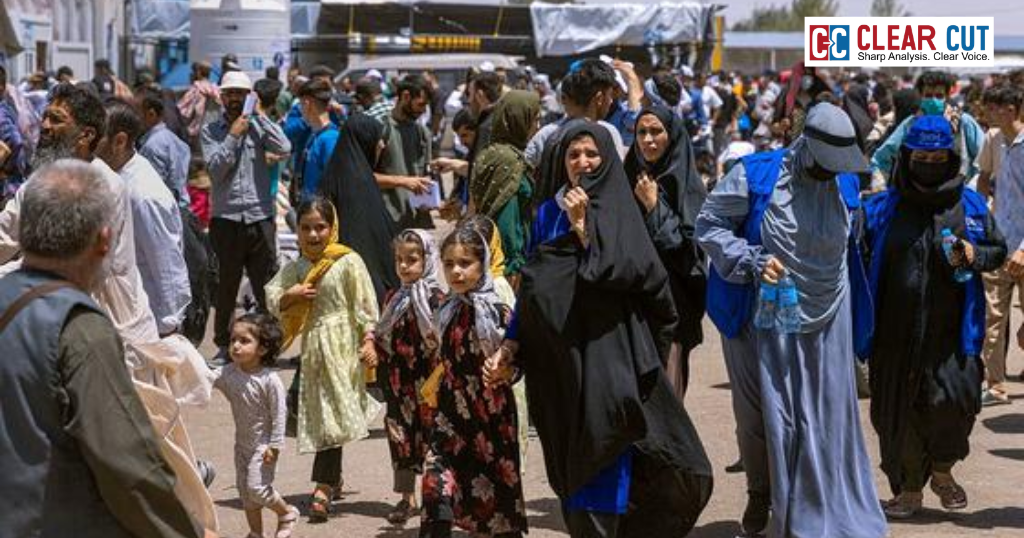
The women’s organizations caught in this collapse are, as UN Women’s Sofia Caltrop puts it, on the frontlines of the world’s most severe crises, operating in places like Afghanistan, the Democratic Republic of the Congo, and Haiti, where international actors often cannot reach and where they remain long after global attention drifts elsewhere. When their funding evaporates, so does the last line of defence for survivors of conflict-related sexual violence, displaced mothers and girls pushed out of school.
The survey data trace how these organizations are absorbing the shock, largely by cannibalizing themselves. Sixty-five per cent report staff working without pay to keep services running. Nearly half report rising burnout. Many of the women doing this work are themselves crisis-affected, paying with their own labour, income and wellbeing to hold together what donors have let fall.
The downstream effects are already visible. Half of the organizations have started turning women away or placing them on waiting lists. Ninety-two percent report deepening poverty among the women they serve; 82 percent see more girls dropping out of school. Conflict-related sexual violence doubled in 2025, even as the systems meant to protect survivors buckled: 86 percent of organizations report rising gender-based violence, and 62 percent say safe spaces have shrunk or vanished. The women left behind first, the report notes, are those with the fewest alternatives, those in remote, hard-to-reach communities, where nearly two-thirds of organizations have already cut services.
There is a political dimension too. The dismantling is happening against a broader global rollback of women’s rights. One in five organizations has suspended work on women’s leadership and gender equality; more than half already see women’s participation in community decision-making sliding backward.
India: not a headline, but a case study
India rarely appears in the rollcall of humanitarian emergencies that anchors the UN Women report, and its dependence on foreign Aid has long been modest: US grants, for instance, amounted to only a fraction of a percent of USAID’s global spending. That framing, though, obscures how sharply the same forces have cut through India’s women’s sector. India offers a distinct and instructive variant of the global story. Here, the collapse of foreign Aid came on top of a domestic squeeze already years in the making. Sector observers have taken to calling it a “double whammy.”
The first blow came from Washington. When USAID funding froze and then stopped, Indian implementing partners, the NGOs that turned donor dollars into services on the ground, were left stranded mid-programme. In 2023, USAID had directed the bulk of its India assistance to health, and among the casualties of the freeze were the Mitr Clinics providing healthcare to transgender communities, along with tuberculosis and HIV-prevention programmes that had reached populations the public system struggles to serve. Grassroots, NGO-delivered health and gender work, precisely the kind that fills the gaps between government schemes and marginalized women, bore the brunt.
The second blow is home-grown, and for women’s rights organizations, it may be the heavier of the two. India’s Foreign Contribution (Regulation) Act has, over the past decade, become an instrument to throttle civil society’s access to overseas funding. By official count, some 21,933 organizations had lost their FCRA licenses by March 2026, and only about 27.7 percent of registered organizations remain active, the rest canceled, expired, or non-renewed. In June 2026, the Ministry of Home Affairs went further, adopting amendment rules that grant authorities sweeping powers over the assets of NGOs whose licenses have been withdrawn. Among the organizations stripped of FCRA registration is Apne Aap Women Worldwide, an anti-trafficking group working with some of the country’s most vulnerable women and girls.
The chilling effect reaches well beyond the organizations directly targeted. Research drawing on discussions with roughly 74 feminist organizations across India found that the mere fear of a shutdown had paralysed advocacy and policy work, with Dalit and Muslim women’s organizations, which have the least access to domestic philanthropy to fall back on, hit hardest. The result mirrors the global survey almost exactly: financial instability, operational downsizing, programme closures and layoffs.
The same equation: demand up, support down
What makes India a genuine comparative case, rather than a footnote, is that it reproduces the report’s central dynamic, need climbing as the response contracts, on its own terms.
The need is not in doubt. India’s National Crime Records Bureau logged roughly 471,000 crimes against women in 2023, and household survey data suggest the true scale of violence is far larger than any police record captures: successive National Family Health Surveys put the share of ever-married women who have experienced spousal violence at close to a third. Cruelty by husbands and relatives remains the single largest recorded category, and crimes against children under the POCSO Act rose more than nine per cent in a single year.
The response, meanwhile, is thin and thinning. India’s Sakhi One Stop Centres, the government’s flagship integrated-support model for survivors, number around 752 and have assisted some 800,000 women between 2015 and 2023. But they are widely described as underfunded and unevenly distributed, with fewer than a dozen functioning centres in many states. Court backlogs stretch trials past five years on average. Into these gaps step exactly the women-led and NGO-run organizations, running shelters, helplines, legal Aid, and community outreach, that the twin funding squeeze is now hollowing out.
Two stories, one thread
The differences between the global crisis and India’s are real. In Afghanistan, Congo, or Haiti, the dismantling is driven overwhelmingly by the withdrawal of foreign humanitarian money from active war zones. In India, foreign-aid withdrawal is compounded by a regulatory architecture that has spent a decade tightening the flow of overseas funds to civil society, so that even organizations far from any conflict find their lifelines cut from two directions at once.
But the common thread is the same: the central warning of the report. Women’s organizations are not a cozy addition to the human security and development system; they are the front line: on-the-ground actors filling space where states and international bodies cannot operate, deeply embedded in the community and present in the long term. Whether the cut occurs in a budget line in a foreign capital or a license is suspended in the country in question, the cost of removing this funding falls, first and foremost, on women and girls with the fewest other options.
UN Women is asking for the sector’s request of years of neglect: sustainable, direct, flexible, multi-year funding to women’s organizations as essential partners, not accessories. Torp puts it starkly: if states fail to act now, women’s organizations that have saved women and girls’ lives during some of the worst crises will become “just another casualty of war.” In the Indian context, the war is not being fought with tanks and bombs, and the casualties are not registered on any humanitarian dashboard. The modus operandi, however, is the same, as is the result.
Sources
- UN Women, Beyond the Breaking Point: The continuing impact of funding cuts on women’s organizations in humanitarian settings (press release and report), 10 July 2026.
- UN Women, At a Breaking Point (earlier rapid survey), April to May 2025.
- OECD, “A historic decline in foreign aid: Preliminary 2025 ODA data,” April 2026; OECD press release, 9 April 2026.
- Columbia University Mailman School of Public Health / BMJ Public Health on the human toll of US aid cuts, 2026.
- The Wire; Feminism in India; Insights on India, on USAID cuts and India’s health and gender programmes, 2025.
- Human Rights Watch, Amnesty International, ICJ, ISHR, on FCRA amendments and licence cancellations, March to July 2026.
- The Leaflet, “Defunding dissent: How India’s regulatory crackdown is silencing feminist organizing,” 2025.
- National Crime Records Bureau (NCRB) 2023; National Family Health Survey (NFHS-5, 2019 to 21); Observer Research Foundation and SPRF analyses of One Stop Centres and crimes against women.
Note: Figures reported by surveyed organizations in the UN Women report are self-reported and, per UN Women, not independently verified unless otherwise specified.
Clear Cut Gender Desk
New Delhi, UPDATED: July 27, 2026 11:40 IST
Written By: Darshana Sharma
Designation: Senior Associate – Research & BD at Devinsights