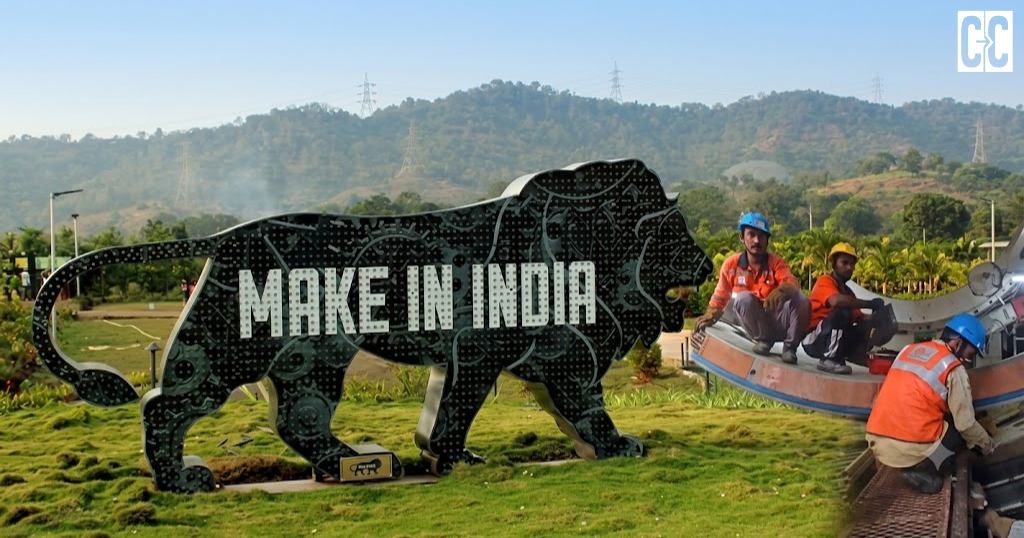

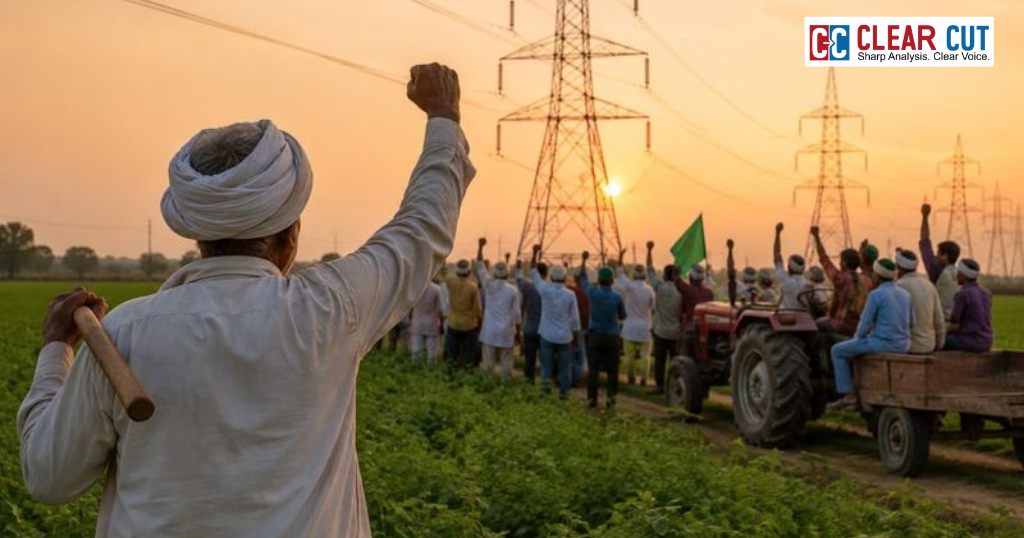
- Farmers across Gujarat are protesting against the installation of transmission towers on agricultural land, saying the compensation offered does not reflect the long-term loss of farming and land value.
- The Gujarat government has announced a revised compensation policy based on twice the market value of land with upfront payments, but farmers continue their agitation, demanding the changes be legally notified through a Government Resolution.
Across the dusty stretches of Kutch, Saurashtra and north Gujarat, a quiet but determined rebellion has been building through the summer of 2026. Farmers who have spent generations tilling their land are now standing in front of bulldozers and construction crews, refusing to let power companies plant transmission towers on their fields and in the process, they have pulled off something rare: forcing the state government to blink.
Where It Started
The trouble began with a familiar story. As Gujarat races to become India’s renewable energy hub, with sprawling solar and wind installations coming up in Kutch and Saurashtra, someone has to carry all that electricity to the cities. That job falls to high-tension transmission corridors, and those corridors cut straight through private farmland. Companies including Adani Energy Solutions and Power Grid began erecting poles and towers on agricultural plots, often before farmers had agreed to terms.
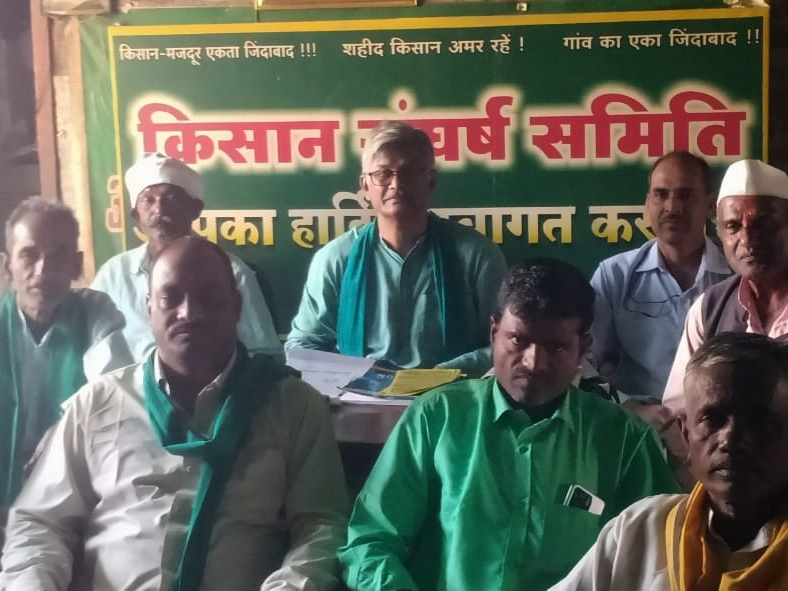
By mid-June, the frustration boiled over. On June 15, farmers under the joint banner of Kisan Congress and the Kisan Sangharsh Samiti organised a tractor rally that began at Shantipura Circle and rolled toward Gandhinagar, with more than a thousand tractors joining from Surat, Morbi, Rajkot, Surendranagar, Bhavnagar, Kutch and north Gujarat. Villages like Jetpar in Morbi district and Kondh in Surendranagar became flashpoints, with farmers alleging that companies dug up their fields and put up poles without paying any compensation at all.
Why Farmers Are Angry
The core grievance is simple but deeply felt: once a transmission tower goes up, that patch of land is effectively dead for farming. Overhead lines make it nearly impossible to run tractors and harvesters, and the presence of a tower permanently drags down the value and productivity of the surrounding plot. Farmers say the one-time compensation on offer doesn’t come close to covering what they lose year after year, while power companies continue to profit from the infrastructure for decades.
Farmer organisations have been blunt about the scale of their demands: compensation at four times the market price of land as laid out under the 2013 Land Acquisition Act, a monthly rent of ₹50,000 for every pole standing on their property, and a one-time settlement of ₹2 crore per pole. It’s worth remembering this isn’t the state’s first attempt to address the issue back in 2022, Gujarat had already doubled the compensation rate for land under transmission corridors, from 7.5 percent to 15 percent of land value. Farmers say that increase never came close to matching their actual losses.
The Government Moves Cautiously
By early July, the pressure had produced results. On July 3, under Chief Minister Bhupendra Patel, the state government announced a significantly revised compensation policy: instead of using the jantri, or official circle rate, as the base for payouts, compensation would now be calculated at twice the prevailing market value of the land. Farmers would also receive the full compensation amount upfront, replacing the earlier system of staggered payments across three instalments. The state further introduced a Market Rate Committee intended to bring more transparency to how land values are assessed, with the revised terms applying retroactively to projects already underway.
Agriculture Minister Jitubhai Vaghani, Energy Minister Rushikesh Patel and Minister of State for Energy Kaushikbhai Vekariya reportedly held direct discussions with farmer organisations before the policy was finalised a signal that the Cabinet was taking the agitation more seriously than the muted media coverage might suggest.
Yet farmers have made clear they are not satisfied. Protesters in Morbi, where the agitation over the AESL-linked project had run for more than three weeks, said they would continue their movement until the state issues a formal Government Resolution codifying the new terms a verbal Cabinet announcement, they argue, offers no legal guarantee.
A Fight Beyond Compensation
What began as a dispute over rupees per pole has evolved into something broader: a debate over who benefits from Gujarat’s green energy boom. Farmer leaders argue that power companies will keep earning steady profits from these transmission lines for decades, while the people whose land makes it all possible are asked to accept a single payout and walk away. Some Kisan Congress leaders have since announced a foot march starting from Vrajvani village in Kutch and culminating in a gathering at Dwarka, suggesting the movement has no plans to wind down soon.
For now, farmers across Kutch, Surat, Morbi, Jamnagar and Rajkot are watching the government’s next move closely. The revised compensation policy is a genuine concession, but as long as it exists only as an announcement and not a notified rule, the tractors, rallies and roadside sit-ins look set to continue.
Clear Cut Livelihood Desk
New Delhi, UPDATED: July 25, 2026 09:30 IST
Written By: Anaina Tomy
Designation: Senior Research Associate at Devinsights