
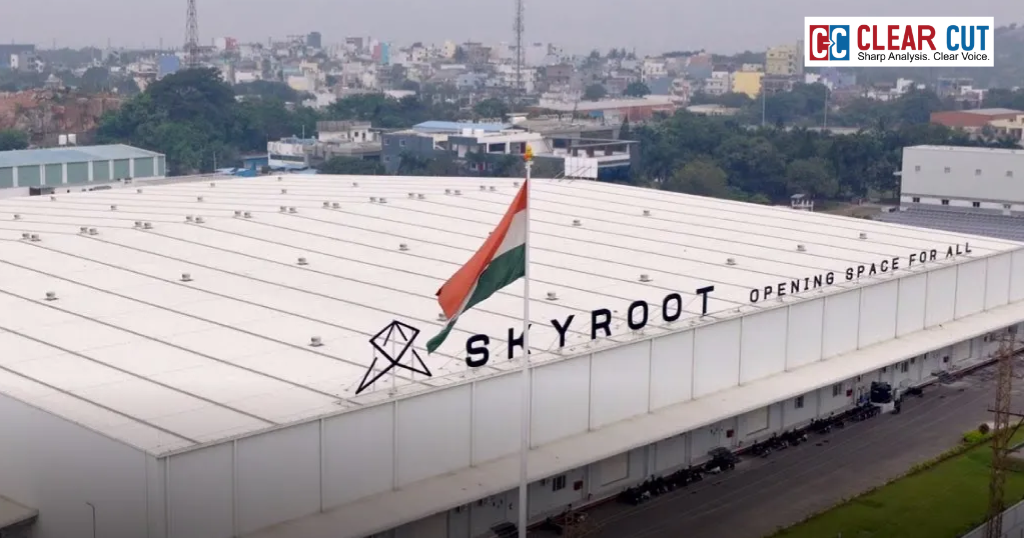
- Skyroot Aerospace’s Vikram-1 became the first privately built Indian rocket to successfully reach orbit, marking a historic milestone for India’s private space sector and showcasing the success of the 2020 space reforms.
- The mission strengthens India’s growing space economy, which is projected to reach $44 billion by 2033, while highlighting opportunities in satellite applications, investment, innovation, and global competitiveness.
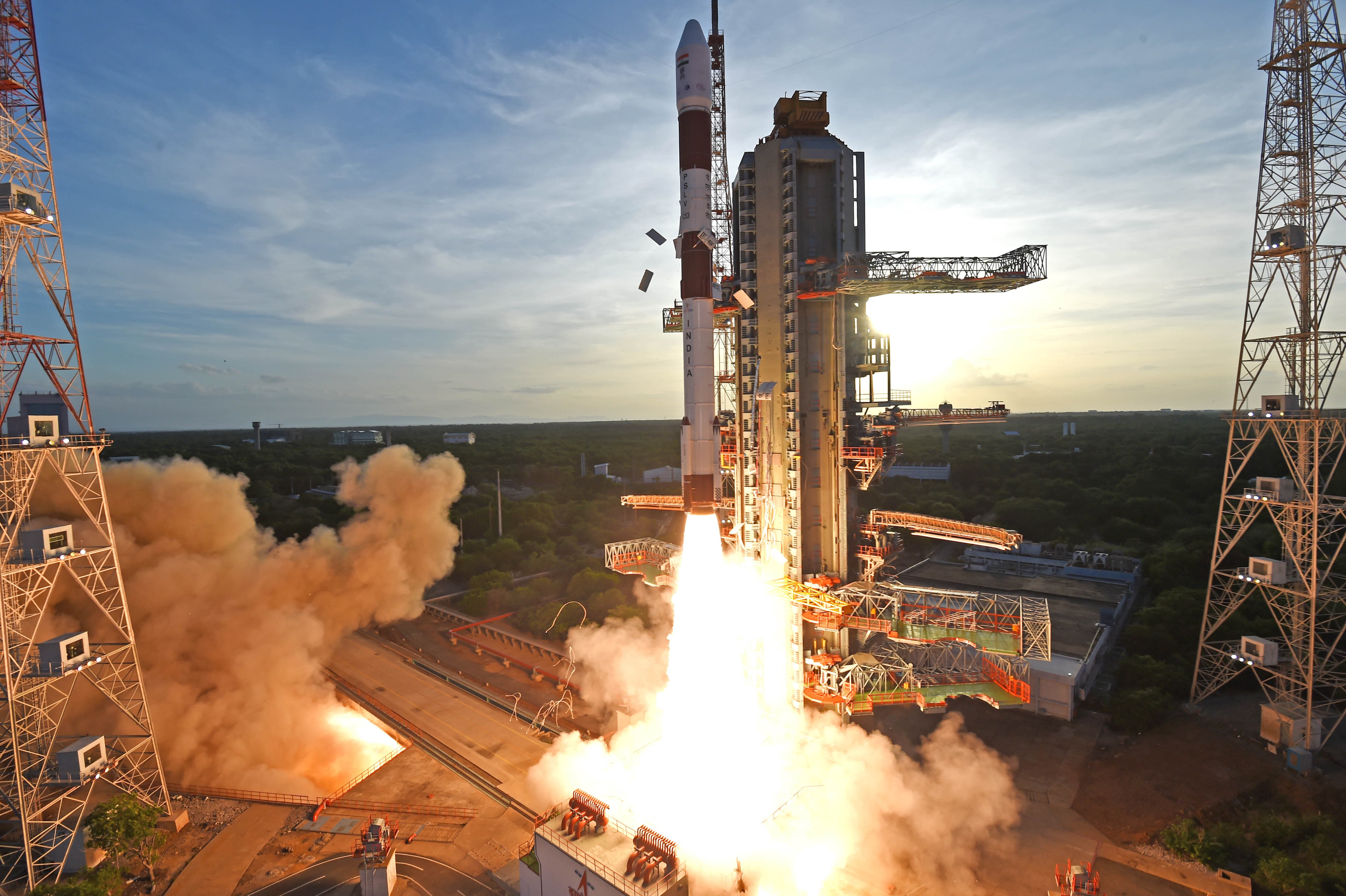
Before dawn on July 18, 2026, a 22-metre rocket built by a Hyderabad start-up lifted off from the Satish Dhawan Space Centre and did something no privately built Indian rocket had done before: it reached orbit. Skyroot Aerospace’s Vikram-1, flying its debut mission “AAGMAN,” placed technology demonstration payloads into a 453-km low-Earth orbit on the very first attempt — making India only the third country, after the United States and China, to achieve private orbital launch capability.
Rocket equipped with multiple satellites from companies including Grahaa Space, Cosmoserve, DCubed, and another from Skyroot satellite is capable of transporting 350kg of payload into Low Earth Orbit. “We have shown that India now has a set of skills, a technology, and industry that is worthy of the global standard,” said Pawan Kumar Chandana, co-founder and CEO of Skyroot.
“This is the first successful flight of an Indian private rocket reaching orbit,” ISRO Chairman V. Narayanan said. “I want to highlight that after the space reforms of 2020, which first paved the way for Indian companies to design, build, and fly rockets, India has gone from one registered space start-up to 400-plus space companies in India.” IN-SPACE chairman Pawan Goenka – the country’s window regulator overseeing all activities in the private space sector – shrugged off comparisons to the world. “It is an ‘India moment’ for us.”
That event sits within a more sweeping economic narrative. India’s space economy, estimated at around $8.4 billion, or about 2 percent of the global total, is projected to reach $44 billion by 2033. In the last decade, the industry has chipped some 20,000 crores to the GSDP and now employs some 96,000 people, says an International Monetary Fund report. The highest-value “segments” of the sector are found in space applications, not in the launch market, notes a May 2025 study led by economists, such as Sunil Mani; these range from “disaster management and agricultural applications to the rural connectivity that serves some areas not addressed by the terrestrial broadband market,” according to its findings.
Competing on the Global Stage
India’s jump doesn’t look so massive when considered next to the two others who made it all the way before. The US built its private rocket space way back, the Commercial Space Launch Act in 1984, long before Elon’s maiden 2008 orbital mission, which resulted in an economy that now houses 373,000 working people and is a contribution of $142.5 billion to the US’s gross domestic product as of 2024, which was a little over $613 billion. While China chose a different, “entire-of-society” approach where state cash is used to fuel private firms, private investments continue to flood in there at double India’s, having raised $1.17 billion in equity investments as of last year.
That funding gap is the most obvious constraint for the sector. Skyroot has also attracted funding of $60 million in May 2026 that will go to building out Vikram-1 as well as beginning work on its larger Vikram-2, also a 2027 contender, and has signaled two or more test flights later this year. IN-SPACE’s take is very similar – for the sector, a late-stage venture funding remains the key choke point to becoming a top player, and not technology.
Beyond the Launch Pad: The Bigger Picture
According to the World Economic Forum, a country opening up the launch and satellite markets to private ventures is democratising access to space – something that should bring benefits of a societal, not purely commercial, nature – bringing greater access to tele-education, tele-medicine, and digital banking in regions bypassed by the traditional grid. In practice, the idea is proving fruitful, with Geo-MGNREGA geo-tagging more than 6.24 crore rural assets using satellite data. Vikram-1’s flight alone can’t shrink the gap in capability between India and Washington or Beijing. Still, a 2020 policy promise regarding deregulation, with a dedicated regulator (IN-SPACE) established and a national space policy adopted in 2023 to translate the opportunity into hardware, culminating in a successful landing after one launch. What follows it, in large part, is determined not by rocket technology but by its capacity to attract investment and market interest.
Clear Cut Research Desk
New Delhi, UPDATED: July 24, 2026 4:30 IST
Written By: Yatharth Pathak