
- The passage explains how everyday AI use feels effortless but has hidden environmental costs, especially water consumption in data centers.
- It highlights how cooling systems rely on water, linking AI growth to increasing strain on natural water resources.
- It ends by stressing balance—AI also helps solve water issues, but awareness and responsible use are essential.
We ask AI for things dozens of times a day without ever once thinking about what it costs the planet to answer me. A recipe idea here, a draft email there, maybe a generated image for a birthday card, a quick summary of a paper we don’t have time to read. It’s so fast, so frictionless, that it barely registers as an act with consequences at all. It feels more like flipping a light switch than starting an engine.
That’s the strange thing about this technology. It feels like it comes from nowhere. You type a question, and an answer appears, as if pulled from thin air. No smoke, no machinery, no sense that anything physical had to happen for that sentence to land on your screen. The whole experience is designed, intentionally or not, to feel weightless.

But something physical did happen. Somewhere, a server worked to produce that answer, one machine among thousands, packed into a data center, running hot, all day, every day, never really resting. And heat needs to go somewhere. Most of the time, water is what carries it away, cycling through cooling systems so the machines don’t overheat and fail.
I think about water differently than I used to. I grew up assuming it would always just be there when I turned the tap, that it was one of the few constants I’d never have to negotiate with. Plenty of people don’t have that luxury anymore. They’re watching reservoirs shrink, wells run dry, rain become less predictable each year, harvests fail because the water simply didn’t come when it was supposed to. For them, water isn’t something thats always just available. It’s the main event of daily life, the thing every other decision bends around.
So it’s worth asking honestly: as we lean harder and harder on AI, what are we asking of water in return? What are we quietly signing up for every time we hit enter?
Its easy to overstate this, but AI didn’t create the world’s water problems. Drought, climate change, bad infrastructure, overuse, pollution, decades of poor planning; these forces have been straining water supplies long before chatbots existed, long before any of us had heard the word “AI” outside of a movie. AI is one thread in a much bigger, older, more tangled story, not the author of it.
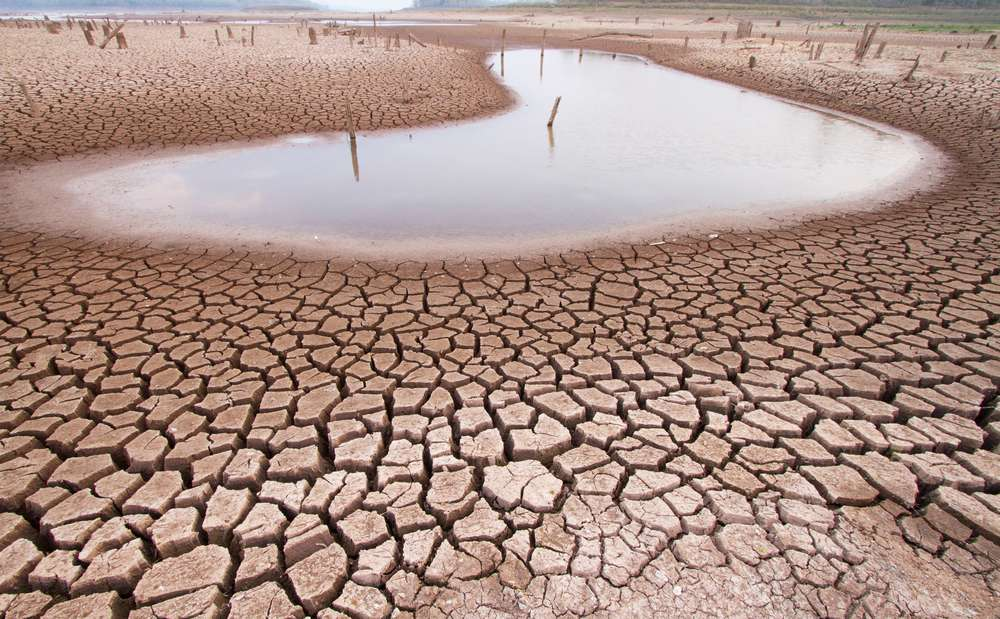
But it is a thread, and a fast-growing one. And what makes it an unusual thread is how invisible it’s allowed to remain. If you leave a tap running, you know it. You can hear it, see it, feel a small flicker of guilt about it. If you forget to turn off a light, you notice the bill at the end of the month. AI doesn’t work that way. You can generate a hundred images in an afternoon, ask question after question late into the night, and feel nothing, no dripping sound, no flickering bulb, no number creeping upward to give you pause. The cost is real, but it’s been pushed somewhere you can’t see it, into a building you’ll never visit, drawn from a water table you’ll never watch drop.
That’s not a reason for guilt. It’s a reason for honesty, and maybe for a little more curiosity about what’s actually happening behind the screen.
And here’s what makes the whole picture more complicated, in a genuinely good way: AI isn’t only taking from the water story. It’s also being put to work helping with it. Scientists are using it to track water quality in real time, catching contamination before it spreads. Meteorologists and hydrologists are using it to forecast droughts before they fully arrive, buying communities precious time to prepare. Used well, it can be one of the better tools we have for managing a resource we genuinely cannot afford to lose.
So we’re left with something more like a tension than a verdict. AI uses water. AI can also help save water. Which one wins out in the long run isn’t decided by the technology itself, it’s decided by us. By the choices companies make about where and how they build data centers, and how transparent they’re willing to be about it. By the cooling systems they invest in, or cut corners on. By the policies governments are willing to write and actually enforce. And yes, in some small but real way, by how thoughtfully each of us reaches for these tools in the first place.
None of this is really about shame. I don’t think the answer is to stop using AI, or to feel bad every single time we do, second-guessing every prompt. I think the answer is smaller and more honest than that: just remembering. That somewhere behind the screen, there are rivers and reservoirs and aquifers and entire ecosystems quietly holding up the whole operation.
We’d never leave a hose running in the yard overnight without caring, without at least feeling a twinge about it. Maybe the next step, the small and doable one, is learning to extend that same instinct to the technologies we can’t see, to ask not just what AI can do for us, but what it quietly asks of the world to make that possible.
Intelligence is impressive. But water is what makes life possible in the first place, the one thing every living system depends on without exception. If we’re going to keep building one, chasing it further and further, we owe it to ourselves, and to each other, to never forget the other.
Clear Cut Climate Desk
New Delhi, UPDATED: June 22, 2026 01:00 IST
Written By: Zaina