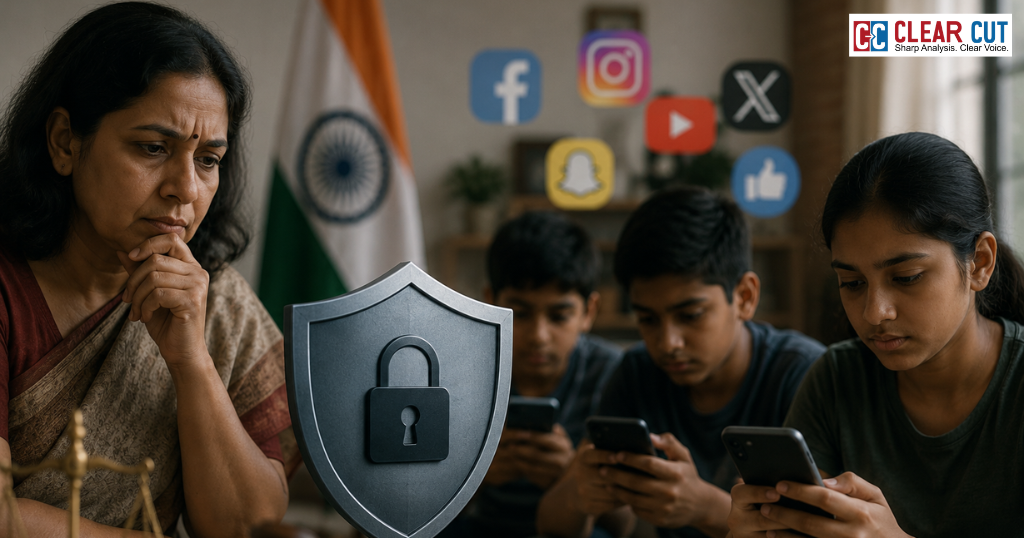
Internet addiction among children is becoming an emerging problem due to the link between high levels of screen time and anxiety, low academic performance, and ill health. Since most teenagers spend their time on smartphones for social interaction rather than learning, the government is considering stringent measures such as banning social media based on age groups.
The Economic Survey of India 2025-26, presented in Parliament on 29th January, highlighted that Internet addiction among children and teenagers is posing a threat to public health in India. The report associated excessive exposure to social media with symptoms like anxiety, attention disorders, and poor performance at school.
Over the last ten years, there have been tremendous changes in India with respect to connectivity and access to technology. From having 250 million internet users in 2014, the country reached alamongmost 1.02 billion internet users in 2025, out of which about 500 million are regular users of social media. Thanks to affordable smartphones and cheap data charges, India has become the second-largest smartphone market in the world with about 750 million devices in circulation. The average data usage per month by users has increased manifold from 62 megabytes in 2014 to about 24 gigabytes in 2025.
Impact on Child Development
According to ASER’s 2024 report, 82.2 percent of young adults (14-16 years) in India know how to operate a smartphone; yet, only 57 percent use a smartphone for their education, while 76 percent use smartphones to connect with social media platforms. In many studies, excess screen time usage in children has been highlighted, especially in various parts of the nation. For instance, NCCS conducted a study that revealed that roughly 74 percent of students in the entire nation use their smartphones for over two hours per day in a non-academic setting, whereas 21 percent use them for over four hours daily.

Screen exposure of children aged below five years has also been reported to be 2.22 hours per day, which is significantly higher than the recommendation of one hour per day as prescribed by the IAP.
The high levels of screen usage by children have been linked to various negative implications on their overall development and well-being, including:
• Impacts on cognitive development: Decreased attention span, poor comprehension skills, and impaired memory.
• Impacts on health: Problems related to posture, eyesight, disrupted sleeping patterns, lack of exercise, and increased chances of becoming overweight.
• Impacts on behavior: Increased anxiety and stress, aggressive behavior, poor body images, and poor development of socio-emotional skills.
• Impacts on time usage: Less time available for reading, studying, and engaging in social activities.
Thus, in addition to the positive effects of having digital access on education, there has been an increasing amount of evidence that demonstrates a different scenario altogether – the digital context among students has become a structure in human capital development. Thus, the question of policy has shifted from ensuring access to technology to using that technology positively for learning purposes.
The Changing Policy
Certain signals from state governments have also contributed to the broader debate.
In Andhra Pradesh, the IT & Education Minister Nara Lokesh had mentioned during an interview on 30 January that the state government was looking at how Australia banned under-16s from using social media platforms and was going to discuss the matter with companies like Meta, Google, X, and ShareChat. Lokesh raised issues related to student mental health and their grades.
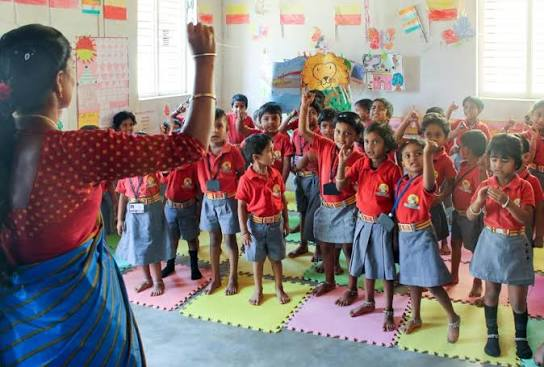
Screen-Based Media and Excessive Screen Time: IAP Guidelines for the year 2022 were updated after evaluating scientific literature on how excessive exposure from an early age to screen-based media has harmful consequences. The Economic Survey for 2025-26 was published with a new chapter on “Digital Addiction,” pointing out the “real economic and social costs” involved. It suggested different approaches for controlling screen-time usage, such as verifying the user’s age and appropriate default settings, a digital wellness curriculum along with compulsory physical activities in schools, setting up tech-free zones, conducting education programs, and running parenting workshops.
Other institutions that concern themselves with child rights and education have become aware as well. Advice and guidelines on cyber safety, proper digital behaviour, and screen time are beginning to be introduced into the curriculum of schools and general public messages. Regulations concerning new data protection policies ensure the safety of children from being profiled or marketed to.
Conclusion
An in-depth analysis of Indian literature on social media usage and misuse as well as smartphone addiction in India from 2016 to 2025 indicates a connection between one’s mental and physical wellbeing. Use of digital devices can positively impact academics, communications, social support networks and self-expression when done effectively; conversely, misuse or overuse results in associated concerns such as lack of proper sleep, poor eyesight, stress, anxiety, depression, body pains, and low self-worth. Adolescents and young adults, being developmentally at risk, are the most vulnerable demographic for such issues. Problematic abuse, however, occurs at a high rate among
Clear Cut Education, Health Desk
New Delhi, UPDATED: June 16, 2026 05:45 IST
Written By: Muskan Pal