
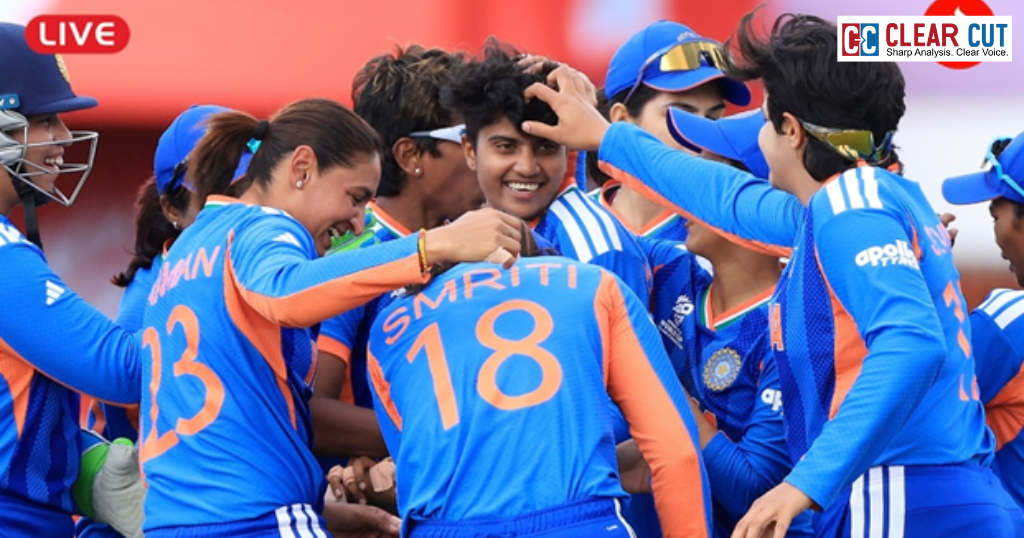
- India suffered their first defeat of the Women’s T20 World Cup 2026, losing to South Africa by 6 wickets after dropped catches allowed Marizanne Kapp to guide her team to victory despite India’s competitive total of 158/7.
- Jhulan Goswami highlighted poor fielding as the turning point, while praising tactical decisions and backing Deepti Sharma as one of India’s most dependable performers across formats.
- The loss puts India in a must-win situation against Australia, making improved fielding and converting half-chances crucial to keeping their semifinal hopes alive.
THE CATCHES THAT GOT AWAY
Cricket has a cruel way of reducing entire matches to single moments, and India’s first defeat of the Women’s T20 World Cup 2026 will likely be remembered for the chances that weren’t taken rather than the runs that were scored. At Old Trafford in Manchester, India posted a genuinely competitive 158 for 7 after choosing to bat first. The total should have given the bowling attack room to defend. South Africa’s Marizanne Kapp had other plans, finishing unbeaten on 81, an innings built substantially on catches India’s fielders simply didn’t convert.
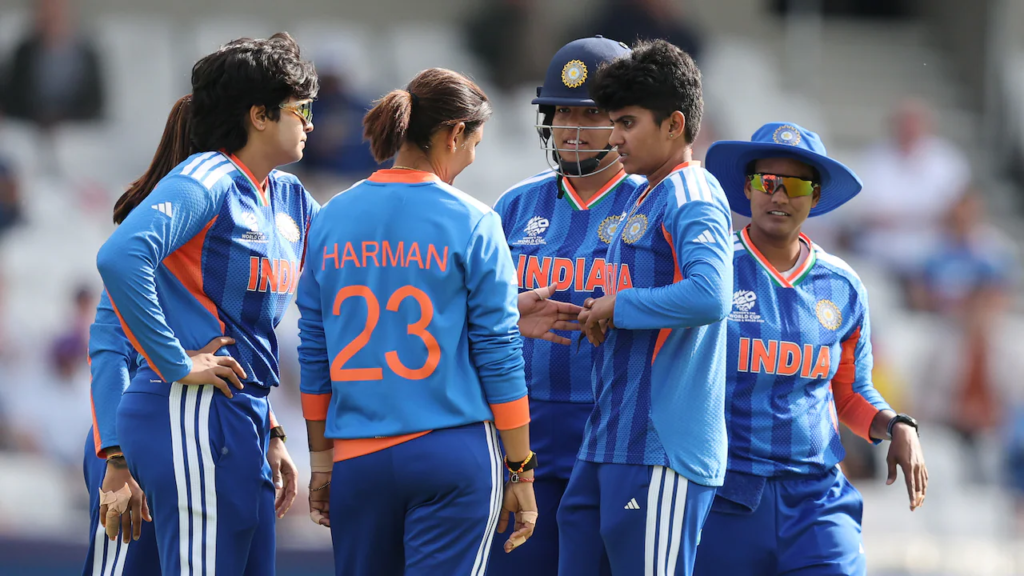
South Africa won by 6 wickets, ending India’s unbeaten run in the tournament and immediately complicating their path to the semifinals. The complication had narrowed team India into a must-win scenario against Australia.
A FORMER LEGEND’S MEASURED DEFENCE
Jhulan Goswami, India’s former pace spearhead and most decorated bowler in the women’s game’s history, offered a balanced assessment, when she spoke to Rev Sportz after the match. ‘Yes, India could have scored 170+, but unfortunately, wickets fell at regular intervals,’ she said, acknowledging the batting innings’ missed acceleration. ‘However, fielding was an area where India could have done much better. In T20 cricket, taking half-chances can make a huge difference. Had India taken those opportunities, the result could have been different.’
Goswami also highlighted a tactical decision worth noting on its own merits. The team management’s choice to open the bowling with Shafali Verma was a brave move and indicative of specific match-ups being planned in advance. It’s a small detail, but one that speaks to a coaching staff willing to take calculated tactical risks rather than defaulting to convention.
DEEPTI SHARMA AND THE BIGGER PICTURE
Beyond the immediate result, Goswami’s comments pointed toward a broader storyline she clearly believes will define India’s tournament. The continued excellence of spin-bowling all-rounder Deepti Sharma, who was Player of the Series and the leading wicket-taker at the 50-over World Cup. Goswami expressed an explicit wish to see Deepti cross the milestone of 400 international wickets, describing her evolution from a promising young player into ‘one of the most important members of the Indian team across all formats’. She is a player she now considers the team’s most reliable performer under pressure.
This framing matters because it reflects a team identity in genuine transition: less reliant on any single dominant superstar, and increasingly built around a deep core of all-rounders and specialists whose collective consistency, rather than individual brilliance, is now the team’s primary competitive asset heading into the tournament’s business end.
WHAT THIS SETBACK SHOULD ACTUALLY PRODUCE
A single defeat in a long tournament, properly contextualised, is rarely catastrophic — and Goswami’s measured tone reflects exactly that kind of perspective, refusing to either panic or dismiss the loss’s lessons. What India’s coaching and support staff owe the team and its supporters now is a fielding-specific intervention before the knockout stages begin in earnest: specialised slip-catching and outfield drills targeting the precise half-chances Goswami identified, rather than generic fitness or fielding sessions that don’t isolate the specific skill gap this match exposed.
Indian women’s cricket has built genuine depth over the past several World Cup cycles. It is visible in the team’s run to the 50-over World Cup final and the emergence of players like Deepti Sharma as legitimate world-class all-rounders. The opportunity in front of this specific squad is to convert that depth into the kind of fielding discipline that turns competitive totals into defendable ones. The semifinal-or-elimination stakes ahead leave little room for the same half-chances to go down twice.
Clear Cut Awards & Events Desk
New Delhi, UPDATED: July 01, 2026 13:00 IST
Written By: Tanmay J. Urs