
- Khadi aur Village Industries sector ne FY 2025-26 mein ₹1.87 lakh crore ki record sales hasil ki, jisme production aur employment dono mein mahatvapurn vriddhi dekhi gayi.
- PMEGP, Gramodyog Vikas Yojana aur badalte consumer trends ne rural enterprises aur women entrepreneurs ko majbooti se support kiya hai.
- Lekh yeh sawal uthata hai ki is vikas ka kitna laabh vaastav mein artisans tak pahunch raha hai aur income distribution par adhik transparency ki zaroorat hai.
The Loom That Built an Economy
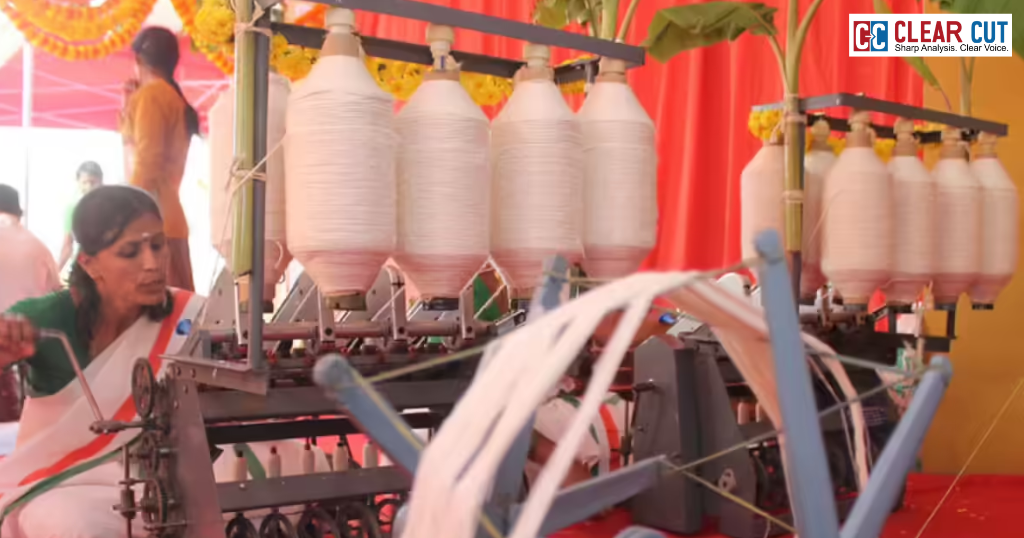
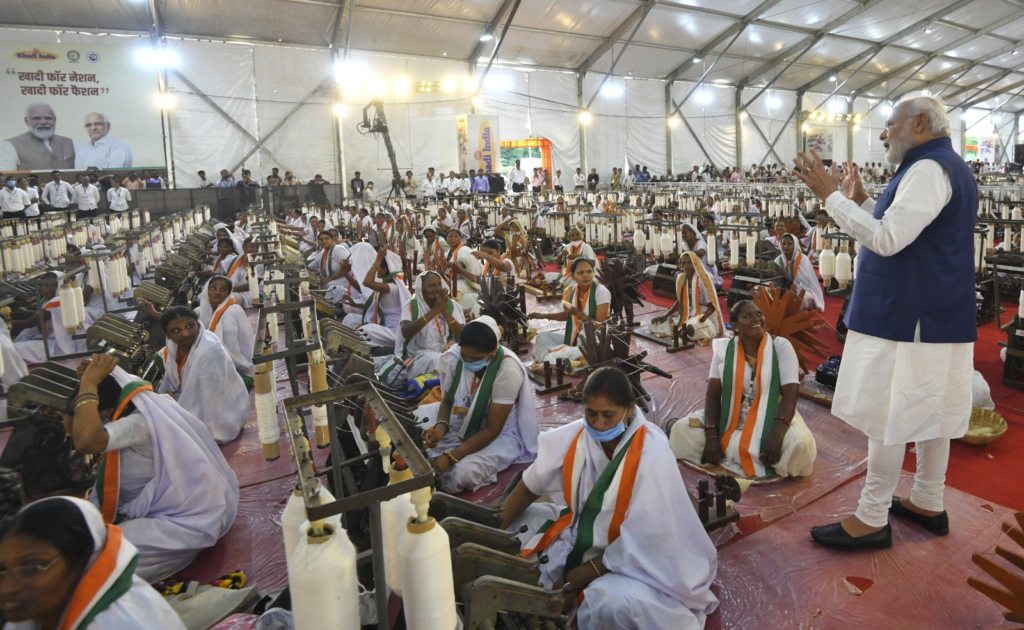
Savitaben Patel has run a khadi weaving unit in Anand, Gujarat, for 21 years now. She employs 11 women from the surrounding neighbourhood. When she started, the unit’s annual turnover was under Rs. 8 lakhs. By FY 2025-26, it crossed Rs. 34 lakhs. There was no change in what she made. She changed who she sells her goods to. They were a mix of institutional khadi outlets, a state-government departmental purchase order and 2 e-commerce platforms. These platforms began listing handloom products under conscious-consumer programme, 3 years ago. Savitaben’s unit is a surprise to everyone who had written off khadi, as a heritage sector in terminal decline.
KVIC Chair Mr. Manoj Kumar released the provisional performance data for FY 2025-26 on May 26 at Gandhi Darshan in Rajghat, New Delhi. The combined sales of Khadi and Village Industry products reached Rs. 1,87,105 crores, which was a 501% increase from Rs. 31,154 crores in 2013-14. Production rose 380% from Rs. 26,109 crores in 2013-14 to Rs. 1,25,000 crores. Employment in the sector grew 56% to 2.04 crore workers. KVIC has now set a target of Rs. 2,51,000 crores in business for FY 2026-27.
What Is Driving the Growth
KVIC FY26: Sales Rs. 1,87,105 crores (+501% from 2013-14). Production Rs. 1,25,000 crores (+380%). Employment: 2.04 crore (+56%). PMEGP: 10.18 lakh units showed since start; Rs. 27,166 crores in margin money subsidies; 90 lakhs employed.
[KVIC Chair / PIB, May 26, 20z26]
3 engines are running simultaneously. The first is the Pradhan Mantri Employment Generation Programme (PMEGP), which has established over 10.18 lakh units since inception. The government is providing Rs. 27,166 crores in margin money subsidies against loans totalling Rs. 73,348 crores. This, therefore, creates employment for over 90 lakh individuals. The second is the Gramodyog Vikas Yojana, under which KVIC distributed 37,218 machines and equipment in FY 2024-25 alone. This was the highest annual figure on record, ranging from electric pottery wheels to bee boxes to incense stick manufacturing units. The third is the shift in consumer behaviour. Khadi has moved from being a patriotic purchase to a premium lifestyle choice, particularly among urban professionals who are willing to pay significantly more for certified handmade, sustainable textiles.
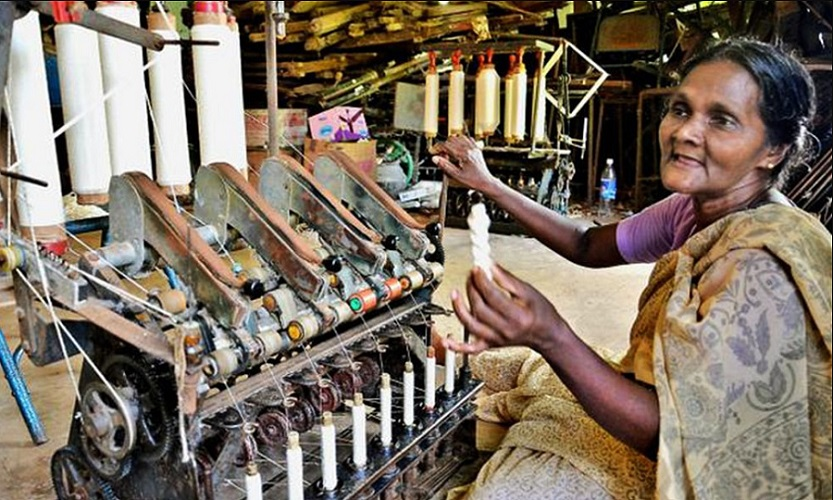
Women are at the centre of this expansion. 59% of trainees under KVIC schemes are women. Over 28,000 women entrepreneurs have been supported under PMEGP. Artisans’ payment has grown by up to 275% over the twelve-year period, reflecting that at least some of the revenue growth is reaching the producers. The iconic Khadi Gramodyog Bhawan in New Delhi more than doubled its business to Rs. 110 crores from Rs. 51 crores eleven years ago.
The Questions the Record Does Not Answer
The 501% sales growth figure is extraordinary. It also requires scrutiny. The Khadi and Village Industries sector is broad: it encompasses traditional hand-spun khadi at one end and diversified village enterprises including agro-based industries, forest-based products, mineral-based units, and rural engineering enterprises at the other. The aggregated figure does not distinguish between the traditional artisan weaving on a handloom and a mechanised rural enterprise producing packaged food. Both are valid. But they are not the same development story, and they should not be presented as a single narrative.
Employment growth of 56% against sales growth of 501% suggests that productivity per worker increased substantially. However, it also raises the question of whether the value-addition benefits are being distributed equitably down the supply chain to the rural artisan at the base. It even argues whether the gains are being captured primarily at the aggregation and retail end.
The Policy Demand: Track Who Gets What
KVIC must publish income data disaggregated by artisan type and geography: how much of the Rs. 1.87 lakh crore in sales revenue reached primary producers? The FY 2026–27 target of Rs. 2.51 lakh crore must be accompanied by an equally ambitious target for artisan household income improvement. PMEGP’s loan disbursement data must track employment sustainability.
2 Crore People. One Unfinished Promise.
Savitaben’s loom is running. Her eleven employees are earning. The Rs. 1.87 lakh crore is real and remarkable. But the promise of the khadi economy was never merely commercial growth. It was Gandhian in its insistence that the maker should be the beneficiary. India’s rural artisans have built a half-trillion-rupee sector. The next chapter must ensure that the wealth they create stays in the hands that create it. Track the income. Report the distribution. The record belongs to the weavers. Make sure the rewards do too.
Clear Cut Livelihood, Research Desk
New Delhi, UPDATED: May 31, 2026 09:00 IST
Written By: Tanmay J Urs