

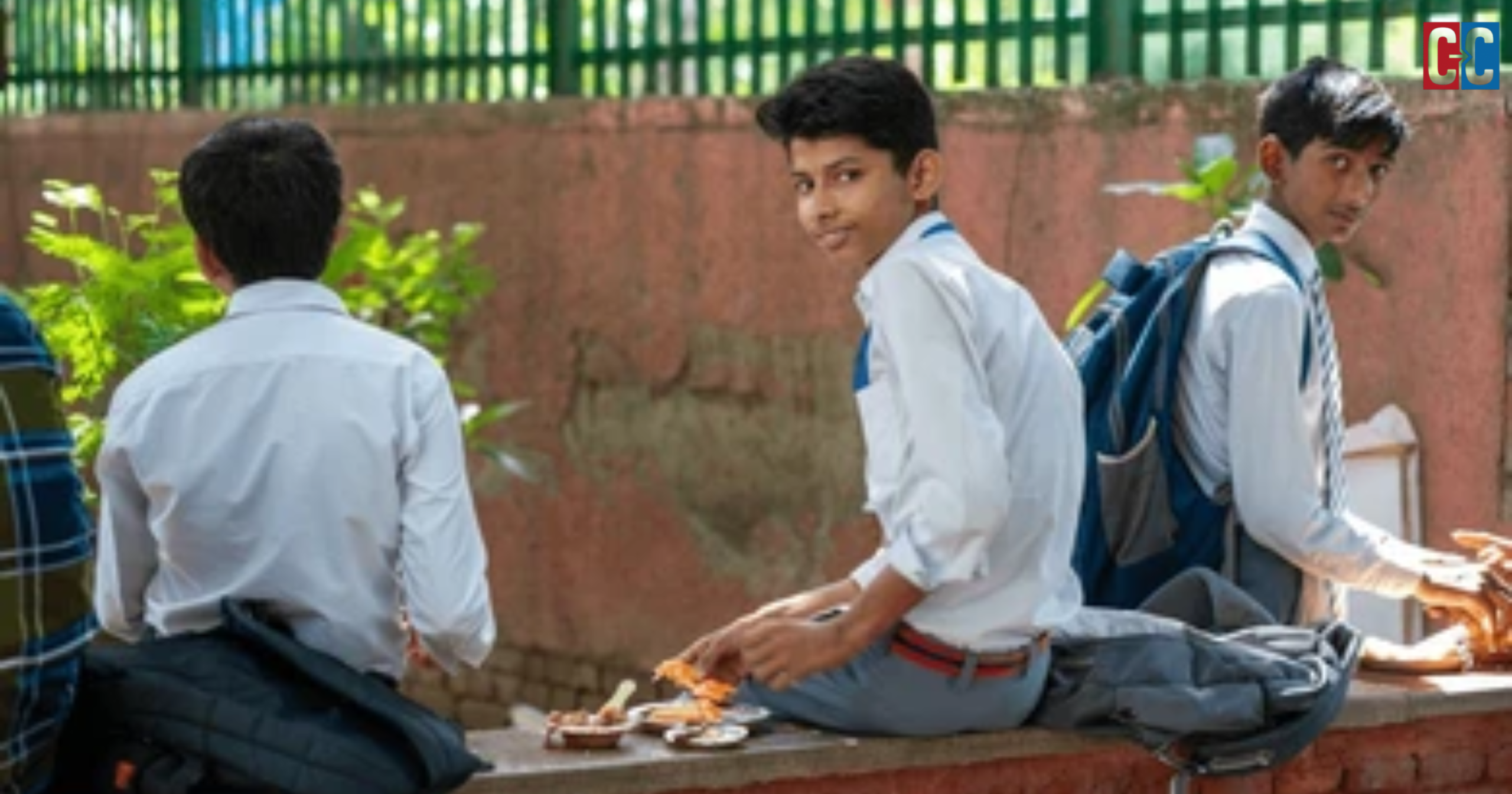
- Maharashtra has banned the sale, advertising, and free distribution of HFSS (high fat, sugar, and salt) foods within a 50-metre radius of schools to promote healthier eating habits and address rising childhood obesity.
- While health experts have largely welcomed the move, evidence from India and other countries suggests that effective enforcement and complementary measures such as front-of-package labeling will be crucial for achieving long-term impact.
The Maharashtra Food and Drugs Administration has banned the sale, advertising, and free distribution of High Fat, Sugar, and Salt (HFSS) foods within a 50-metre radius of all schools in Maharashtra. Under the ban, prohibited items include vada pavs, samosas, chips, cold drinks, chocolates, and ice creams. Announced by FDA Commissioner Tukaram Mundhe on July 29th, the ban has been described as an attempt to prevent a incursion in deep-fried food and fizzy drinks aimed at a captive market of kids.
The ban extends to approximately 1.08 lakh schools, two crore students in all government, aided, private, and residential schools, and to food catering facilities and midday meal kitchens, which are required to be licensed by FSSAI. Penalties for non-compliance include suspension or cancellation of the food license, with biannual inspections.
The order comes against the backdrop of rapidly deteriorating health. The NFHS-5 states that overweight and obesity in children below 5 years increased by 127 percent, from 1.5 percent to 3.4 percent, from 2005–06 to 2019–21. The Economic Survey 2025–26 estimated that while 3.3 crore Indian children were obese in 2020, the figure is likely to rise to 8.3 crore by 2035, with annual ultra-processed food sales nationwide growing from around $900 million in 2006 to $37.9 billion in 2019. A nearly identical 50-meter ban order, with a similar provision extending it to hospitals, was imposed by Karnataka at the same time.
Most medical professionals are in favour of the move. Dr. Aditi Sachdeva, a consultant in pediatrics and neonatology at the Indian Public Schools Conference in New Delhi, said that children devote a substantial part of their day to school, which is a “limited environment where we get a chance to mould habits.” “This is a very positive step,” said Dr. Rahul Verma, director of pediatrics at Mumbai’s Sir HN Reliance Foundation hospital, with several others in the medical community, aiming for “non-unhealthy eating daily” instead of the outright ban of junk food. “A ban helps curbing supply.. The present Indian food labeling system is derived from studies done on adults,” countered Dr. Shweta Khandelwal, vice-president at IPE Global and a public health nutritionist. At the same time, most purchases are made by teens.
Similarly, Maharashtra is proposing policies similar to those enforced in Chile under its 2016 Food Labeling and Advertising Law: a package of “black octagon” warning labels, a prohibition on sales in schools, and advertising restrictions. While it was recorded in this year’s Lancet publication that after 18 months, over 300,000 school children’s chance of being overweight was indeed lower, but only by approximately 1.2 to 1.4 percentage points, another longitudinal study involving the same children reported that children consume more HFSS food once school has finished; a warning against any regulation that stays within a 255,000 ft radius of any one school. Similar results were found in Mexico, where the national ban on schools was introduced in 2025. Based on their current labeling scheme, they found their rule had the same problem: street vendors selling sweets and chips outside the nation’s 255,000 schools were still able to sell the products, making enforcement complicated, and approximately one-third of Mexican children were still either overweight or obese.
Britain chose a more constrained route, only placing restrictions on the sale via advertisement, and that had been delayed 4 times already, even though the ‘law’ only passed through in January 2026 to ward off industry lobbying, showing how contested food-environment policy can be even in wealthy countries.
The stakes are even higher in India. Virtually identical “50-metre rule” proposals have been proposed at the national level since the food-safety regulator FSSAI issued its 2020 standards and at the regional level in Karnataka since 2019. Again and again, these rules failed in packed communities with densely clustered municipal and low-cost private schools right next to food stalls, not private schools buffered by space.
Vendors selling vadas and samosas, often informal, low-profit labourers who become the face of regulatory crackdowns, bear the brunt, even as a branded product can be bought just a short walk away at a supermarket counter for a family that has the means to get there.
An interesting dataset on India: one student from Mumbai surveyed 120 teenagers and found that 80% would choose the healthier choice when presented with front-of-packaging nutritional labeling – an intervention still in the planning stages at the national level. Maybe front-of-package labeling actually means as much as an outright ban on school aspects, but this ban in Maharashtra really may hinge less on where its FDA maps the fifty metres than on what occurs right outside it.
Clear Cut Health Desk
New Delhi, UPDATED: August 04, 2026:00 IST
Written By: Yatharth Pathak