- Ratan Tata’s philanthropy focused on improving lives through healthcare, education, institution-building, and community welfare rather than personal recognition.
- Through Goodfellows, he highlighted loneliness among the elderly and the importance of companionship, dignity, and emotional well-being.
- His legacy offers valuable lessons for India as its ageing population grows and the need for inclusive elderly care becomes more urgent.
I Jyoti Agarwal n 2022, on an August day, in a small hall in Mumbai, Ratan Tata, aged eighty-four years old found himself among other elderly people and recent graduates. No inspiring speeches, celebrities, or grand philanthropic ventures took place at the event. Instead, it signified the beginning of a new venture, called Goodfellows, which is dedicated to creating companionship between elderly people and recent graduates. It was founded by Shantanu Naidu, a young businessman who is a friend of Ratan Tata. Speaking to the audience, Ratan Tata raised a very personal issue – loneliness. Although it is rarely mentioned openly, his words were honest and meaningful. Ratan noted that loneliness is something that a person does not comprehend until one feels it personally (Gulf News, 2022). In a matter of few sentences, Ratan brought into light an invisible problem experienced by many older people. That was an expression of the philosophy that he lived by. Where other great business leaders have been immortalised for their companies and fortunes, Ratan Tata thought that success lay in making the lives of people better. His acts of philanthropy were not driven by publicity or accolades but rather by his desire to build organisations and systems that would benefit people even after the media attention had died down.
Today, his thoughts have become even more significant. India is going through one of the fastest demographic changes that the nation has seen before. As mentioned in the India Aging Report 2023 written by the United Nations Population Fund (UNFPA) and the International Institute for Population Studies, almost one-fifth of India’s population will be above the age of sixty years old in 2050. By 2046, there will be more people who are older than those who are under fifteen years old (UNFPA India, 2023). It clearly shows the improvement in life expectancy of people because of better living conditions and improved healthcare systems.
Ageing nowadays is not simply living a long life; indeed, ageing these days is full of challenges such as chronic illnesses, reduced mobility, poverty, and lack of access to medical care among other things. The other problem that is becoming prevalent is loneliness. Urbanisation, migration, nuclear families, and changes in lifestyle are such that many elderly people have become lonely. Whereas it may be easy to spot a sick individual, the issue of loneliness is often overlooked.
Unlike most philanthropists who advocate for highprofile causes, Ratan Tata did not place himself at the core of his philanthropy. He was unique in that, unlike others who would design programmes around their names, he funded organisations that had the capacity to address social problems over time. This is why he used health care, education, scientific research, rural development, and community welfare as the foundation of his philanthropy since they affect quality of life at all stages of human existence.
It is inherent in the very nature of the Tata Group. More than two-thirds of the equity of Tata Sons Ltd. are held by charitable trusts. This means that much of the wealth of the Tata Group will always be invested in the public good and not only for private gain (Tata Trusts; Tata. com). Such an arrangement is not common to any other corporate group around the world. It is in line with the vision of Jamsetji Tata that business is meant to create wealth for the nation as well.
Possibly no place reflects this philosophy better than the field of healthcare. The Tata Memorial Centre in Mumbai and the Tata Medical Centre in Kolkata are examples of places where cancer treatments are provided at an affordable price. Each year, thousands of people visit these centres in search of affordable treatment. 60% of the patients receiving primary care treatment at the Tata Memorial Centre get treated free of cost, helping many elderly patients whose financial condition doesn’t allow them to continue their treatment.
Given the fact that specialist health care should not be available only in metropolitan cities, the Tata Trusts have also devised a dispersed form of cancer care. This is accomplished through the Cancer Care Programme of Tata Trusts, whereby diagnostic and treatment centres are brought nearer to the patients, thereby minimising travel expenses and delays.
These initiatives were never intended to serve only the older generations. However, they have dramatically changed the way access to healthcare is available for some of the most vulnerable communities in India. Elderly patients living in rural and poor households often do not have access to any kind of healthcare services, except for those offered by Goodfellows.
Whereas healthcare was aimed at maintaining physical wellbeing, Goodfellows paid attention to something that is just as important—human contact.
The concept of Goodfellows is quite simple. Recent graduates spend time with the seniors, who could be alone and socially isolated. They chat, eat together, take walks, perform some light work around the house, or just provide company. The intention is not to substitute their families or hired caretakers. The aim is to realize the importance of conversation and human contact as an act of care.
Goodfellows is in many ways a rebuke to society’s views on aging. Issues related to taking care of elders always involve hospitals, pensions, drugs, and nursing homes. This is undoubtedly true. Emotional health is as important as these physical matters. Being loved and listened to improves quality of life considerably. Through his initiative of Goodfellows, Ratan Tata made people realise the importance of companionship in ageing gracefully.
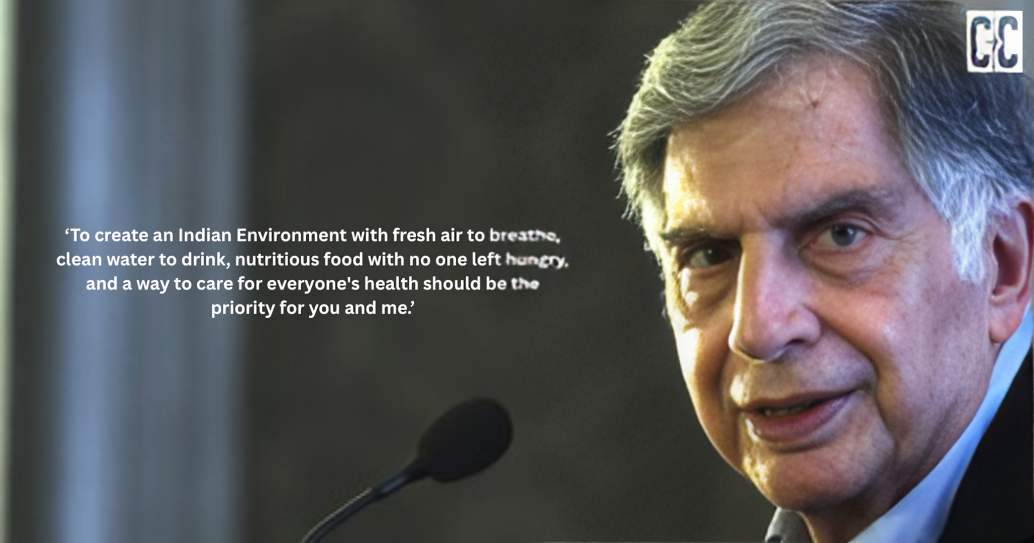
The philanthropic efforts of his wider scope also echoed the same sentiment regarding dignity. By implementing various initiatives through Tata Trusts in the fields of rural livelihoods, water security, sanitation, nutrition, financial inclusion, and skills development, numerous households that are financially unstable and lead a vulnerable life have found themselves much better off in terms of their economic well-being and overall hygiene levels. Though such efforts do not seem to be related to elderly care, they contribute to making the families and communities that take care of the ageing generation much stronger.
Equally noteworthy was the faith that Tata had in building institutions. This was because his philanthropy always centered on establishing institutions that would serve the community for many years rather than engaging in charity programs that were of temporary nature. The Tata Institute of Social Sciences, the Tata Memorial Center, and the Indian Institute of Science still churn out doctors, research scientists, public health practitioners, and social workers to tackle new problems of the country.
The long-term perspective provides useful insights for India to prepare for an aging society. The number of initiatives undertaken by the government that are related to the senior citizens has been increasing over the years; however, availability of facilities still varies greatly from state to state and within urban and rural settings (UNFPA India, 2023). Not all problems related to aging can be solved by public policies. There are other stakeholders, such as philanthropy, civil society, community, and family that should also contribute their share.
Goodfellows is a classic case study of this strategy. Goodfellows did not try to fix all of the problems facing older people. Rather, it tried to tackle one of those problems that is very often neglected – loneliness. Sometimes the most important change starts not with building new infrastructure worth millions of dollars but with realisation of the simplest human need for acceptance and value.
The final ceremony in Mumbai was the modest conclusion of what appeared to be a trivial event. No more applause, no more camera flashes, no more youth volunteers escorting the elderly. This was the end of an event which embodied the spirit of Ratan Tata much better than any of his greatest achievements in business.
Throughout his life, he opted for institution building rather than monument creation, community strengthening rather than self-aggrandisement, and ideas which would yield their best fruits only in years to come. Through his philanthropic work, we should understand that compassion does not lie in the quantum of contribution, but in the way it changes lives.
In light of the imminent future scenario when one out of every five people in India will be aged above sixty, such a perspective is required now more than ever before. Care for elders is not only about hospitals, pensions, and specialist services; it is about ensuring that the old remain healthy, engaged, honored, and included within the same societies which they have built throughout their lifetime. Ratan Tata knew that such a society needs not just charity but empathy.
This may well be the reason why he still lives on through his legacy. Even long after the thunderous applause of people have quieted down, the hospitals will go on saving people’s lives, the schools will keep educating future generations, and somewhere out there, a young volunteer will sit with an old individual who can remind them that they are not alone.
Clear Cut CSR, Health, Livelihood Desk
New Delhi, UPDATED: August 22, 2026 03:00 IST
Written By: Dr. Jyoti Aggarwal
Designation: Senior Research Associate at Devinsights