
- Shaheen Mistri’s journey from teaching children in Mumbai’s slums led to the creation of Teach For India, which has grown into a national education movement.
- The organisation’s Fellowship and alumni network aim to address educational inequality and develop long-term social-sector leaders.
- In 2026, Teach For India is pursuing an ambitious goal of reaching 100 million children through its growing network.
She was 18, a college student in Mumbai, when she first walked into the city’s slums to teach. There was no organisation behind it, no fellowship, no grant. Just a young woman who had grown up in India and abroad and could not reconcile the world she had been given with the one child in Dharavi had been handed. That first instinct eventually became the Akanksha Foundation in 1989. Two decades later, it became Teach For India in 2009. Today,

oversees a movement that has produced 13,500 leaders, directly impacted millions of students, and shaped an education discourse that reaches roughly 50 million children across India through alumni-led work. The question worth asking in 2026 is not what she built, but how.
From 87 fellows to a national movement
Teach For India launched in 2009 with 87 Fellows: college graduates and young professionals who committed two years to teaching full-time in low-income schools. The model was adapted from Teach For America but designed for India’s specific realities: overcrowded government and low-fee private schools, children dealing with hunger and trauma alongside learning deficits, and communities that have long had reason to distrust institutions that arrive promising change and leave when the project ends. By 2026, the Fellowship will have expanded to eight cities, such as Mumbai, Delhi, Pune, Chennai, Hyderabad, Ahmedabad, Bengaluru, and Kolkata, with around 1,000 Fellows actively teaching approximately 37,000 students in any given year.
What happens after the two years
The Fellowship is not Teach For India’s most important output. Its most important output is what Fellows become after the two years are done. Over 5,800 alumni have established or co-founded more than 160 social impact organisations across India and contributed to initiatives that collectively reach an estimated 33 million children indirectly through scaled programmes. 77% of alums continue to work directly in or for the social sector by leading classrooms, running schools, designing education policy, or working in government. This pipeline from privileged young professional to committed social-sector leader is what Mistri has always described as the real purpose of the Fellowship: not two years of teaching but a lifetime redirected toward equity.
What equity looks like at the classroom level
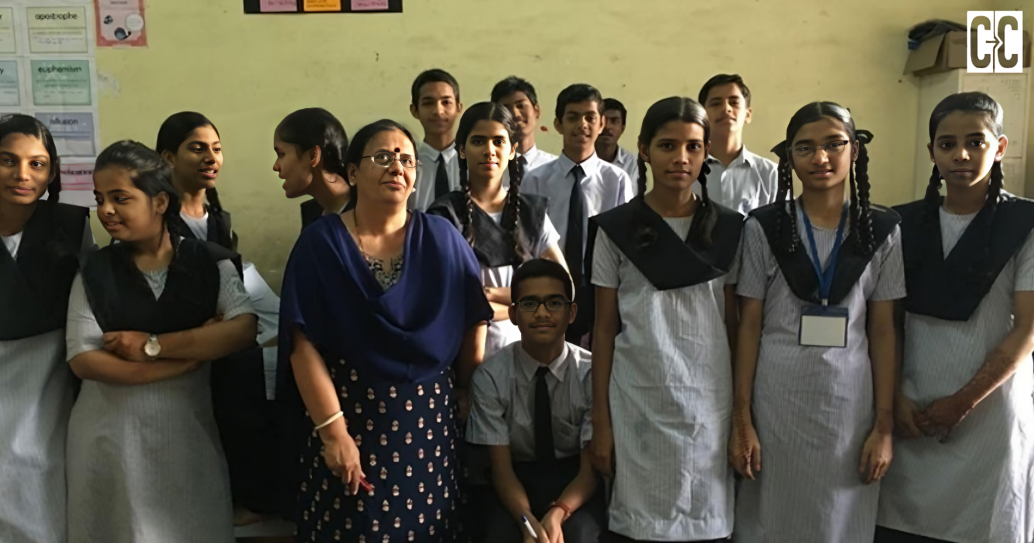
Empirical evaluations of the Teach For India programme find that Fellows’ students show measurable gains in English, mathematics, and critical thinking compared to control classrooms. More importantly, Mistri has described the classroom as ‘a microcosm of society’ where Fellows encounter children who are victims of abuse, go to sleep hungry, have parents without employment, and have medical conditions their families cannot afford to treat. The Fellowship’s value is not only academic: it forces young leaders from privileged backgrounds to understand India’s inequities from within a classroom, rather than from a policy brief. That experience is what the alumni data says tends to keep them engaged with the problem long after the Fellowship ends.
2026 and the ambition for 100 million children
Applications for the 2026 Fellowship cohort opened in July 2025, continuing the programme’s expansion. Teach For India has articulated an ambitious longer-term goal: reaching 100 million children directly and indirectly through its network, a tenfold jump from its current estimated reach. Achieving that would require both growing the Fellowship itself and dramatically expanding the alumni organisation-building ecosystem.
Conclusion
Shaheen Mistri’s most uncomfortable argument is that educational inequity in India is not a resource problem; it is a will problem. The government classrooms exist. The children are there. What has historically been missing is the sustained presence of capable, committed adults who treat these children as deserving of the same quality of attention, care, and academic rigour that private schools give their fee-paying students. Teach For India’s alumni data makes a specific policy case: a two-year immersive experience in a low-income classroom is one of the most reliable ways to produce a social-sector leader for life. The government of India and state education departments should study whether a mandatory public service fellowship could be embedded into public university graduation requirements, converting India’s youth population from an untapped resource into a nationwide education force.
Clear Cut Education Desk
New Delhi, UPDATED: September 16, 2026 11:38 IST
Written By: Tanmay J. Urs