
- Recent food poisoning incidents in Telangana, including cases involving school children and street food consumers, highlight a recurring pattern of outbreaks followed by investigations but little long-term change.
- Unsafe water, poor food storage, inadequate hygiene practices, and weak oversight continue to put children, especially those in welfare hostels and schools, at risk of preventable illness.
- The article argues that consistent inspections, trained food handlers, clean water, and accountability are essential to prevent future outbreaks and restore public trust.
June 2026. In Rajanna Sircilla district, over 30 people more than half of them children were hospitalised after eating pani puri from a street vendor in KCR Nagar colony. The vendor was arrested. Weeks before that, in Sangareddy, between 23 and 45 students at a government primary school fell violently ill after being served leftover food from a private village function, passed off as part of their mid-day meal. Vomiting, stomach pain, children carried into wards. Parents dropping everything to get there.
Telangana has been here before. The districts change. The children change. What does not change is the sequence an outbreak, rushed investigations, official assurances, and then silence. Within days the story leaves the front page. Within weeks it is forgotten. And the conditions that made it happen remain untouched.
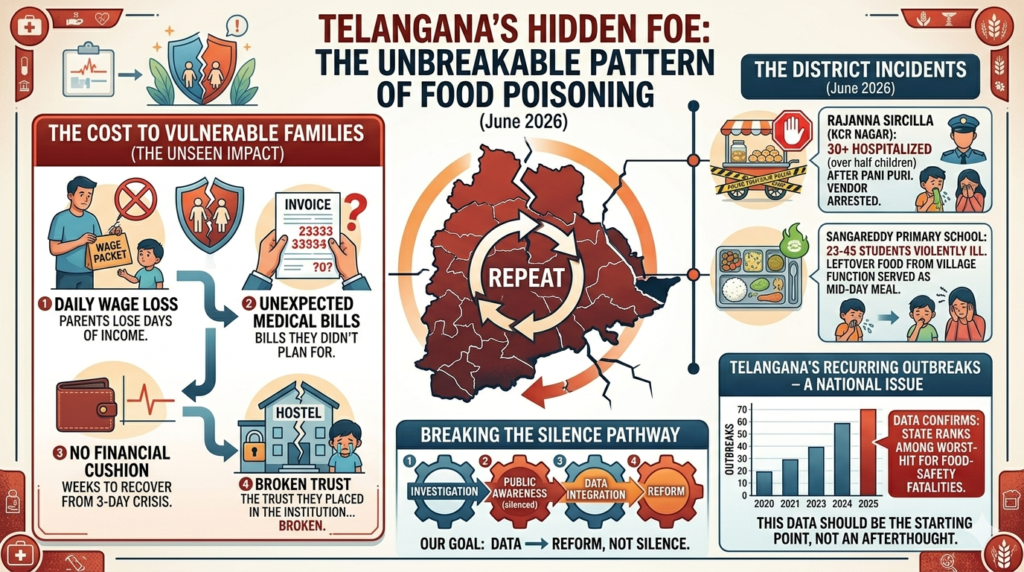
This is the pattern. And Telangana’s own data confirms it. According to the Medically Certified Cause of Death report, the state ranks among the worst-hit in the country for food-safety-related fatalities. That detail rarely enters the conversation that follows each outbreak. It should be the starting point of it.
The cost falls hardest on those least able to absorb it. Most children in welfare hostels come from families with limited means and uncertain daily incomes. For them, the hostel meal is not supplementary it is the meal. When a child ends up in hospital, the damage spreads far beyond the ward. Parents drop everything, watching wages disappear and facing bills they had no warning were coming. For families living on what they earn each day, there is no cushion. Three days of crisis can take weeks to recover from. And running beneath all of it is something that does not show up in any expense column the trust these families placed in an institution, often sending children far from home, broken by something as basic and avoidable as contaminated food.
The reasons this keeps happening are not hard to find. Unsafe water. Food left out too long. Kitchens that are not cleaned properly. People cooking for hundreds of children every day with no real training, no clear protocols, and often no one checking whether basic standards are being met. In Telangana, that problem collides with a climate that leaves almost no room for error.
Summer here is not a mild inconvenience. Temperatures climb past 40 degrees Celsius and stay there for months. It does not take dramatic mishandling for food to turn dangerous in that heat. A meal cooked in the morning and held until midday. Ingredients sitting out for a few hours longer than they should. A storage room with no cooling that gets unbearable by nine in the morning. The line between safe and unsafe is crossed quietly and nobody notices until children start falling ill.
Raw ingredients sitting in a room without cooling. These are not dramatic failures. They are ordinary oversights that the climate turns into health emergencies.
That reality demands serious, consistent oversight. What exists instead is inspection that is irregular and almost always reactive arriving after an outbreak rather than working to prevent one. Staff training, where it happens at all, tends to be a single session with no follow-up. Supply chains move through with little scrutiny. A system that only tightens its attention after children fall ill is not a food safety system. It is a damage control mechanism. And damage control always comes too late.
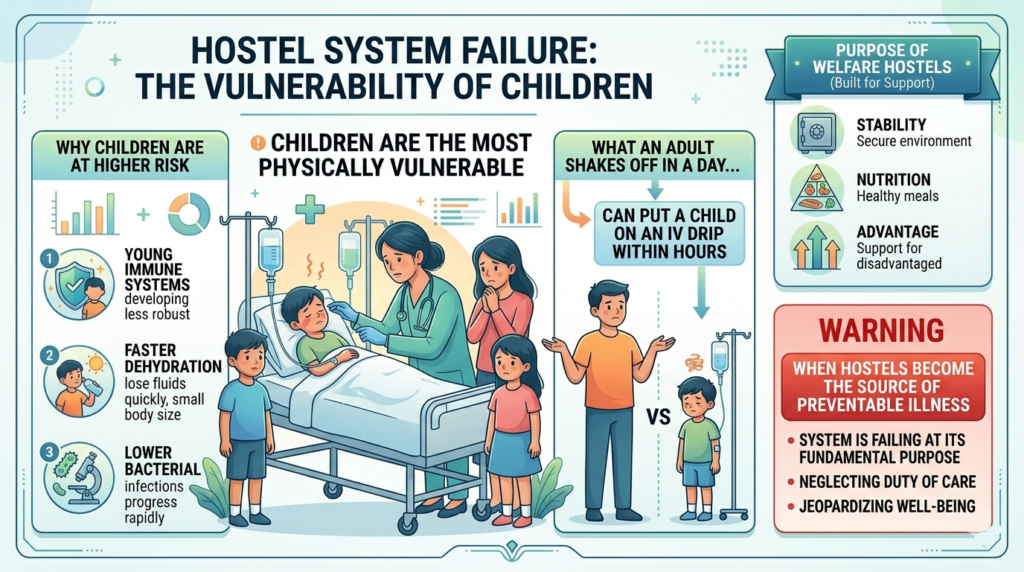
The children caught in the middle of this are also the most physically vulnerable. Young immune systems, faster dehydration, lower tolerance for bacterial infection what an adult shakes off in a day can put a child on an IV drip within hours. The welfare hostel system was built to support children from disadvantaged backgrounds, to give them stability and nutrition their circumstances might not otherwise allow. When it becomes the source of preventable illness, it is failing at the most fundamental level of its purpose.
Fixing this does not require new policy or additional budget. Clean water. Functioning cold storage. Documented hygiene protocols. Trained food handlers. Unannounced inspections with real consequences for lapses. None of this is complicated or expensive. What is missing is not knowledge it is follow-through, and accountability that applies every day, not just after a crisis forces attention.
No parent should have to wonder whether a routine meal might send their child to hospital. For too many families in Telangana right now, that is not an abstract concern. It is a reasonable one. And that should not be acceptable to anyone responsible for running these institutions or for overseeing them.
Clear Cut Health Desk
New Delhi, UPDATED: June 20, 2026 09:00 IST
Written By: Anaina Tomy