

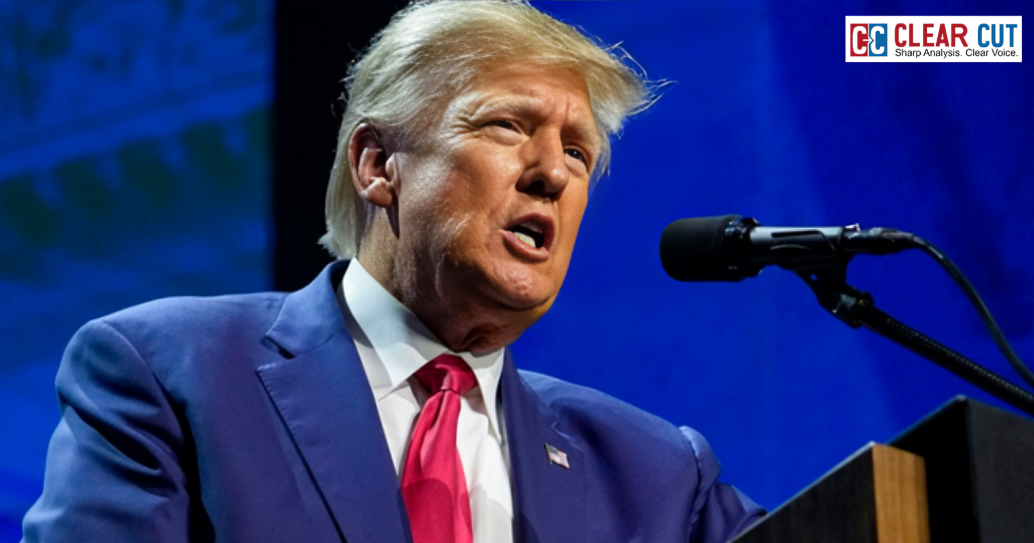
- President Trump and Senator Bill Cassidy had a heated exchange during a closed-door meeting with Republican senators after Cassidy supported the Senate’s Iran War Powers Resolution against the president’s position.
- The confrontation highlighted growing Republican divisions over the Iran conflict, raising broader questions about congressional independence, executive authority, and internal party dissent.
RAISED VOICES IN A ROOM BUILT FOR DECORUM
Closed-door meetings between a sitting president and his own party’s senators are, by design and tradition, supposed to stay closed-door. The disagreements aired privately, unity projected publicly. That arrangement broke down on Wednesday, June 24, 2026, when President Trump’s meeting with Republican senators turned visibly, audibly testy, and the president told Louisiana Senator Bill Cassidy, in front of his colleagues, to sit down.
Cassidy, for his part, did not simply comply. According to multiple sources familiar with the exchange, he attempted to respond, telling the president he should sit down instead, before ultimately relenting. ‘He raised his voice. I lost my temper. That’s not appropriate,’ Cassidy told reporters afterward, adding with characteristic candor, ‘It’s the Irish in me, but I again matched his tone and his volume.’
THE QUESTION THAT STARTED IT
The confrontation arose specifically over questions about the War Powers Resolution. It was the same measure; the Senate had passed just one day earlier on Tuesday. Cassidy among the four Republicans who crossed party lines to support it. This was not an abstract policy disagreement, but the president directly confronting one of the 4 senators responsible for handing him a rare, public legislative rebuke from his own party’s chamber.
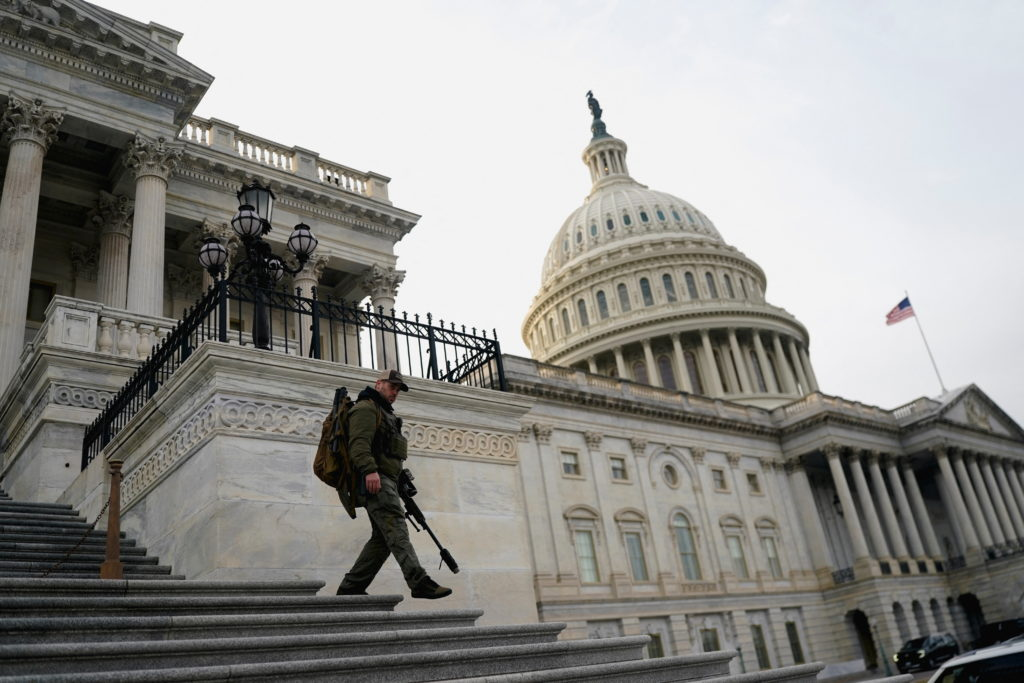
Cassidy’s political position adds another layer of context that several reporters and Democratic senators have noted explicitly. He lost his Louisiana Republican primary on May 16, 2026, to a Trump-endorsed challenger, meaning his remaining months in the Senate carry comparatively little of the usual electoral incentive to avoid friction with the president. It is a dynamic that has visibly emboldened him, by his own account and that of colleagues, to vote and speak with less deference than earlier in his term.
A PATTERN, NOT AN ISOLATED INCIDENT
This confrontation did not occur in a vacuum. It followed directly on the heels of Tuesday’s 50-48 Senate vote on the Iran war powers resolution. It arrived as the Pentagon was simultaneously seeking roughly $80 billion in supplemental funding from Congress for the ongoing conflict. The visible friction inside Wednesday’s meeting reflects a Republican Senate conference no longer uniformly willing to absorb policy disagreement quietly, even toward a president of their own party during an active military conflict.
Vice President JD Vance had reportedly been working overseas on diplomatic efforts to negotiate with Iran around the same period, adding a further layer of institutional complexity: the administration was simultaneously pursuing a negotiated resolution abroad while facing open, public dissent over war authority at home. Two tracks that, taken together, suggest an administration managing significant internal disagreement over a conflict that has now stretched more than 80 days.
WHAT THIS MOMENT REVEALS ABOUT INSTITUTIONAL HEALTH
A president raising his voice at a senator, and that senator matching it, is not in itself a constitutional crisis. Heated political disagreement is a normal, even healthy, feature of a functioning legislature, provided it does not curdle into something that suppresses legitimate dissent through intimidation rather than persuasion. What deserves genuine scrutiny is whether this incident reflects isolated personal friction between two strong personalities, or a broader pattern in which the administration treats policy disagreement from its own party as something to be confronted and overpowered rather than debated and accommodated.
Congress, regardless of party, should treat its own institutional as worth defending precisely because it will occasionally produce uncomfortable, public confrontations like Wednesday’s. Cassidy’s willingness to describe the exchange candidly to reporters, rather than letting it disappear behind closed doors, is itself a small but meaningful act of institutional transparency that the public is better served by having, regardless of one’s view on the underlying Iran policy dispute that triggered it.
Clear Cut Research Desk
New Delhi, UPDATED: June 29, 2026 09:00 IST
Written By: Tanmay J. Urs