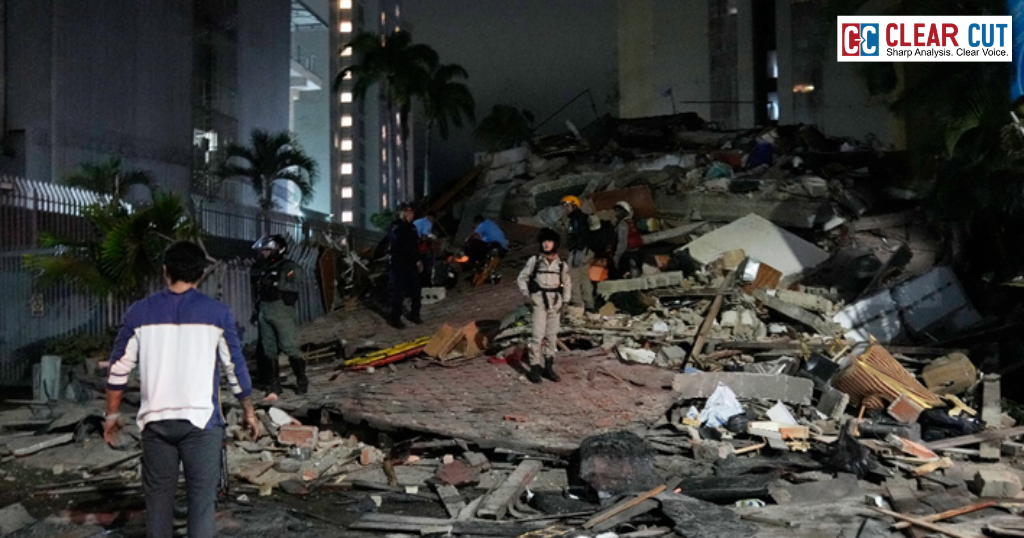
- Two powerful 7.1 magnitude earthquakes struck Venezuela within minutes, with the epicentre near Morón, causing building collapses and widespread shaking in Caracas.
- The shallow, back-to-back quakes increased the risk of severe structural damage, as buildings weakened by the first tremor became more vulnerable to the second.
- The disaster has exposed Venezuela’s strained emergency response capacity, with concerns over rescue operations, infrastructure resilience, and the need for international assistance.
TWO TREMORS, ONE CAPITAL, NO WARNING
Earthquakes rarely announce themselves twice. Venezuela was struck by back-to-back powerful earthquakes minutes apart on Wednesday, June 24, 2026, with buildings collapsing in the capital, Caracas, in a country whose institutional capacity to respond to large-scale disaster has been quietly eroding for years under economic crisis and political turmoil largely unrelated to seismic risk.
The US Geological Survey recorded a magnitude 7.1 quake striking near Morón at a depth of approximately 13 kilometres. A shallow depth that typically amplifies surface shaking and structural damage compared to deeper, more diffuse tremors. The proximity of two major quakes occurring within minutes of each other complicates both the immediate emergency response and the structural engineering assessment of buildings that may have sustained cumulative, compounding damage from the sequential shocks.
WHY SHALLOW, BACK-TO-BACK QUAKES ARE ESPECIALLY DANGEROUS
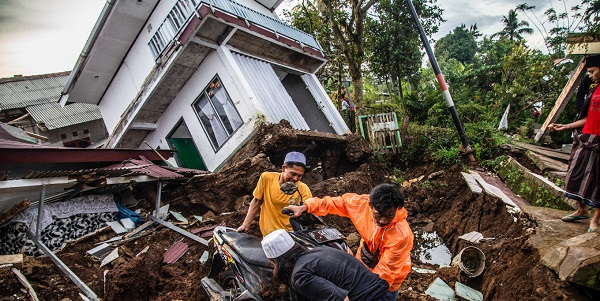
Seismologists generally consider shallow earthquakes more destructive than deep ones of equivalent magnitude, because the energy has less distance to dissipate before reaching structures above ground. A second major quake arriving within minutes, before structural damage from the first can even be assessed, creates a particularly hazardous scenario: buildings weakened but not yet collapsed by an initial shock can fail completely under a second jolt that, on its own, might have been survivable.
Caracas, a dense urban capital built across decades with widely varying construction standards and limited consistent enforcement of seismic building codes, is structurally vulnerable to exactly this kind of compounding seismic event. Venezuela sits along a complex tectonic boundary zone where the Caribbean and South American plates interact, making the country historically prone to significant seismic activity, including a devastating 1967 Caracas earthquake that killed hundreds and remains a benchmark event in the country’s disaster history.
THE COMPOUNDING CRISIS CONTEXT
Venezuela’s capacity to mount an effective disaster response cannot be assessed in isolation from the broader institutional and economic strain the country has experienced over the past decade. This includes hyperinflation, mass emigration that has reduced the country’s skilled workforce including engineers and emergency responders and infrastructure investment that has lagged behind maintenance needs across multiple sectors simultaneously. International humanitarian and disaster-response organisations monitoring the situation will be assessing not just the immediate casualty and structural damage figures, but the speed and adequacy of the government’s emergency mobilisation relative to comparable seismic events elsewhere in the region.
Early reporting in the hours following the quakes remains limited, with full casualty figures, structural damage assessments, and the geographic extent of the impact still emerging as rescue and assessment operations get underway.
WHAT INTERNATIONAL RESPONSE MUST PRIORITISE
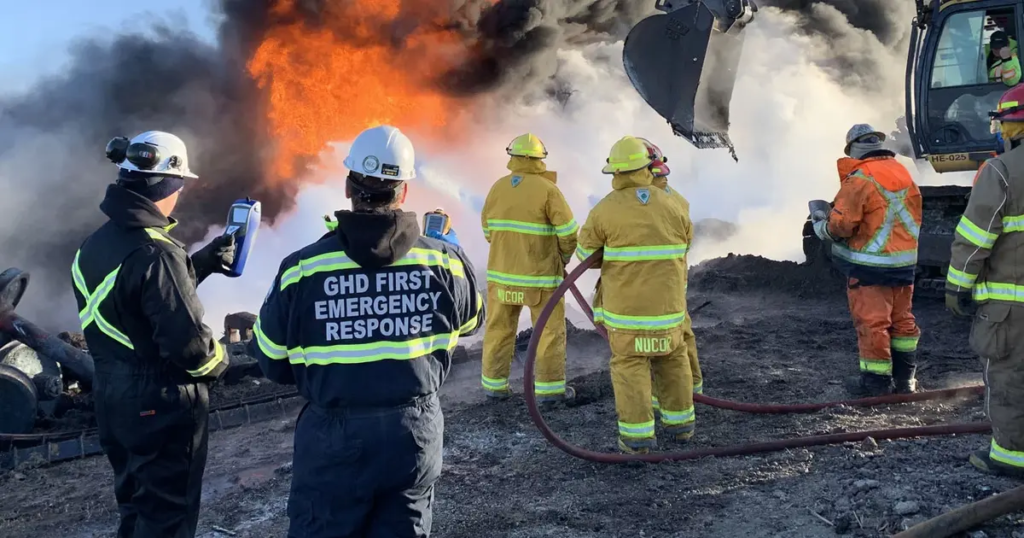
In the immediate term, the priority for international relief coordination must be structural assessment of buildings that may appear superficially intact but have sustained compounding damage from the sequential shocks. It is a less visible but potentially equally lethal hazard compared to buildings that collapsed outright. Search-and-rescue capacity, particularly heavy urban rescue equipment that Venezuela’s own emergency services may lack in sufficient quantity given years of underinvestment, should be a primary focus of any regional or international assistance offered.
Long-term, this event should prompt renewed international attention to seismic building code enforcement across Venezuela’s urban centres. It is a policy area that tends to receive serious attention only in the immediate aftermath of disaster, and is then deprioritised as the news cycle moves on. Venezuela’s vulnerability to this specific type of compounding seismic event will not diminish on its own. Only sustained, unglamorous investment in building codes, structural retrofitting, and emergency response training will reduce the human cost the next time the ground moves twice in the same afternoon.
Clear Cut Climate Desk
New Delhi, UPDATED: June 27, 2026 05:00 IST
Written By: Tanmay J. Urs