India is rapidly emerging as a global hub for precision medicine and biomanufacturing, driven by advances in biotechnology, genomics, and multi-omics research. Government policies, investments, and a growing research ecosystem are positioning the country as a leader in future healthcare innovation.
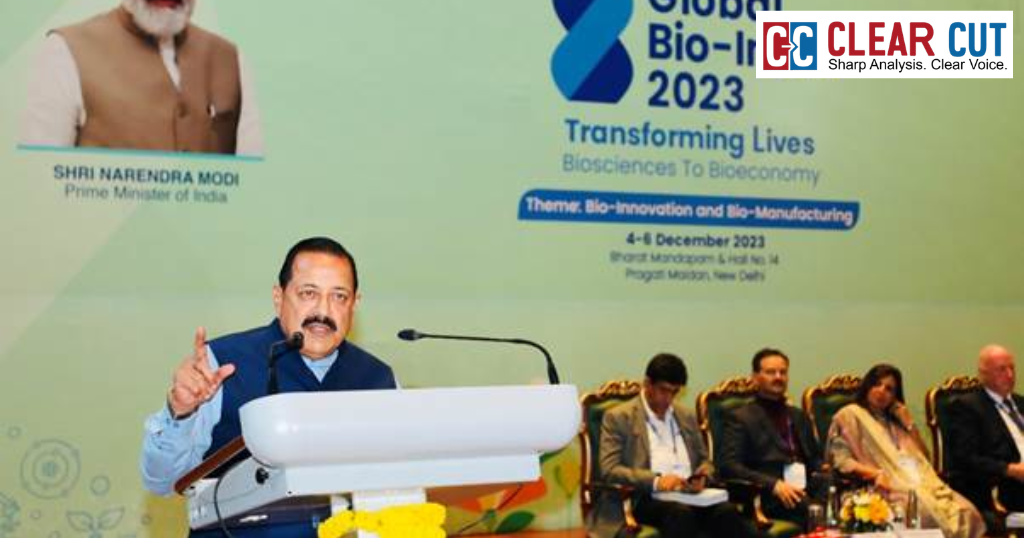
India is entering a new phase in healthcare innovation, driven by advances in biotechnology, genomics, and multi-omics research. Union Minister of State for Science and Technology Dr Jitendra Singh said the country is rapidly transitioning from a healthcare follower to a global leader in precision medicine and biomanufacturing. The statement came during the inaugural address at the Multi-Omics Summit 2026 held in New Delhi.
The summit brought together scientists, researchers, clinicians, and industry leaders to discuss how emerging technologies can reshape healthcare. According to Dr Jitendra Singh, the convergence of genomics, artificial intelligence, and biotechnology is opening new possibilities for disease diagnosis and treatment. He said India now stands at a moment where advanced scientific capabilities can transform the country into a global centre for healthcare innovation.
Dr Jitendra Singh noted that India has moved beyond the stage where patients travelled abroad for advanced treatment. He stated that the country is now attracting medical tourism because of its combination of skilled professionals and cost-effective healthcare services. This shift reflects the growth of India’s research ecosystem and expanding biotechnology sector.
Biotechnology Growth Driving the Bioeconomy
India’s biotechnology ecosystem has expanded rapidly in the past decade. Dr Jitendra Singh said the country now has more than 11,000 biotech startups, compared with only a few dozen in earlier years. The expansion reflects policy support, growing research infrastructure, and increasing participation from industry and academia.

He highlighted the government’s BioE3 policy, which focuses on biotechnology for economy, environment, and employment. According to the minister, the policy aims to accelerate innovation and expand India’s biomanufacturing capacity while creating new opportunities in the bioeconomy.
Government investment is also strengthening the sector. Dr Jitendra Singh pointed to the Biopharma Shakti programme, which has an allocation of ₹10,000 crore. The initiative will support biomanufacturing hubs, biofoundries, and advanced research infrastructure across the country.
Experts at the summit emphasised that these investments could position India as a key player in global biotechnology supply chains. They noted that the country already contributes significantly to pharmaceutical manufacturing and vaccine production.
Genomic Research and India’s Unique Advantage
India’s genetic diversity gives researchers a major advantage in genomic studies. Dr Jitendra Singh said the country’s large and varied population offers valuable data for understanding disease patterns and developing personalised treatments.
Through the Genome India Project, scientists have already sequenced around 10,000 genomes. The upcoming Phenome India initiative aims to expand this research and build large datasets that will help scientists identify disease risks earlier and design targeted therapies.
The minister explained that multi-omics research integrates genomics, transcriptomics, and proteomics to study complex biological systems. When combined with artificial intelligence and machine learning, these technologies can help researchers understand disease mechanisms and design personalised treatment strategies for diverse populations.
Advances in Medical Research
Dr Jitendra Singh also highlighted emerging breakthroughs in biomedical science. He referred to progress in gene-based therapies and nuclear medicine that are improving treatment for complex diseases.
Researchers have reported advances in the treatment of conditions such as sickle cell disorder and hemophilia. He also pointed to new developments in nuclear medicine used to treat acute lymphoblastic leukemia in children at the Tata Memorial Centre.

The minister added that India has demonstrated leadership in preventive healthcare as well. He cited the development of the world’s first DNA-based vaccine as an example of the country’s scientific capabilities and its focus on affordable healthcare solutions.
Collaboration and the Future of Healthcare
Global collaboration continues to be a key pillar of India’s biotechnology strategy. Dr. Jitendra Singh noted that multi-omics research depends on strong interdisciplinary partnerships across institutions and countries. To strengthen such cooperation, the government is promoting policy reforms and encouraging greater participation from academia, startups, and industry.
He also highlighted recent policy changes that allow greater private sector participation in the nuclear sector. According to the minister, these reforms could accelerate advancements in nuclear medicine, especially when integrated with developments in genomics and precision medicine.
Dr. Singh described the present moment as one of the most dynamic phases in modern medical science. The convergence of biotechnology, artificial intelligence, genomics, and digital technologies, he said, is opening new possibilities for innovation in healthcare.
Expressing confidence in India’s scientific talent and research ecosystem, the minister emphasised that the country is well placed to lead future breakthroughs in biotechnology and precision medicine. With the growing global demand for advanced healthcare solutions, India’s expanding bioeconomy and research capabilities are expected to play an important role in shaping the next generation of medical technologies.
Clear Cut Research Desk
New Delhi, UPDATED: March 18, 2026 09:00 IST
Written By: Ayushman Meena