
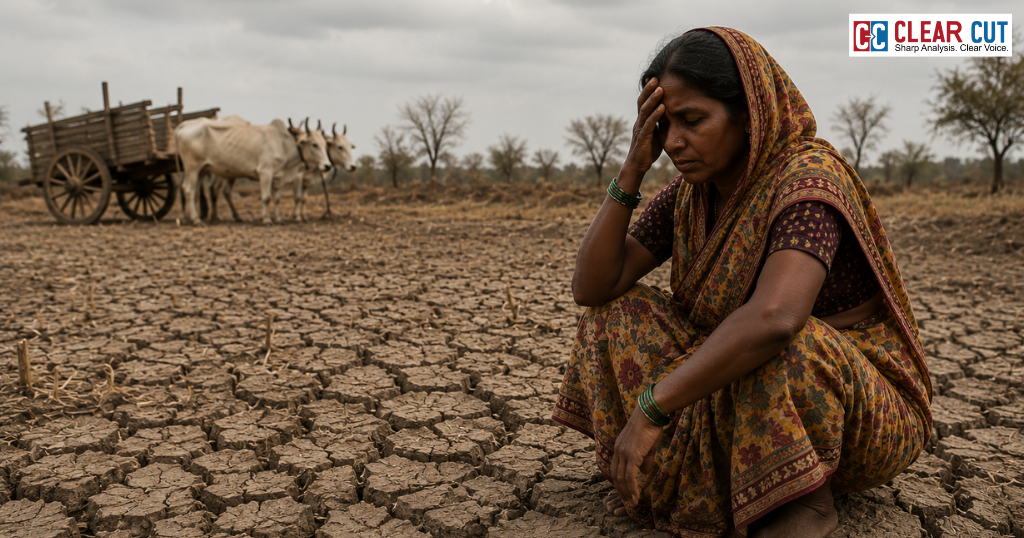
- Climate change is disproportionately affecting women in India, especially those working in agriculture, by reducing income opportunities, increasing wage gaps, and limiting access to resources during droughts and extreme weather events.
- Women also face a growing burden of unpaid care work, including collecting water and caring for family members, which further restricts their participation in paid employment and economic independence.
- Experts recommend gender-responsive climate policies, improved social protection, access to land and credit, and climate-sensitive rural employment programs to reduce these inequalities and strengthen resilience.
In the rain-fed rice cultivation areas of Odisha and Maharashtra, drought years are not gender-blind events. In fact, research based on national sample survey data in India, conducted by the Asia-Pacific branch of UNDP, has shown that when rainfall is poor, women farm workers earn less in terms of wages than men, specifically in rice-growing areas, because women participate mainly in activities that depend on good rainfall. The men migrated from the village during the dry years, while the women were left behind to fetch water and look after their sick children. The plight of the latter went unnoticed.
The recurrence of such trends, regardless of geographical area and industry, suggests that climate change acts as a multiplier for inequality – working silently to restrict women’s access to paid employment, earnings, and independence.
The Economic Face of Climate Change for Women
The figures on which this story rests are not the figures provided by the activists; they are rather those provided by the Food and Agriculture Organisation. According to the findings of The Unjust Climate report issued in 2024 and analysing 70 years’ worth of climate-related data combined with the income of over 109,341 households in 24 low- and middle-income nations, without any disasters being included, an increase in temperature by just one degree Celsius would cause a decrease of 34% in the total income of women-led households compared to men-led households. On an average day, hot weather impacts the earnings of women-led households by 8%, while extreme precipitation impacts them by 3%, amounting to USD 37 billion and USD 16 billion in annual losses, respectively, across low- and middle-income countries.
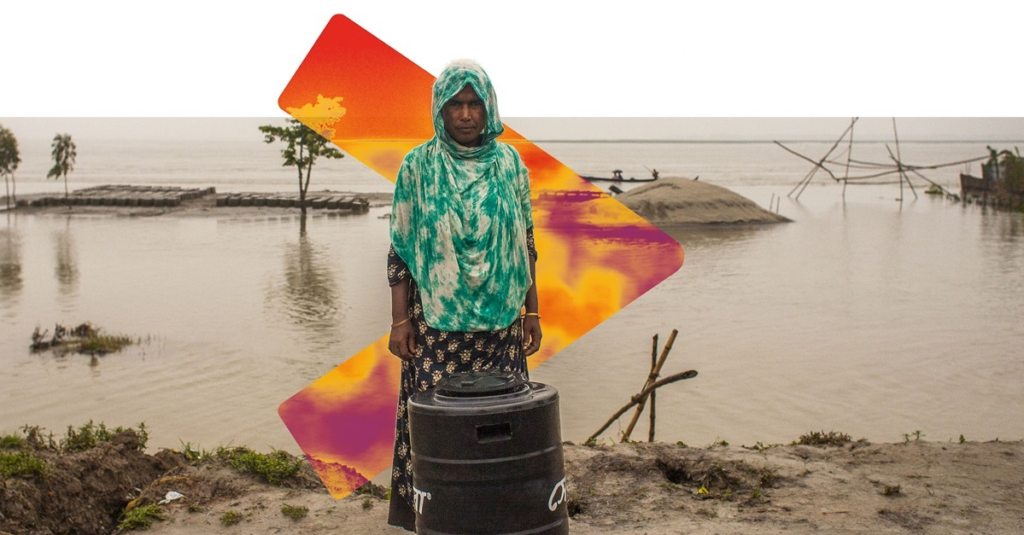
This is not about future predictions. India has seen a 34% increase in deaths due to heat exposure between the periods of 2003-2012 and 2013-2022, as per the IMD. Agriculture is the field that faces these changes more directly; this is also the sector where the majority of women work. As per the Periodic Labour Force Survey (PLFS) 2023-24 report published by India’s Ministry of Statistics and Programme Implementation, 76.9% of the workforce made up of rural women workers are working in agriculture – a proportion that has been rising in recent years due to reasons other than those of opportunity, since women have been withdrawing from both formal and industrial occupations. As mentioned above, the increase in the number of women involved in the above statistics comprises mainly unpaid labour in family enterprises and subsistence farming.
Heat, Drought, and Disappearing Livelihoods
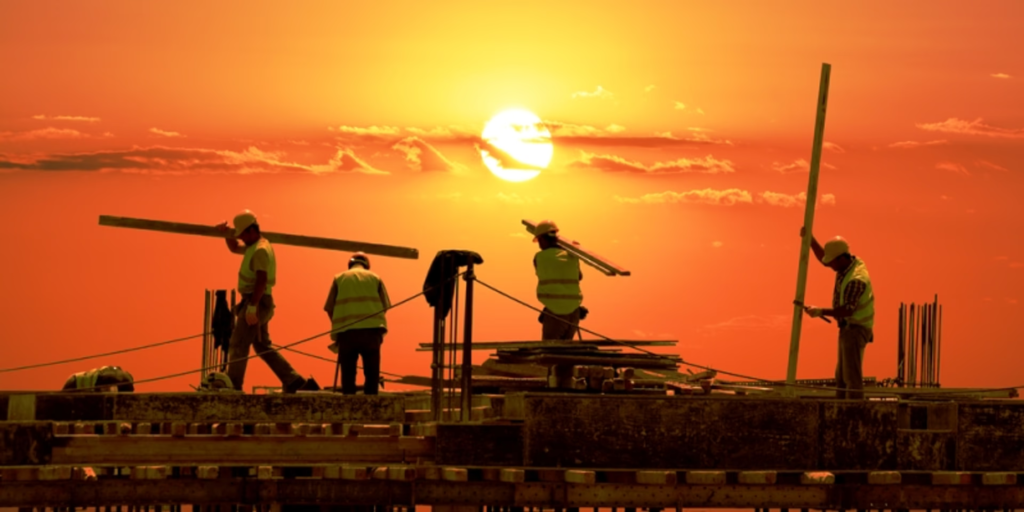
As per the ILO’s historic report “Working on a Warmer Planet” published in 2019, a 1.5°C increase in temperature could lead to 2.2% loss of total working hours across the globe because of heat stress by 2030, resulting in an 80 million loss of employment and USD 2.4 trillion in terms of economic losses annually. India will witness a drop of 5.2% in total working hours lost due to heat stress, the maximum among all G20 countries. The agricultural workforce, which contributes approximately 60% towards total working hours lost due to heat stress, will suffer the most due to this phenomenon. In fact, according to the ILO, one of those groups that will be significantly affected is the female gender who make up a substantial number of the estimated 940 million people working in agriculture worldwide.
The exposure risk of Indian females becomes even greater due to agricultural specialisation. As indicated by a study conducted by Afridi et al. in Labour Economics (2022), based on panel data at the district level in India, after the periods of drought, women become much less likely to be engaged in non-agricultural labour as a result of migration compared to males, especially in places with increased rainfall variability. Men would move away, whereas women remained exposed in their homes to shocks. Rain-fed rice areas, accounting for much of eastern and central Indian agricultural production, saw a widening of gender wage inequality.
The Hidden Burden of Unpaid Care and Water Collection
One area that cannot be measured using economics is unpaid labour. According to UN Women statistics, while only 5 % of working-age men are out of the labour force due to unpaid care work, 45 % of women face a similar fate. This challenge is even worse in times of climate change. According to the analysis carried out by the Food and Agriculture Organisation of the United Nations, women dedicate themselves to four hours daily in the execution of unpaid domestic and care activities, which is even higher compared to men. In addition, climate change increases this challenge, with more water collection and child care needs resulting from extreme weather.
As evidenced by the studies conducted by UNDP in India, using the data collected from focus group discussions conducted in 26 villages in Maharashtra and Odisha, this is a direct mechanism that is responsible for keeping women away from waged labour due to increased collection time for water, fodder, and firewood in the case of low rainfall. Women’s unpaid labour associated with water collection becomes a structural time tax that gets aggravated when there are declining groundwater tables.
How Climate Shocks Widen Gender Inequalities in Employment
Shocks to climate conditions are not only associated with lower levels of employment but also alter it in a gender-specific manner. According to recent findings from the 2023 World Bank Policy Research Working Paper on evidence synthesis from developing countries, when negative rainfall shocks occur in India, there is an increase in casual female labour and male regular wage labour. Conversely, when positive rainfall shocks take place, men turn to casual labour and women engage in housework.
The reduced ability of women to access land, credit, and irrigation, as evidenced by research studies such as the work done by the International Food Policy Research Institute on drought-prone areas in Odisha and Gujarat states, suggests that during a climate shock event affecting agricultural families, women will have less to draw from and fewer resources to adapt. This suggests that rather than generating new forms of inequality, climate change is merely amplifying existing inequalities.
What Governments, Employers, and Communities Can Do
The facts also lead us to potential solutions. According to the ILO, these may take the form of flexible working hours during periods of excessive heat, improved standards for workplace safety, and social insurance for informal sector workers, which includes most women in the climate-exposed industries. According to FAO, these solutions should consist of land and water rights for women, loan programs for women farmers, including gender considerations in national adaptation programs, and improving rural infrastructure to reduce water and fuel collection times.
But India has mechanisms at its disposal – the MGNREGS scheme which has helped shield rural families from the effects of climatic stress, and women’s self-help groups, which have been successful conduits for the delivery of inputs and credit. However, such mechanisms should be designed with climate sensitivity in mind, with links made between drought relief, feeding programs, climate finance, and women’s empowerment.
So long as the climate policies are drafted without considering the labour statistics and employment policies are drafted without taking into consideration the share of unpaid labour, both will continue to interact with each other in silence. Climate adaptation is not a gender-neutral process. Any agricultural policy that does not consider who grows the crops, who carries the water, and who has to remain at home when there is nothing left after harvest is incomplete. The temperature is rising for everyone, but not equally.
Clear Cut Climate Desk
New Delhi, UPDATED: June 10, 2026 03:00 IST
Written By: Jyoti Aggarwal