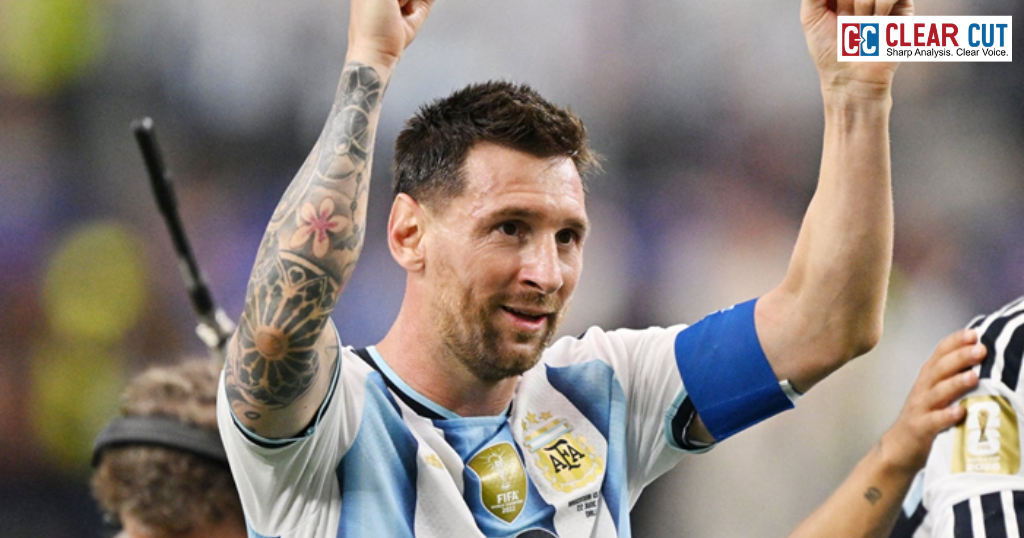
- Lionel Messi created football history by scoring his 17th and 18th World Cup goals against Austria, surpassing Miroslav Klose and Marta to become the all-time leading World Cup goalscorer across men’s and women’s tournaments.
- Argentina’s 2-0 victory secured qualification for the Round of 32, while Messi’s record marked the culmination of a remarkable 20-year World Cup journey spanning six tournaments.
STUNNED SILENCE, THEN A ROAR
For about 90 seconds, Dallas Stadium experienced something close to collective heartbreak. Lionel Messi stepped up to a 9th minute penalty. The entire 70,649-strong crowd on its feet with phones raised, certain they were about to witness history. However, to their discouragement, Messi dragged his shot wide of the post. Austria’s goalkeeper Alexander Schlager celebrated. The record everyone came to see did not arrive on schedule. It arrived 29 minutes later instead, and then again in stoppage time. In a way that made the wait feel almost narratively necessary.
In the 38th minute of Argentina’s Group J fixture against Austria on June 22, 2026, Messi swept home a left-footed finish to reach 17 World Cup goals. He surpassed Germany’s Miroslav Klose to become the all-time leading men’s World Cup scorer. He then added a second in stoppage time, taking his tally to 18 and, in the same stroke, overtaking Brazilian great Marta’s 17 Women’s World Cup goals to become the outright leading scorer across men’s and women’s World Cup history combined.
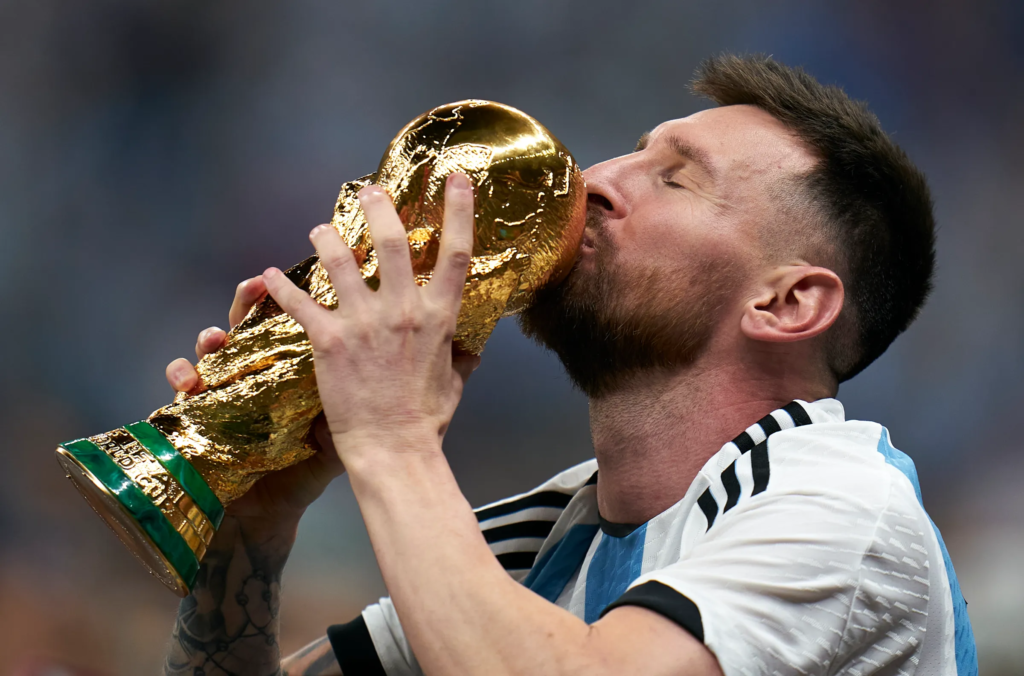
| 18 Total World Cup Goals | 6 World Cups Played | 38 Age at Record Goal | 6 Consecutive Games Scored |
A RECORD TWO DECADES IN THE MAKING
The arc from Messi’s first World Cup goal in 2006 to his record-breaking 17th in 2026 spans exactly 20 years and 6 tournaments. A career longevity almost without precedent for an attacking player operating at the highest level. He had already equalled Klose’s previous record of 16 goals just days earlier with a hat-trick against Algeria in Argentina’s tournament opener, a performance that also made him, at 38 years and 357 days old, the oldest player ever to score a World Cup hat-trick, surpassing Cristiano Ronaldo’s mark set in 2018.
Scoring against Austria also made Messi only the third player in World Cup history to find the net in 6 consecutive tournament games. He joined hands with France’s Just Fontaine from 1958 and Brazil’s Jairzinho from 1970 showing just how rare sustained scoring form across a career, not just a single tournament, actually is.
THE MATCH BEHIND THE MILESTONE
Argentina’s 2-0 win secured their place in the round of 32 and put the defending champions on the brink of topping Group J outright. Austria played a disciplined, physical game managed by Ralf Rangnick that limited Messi’s space significantly more than Algeria had. Austria captain David Alaba personally denied him on 2 separate occasions in the 1st half alone. The eventual record goal came from a slick passing sequence involving Thiago Almada and Facundo Medina, leaving Messi with an unguarded net rather than a contested chance.
Among active players, Kylian Mbappé sits closest to Messi’s new mark with 14 goals. The record, freshly set, already has a credible long-term challenger watching from the same tournament.
WHAT THIS MOMENT MEANS BEYOND THE SCORELINE
Records in football are ultimately about more than arithmetic. They are markers of how a sport remembers its own history. Messi’s path to this one was neither smooth nor inevitable. He publicly announced he was finished with the Argentina national team after a disappointing 2016 Copa América. He called it ‘over’ in a moment of visible anguish, before being coaxed back by coach Lionel Scaloni, winning the 2021 Copa América, and then the 2022 World Cup itself.
That history matters because it reframes this record of a career that nearly ended in frustration and was rebuilt through persistence. The sports’ institutions have drawn criticism for prioritising commercial expansion over player welfare and the integrity of competition. Messi’s record stands as a reminder that the game’s greatest moments still belong fundamentally to the players who refuse to walk away. Argentina face Jordan next on June 28, with at least one more chance for Messi to extend a lead that, for now, looks unlikely to be matched anytime soon.
Clear Cut Awards & Events Desk
New Delhi, UPDATED: June 26, 2026 01:00 IST
Written By: Tanmay J. Urs