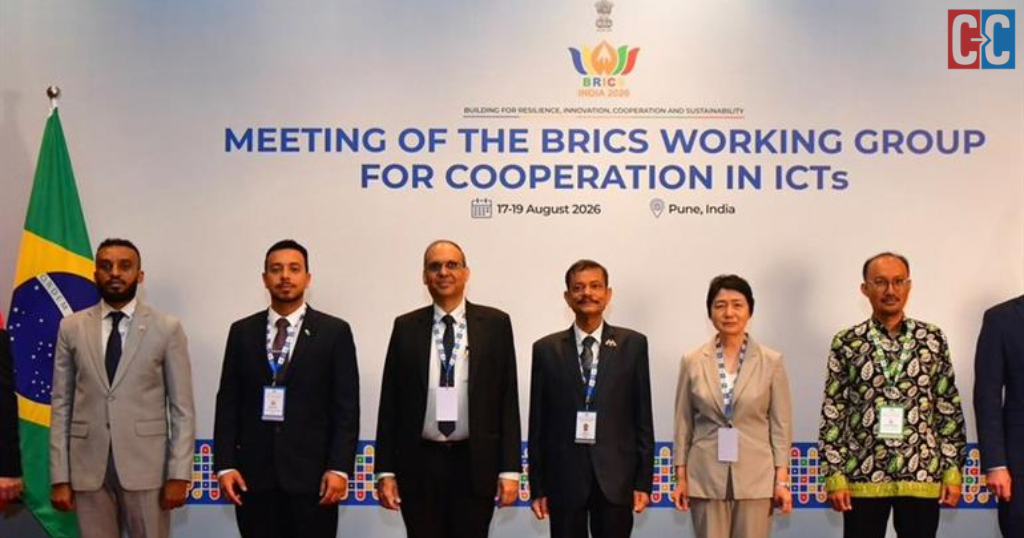
- India hosted the 7th BRICS ICT Working Group Meeting in Pune, focusing on AI, next-generation networks, digital public infrastructure, cybersecurity, and digital connectivity.
- The meeting highlighted India’s 2026 BRICS Chairship and its efforts to strengthen digital cooperation, innovation, startups, and inclusive digital growth among BRICS nations.
Setting the Stage in Pune
The meeting of the 7th BRICS ICT Working Group was held in Pune, India, on 17 August 2026, which marked the first face-to-face meeting of the BRICS ICT Track during India’s 2026 chairmanship (Department of Telecommunications, 2026). The three-day meeting was a part of a five-day ICT Track event that focused on “Innovate, Cooperate and Transform (ICT) for a Resilient Future” involving delegates of all eleven BRICS member nations. As economies get inter-connected with one another in the digital world and as technologies like artificial intelligence and next-generation networks bring about significant changes to governance and industry, international cooperation on ICT has gained a lot of significance.
A Track Built on Four Pillars
The Working Group’s program of action was based on four priorities established in the Chairship’s Issues Note: the expansion of universal, affordable, and resilient connectivity; the creation of trusted, secure, and human-centred digital environments; digital capacity-building; and fostering innovation, startups, and entrepreneurship in ICTs. In these pillars, the delegates discussed issues such as artificial intelligence, next generation of communications, Digital Public Infrastructure (DPI), cybersecurity, children’s online safety, and cooperation in digital ecosystems.
A noteworthy component of the meetings included those of the BIFN Council that examined the performance of its respective national units as well as receiving briefings from working groups on issues of artificial intelligence, next-generation communications, Industry 4.0 internet applications, and EMF exposure. These are all different aspects of digital resilience in that AI is associated with governance but at the same time helps boost productivity; next-generation technologies and Industry 4.0 applications will decide how connectivity will aid the manufacturing and service industries; while EMF exposure will affect public trust and willingness to develop wireless systems further.
India’s Chairship: From Convener to Architect
As Chair, India had clearly set the agenda long before the delegates came together. As explained by DoT Secretary Amit Agrawal to the attendees of the event, the discussions held in Pune represented a collaboration process formed through several months of working group meetings, thematic webinars, and exchanges of concept notes among the members of BRICS. Furthermore, he pointed out that the high-level discussions would lead to a ministerial event and declaration, which is to be held on 20–21 August.
Moreover, the Working Group considered the priorities of the Issues Note and the collection of answers to survey questions and concept notes provided by the member countries. The deliberations were to continue with the Focus Group on Digital Public Infrastructure and the Digital BRICS Task Force, highlighting the consistent relevance of DPI to the agenda of the Chairship. However, the BIFN initiative, which was first announced at the BRICS communications ministers’ meeting held in Bengaluru, has already become an established forum of joint technical research by the member countries.
Why This Matters Beyond Pune
The discussions in Pune are part of a larger trend. As Artificial Intelligence, next-generation networks, and Industry 4.0 technologies become more developed, no single nation will be able to set the norms, standards or safe practices on its own. Joint research in technical areas, including BIFN’s simultaneous research on future networks and exposure to EMF, enables member countries to share their knowledge on issues relevant to both consumer trust and competitiveness. Consistent attention to cooperation in DPI shows that digital public goods – including identity systems, payment, and service delivery platforms – have come to occupy a crucial role in how developing nations reach underprivileged communities with these new services. In India’s case, positioning the issue of DPI within an internationally agreed-upon multilateral agenda helps bring international attention to an area in which India already has significant national experience. On a larger scale, a consistent emphasis on digital skills and startup ecosystems indicates that the BRICS countries view inclusive growth, and not just infrastructure, as part of digital resilience.
Conclusion
The 7th Meeting of the BRICS ICT Working Group shows us one example where multilateral forums have become the means for the governance of emerging technology, and not only the implementation thereof. Through convening this meeting and defining priorities in the Issues Note, India has set up its 2026 Chairmanship as the organiser of common technical interests for the BRICS countries, which will be put to the test at the upcoming meeting of Communications Ministers later this week.
Clear Cut Education, Research, Startups Desk
New Delhi, UPDATED: August 19, 2026 09:00 IST
Written By: Dr. Jyoti Aggarwal
Designation: Senior Research Associate at Devinsights