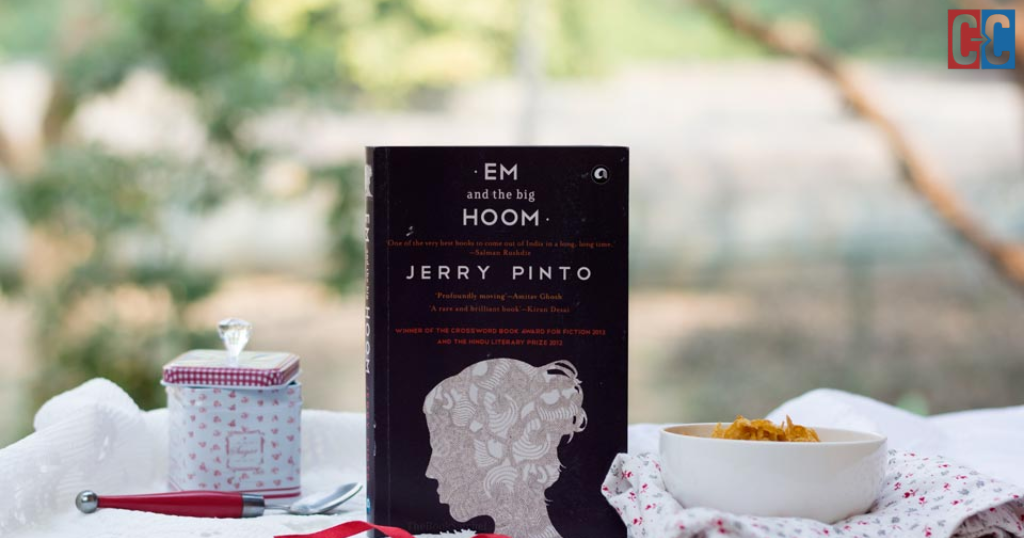
- Em and the Big Hoom explores bipolar disorder, family caregiving, and the emotional challenges faced by a Mumbai family over decades.
- The novel also highlights how ageing adds new responsibilities when mental illness and physical health intersect.
- Jerry Pinto combines humour and sadness to portray the burden families carry in India’s limited mental-health and elder-care system.
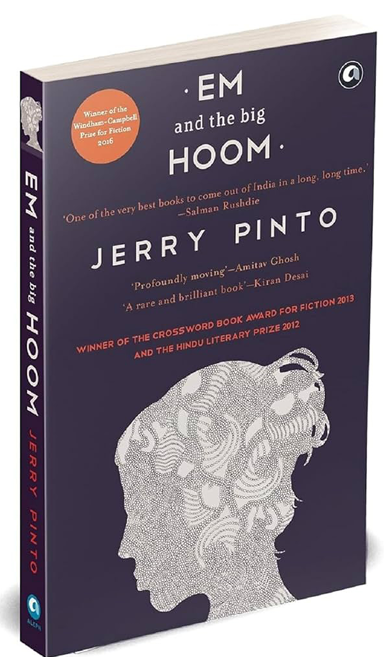
When Em and the Big Hoom, the Mumbaibased Jerry Pinto’s first novel, was published in 2012, it swept the relatively comprehensive list of Indian literary awards: it won both The Hindu Literary Prize and the Crossword Book Award in the same year. It was awarded the Sahitya Akademi Award and the Windham-Campbell Prize for Fiction in 2016. The novel has been primarily viewed as one about bipolar disorder, a characterisation it richly deserves. It is not an unsparing or often laugh-outloud funny story about what it is like to live in a family as its mother alternates between bouts of mania and depression over decades. But it also subtly shifts over its final chapters into a story about the more conventional challenges of growing old. The second reckoning is almost unnoticed on the final pages of the novel – an effect of which the firsttime reader would almost certainly never forget once they have observed it.
Four People, One Room
The novel is narrated by the unnamed younger son of Imelda and Augustine Mendes — Em and the Big Hoom, in the family’s own private language a Goan Catholic couple raising two children, Susan and her younger brother, in a single-bedroom flat in Mahim through the last decades of the twentieth century. Em’s condition structures everything around it: hospital admissions to the psychiatric ward of a government hospital, a shifting rotation of medication, and a running family arithmetic of who watches her on which evening.
Even her diagnosis keeps changing as the narrator grows up — from a vague ‘nervous problem’ to a brief, mistaken label of schizophrenia, before the family settles, permanently, on manic depression. The narrator assembles his mother in fragments, out of order, through remembered conversations, her old diaries and letters, and family legend — because, he admits, he never fully understood her while it was happening. Augustine is the novel’s fixed point: a quiet, capable engineer who keeps the household solvent and functioning without ever quite explaining, even to his own children, how he manages it.
Pinto has spoken about the novel taking him more than twentyfive years to write, beginning as an attempt to process his own adolescence with a mother who had bipolar disorder before it slowly found its shape as fiction. That distance shows in the control of the writing: Em’s cruelty and her tenderness, her wit and her despair, are given equal, unsentimental weight, and the book resists turning her into either a cautionary tale or a redemptive one.
When Illness Meets Old Age
The last movement of the novel shift’s tones. Em turns fifty and gains a considerable amount of weight. A gynaecological problem (benign, but serious enough that they remove her ovaries preventatively) induces early menopause, along with one of the only times her family worries about her body rather than her mind: She’s run down on the street outside their flat, breaking her arm. Her psychiatrist offers the cheerful prospect that perhaps the body, on its own, can do what the pills could never quite managesmooth out the ragged ups and downs of her moods.
Then, after a stretch of calm the family hasn’t experienced in years, she dies in her sleep, of a heart attack, in the next bed over from her husband. It’s a remarkably uneventful end to an outsized life-and that, perhaps, is the novel’s point. Pinto allows his most interesting figure to depart, like many parents in real life, old, tired, body at its close, a caretaking stacked atop another kind of caretaking. The household that monitored mood swings and suicidal ideation must now monitor blood pressure and range of motion, while still monitoring, just below the surface, for anything else.
It isn’t that age replaces the family’s long crisis with a different one, the novel says; it adds one atop the existing one.
The Weight Families Carry Alone
Framed by present-day India’s mental-health stats, the Mendes’ isolation begins to seem less like an artifact of time and more like a contemporary condition. India’s mental-health treatment gap-the percentage of those with a diagnosed condition who go untreated-has been estimated nationally at well over 80 percent; a recent analysis of government survey data put the treatment gap among adults over 60 alone at 84 percent.

The country also has about a fifth of the number of psychiatrists that the World Health Organization recommends per 10,000 people. A national mental-health helpline, Tele-MANAS, which started in 2022, had by last spring received close to 30 lakh (3 million) calls, a statistic less a testament to an established solution than to the limited resources available to the average family.
The Mendeses had nothing of the public or private infrastructure that the family is now so desperately lacking, nor does the average Indian family that must juggle a loved one who is both mentally ill and aging, an individual who can require both inpatient care for the illness and the assistance of aged care providers in a nation with few psychiatric hospitals and even fewer elder-care facilities.
The novel doesn’t make these observations, doesn’t build to a thesis, merely provides a glimpse of the bank account it has maintained “for emergencies”; of sons and daughters who seem forever hovering at the edges of adulthood and whose primary mission is tending to the health of a parent; of a father contemplating how his family will manage in his absence.
Funny, Almost Unbearably
None of this makes Em a particularly heavy or difficult book. In part, the novel’s prizes and its popularity reflect its humour as much as its theme. Em is written as witty, digressive, often savagely funny; its fragmentary, rambling narrative allows a moment of humour and devastation to coexist in the same paragraph, without undermining either. That combination-a book at once laugh-out-loud hilarious and profoundly, extremely sad-was exactly what many critics had called out when Em was published, set in the very specific middle-class Catholic world of Bombay, such as has not previously existed within Indian English fiction.
Reckoning Without Resolution Pinto offers no recovery narrative and no closing lesson. What the book leaves behind instead is a question it never asks outright: what does a family owe a parent who is unwell for decades — first in mind and then in body — in a country that offers so little support for either? Em and the Big Hoom do not answer that question. It simply insists, patiently and often hilariously, that someone always has to.
Clear Cut Health, Research Desk
New Delhi, UPDATED: August 20, 2026 16:02 IST
Written By: Yatharth Pathak