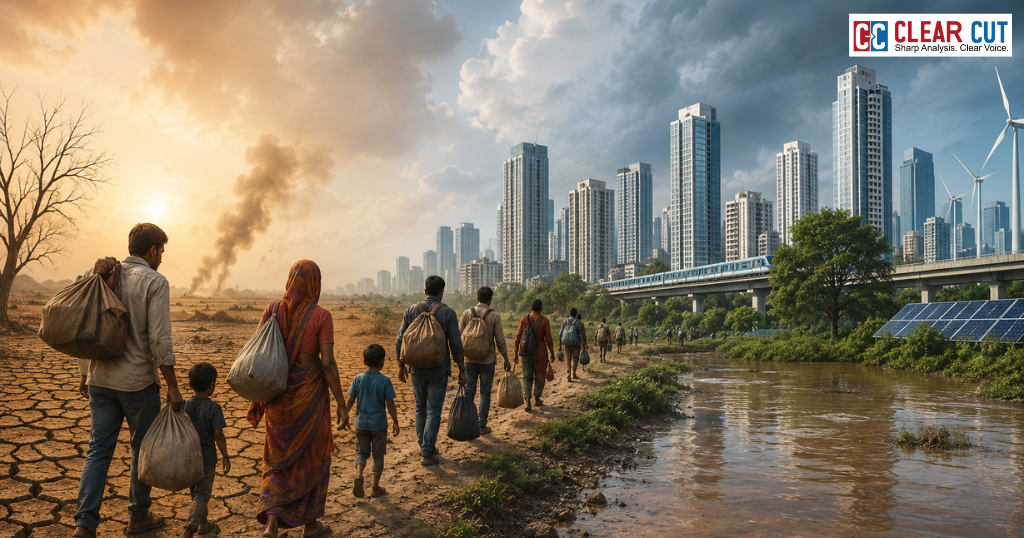
- Climate change is increasingly driving migration in India as floods, droughts, rising temperatures, and declining agricultural productivity threaten livelihoods, pushing people toward urban centres in search of better opportunities.
- Rapid urbanization is placing additional pressure on cities already struggling with housing, infrastructure, water management, and climate-related disasters, highlighting the need for climate-resilient urban planning.
- Policymakers must focus on safe housing, resilient infrastructure, sustainable livelihoods, and nature-based solutions to ensure that climate migration becomes a pathway to resilience rather than vulnerability.
India is at a tipping point in terms of its development trajectory. Urbanization is happening fast, with people moving from rural to urban areas in search of economic growth. But both urban and rural areas are under threat from the consequences of climate change. The rising temperatures, erratic rainfall, droughts, floods and other climate risks are affecting livelihoods of the population. Authorities are now faced with the challenge of managing climate-induced migration and ensuring sustainable urbanization to cope with growing populations.
Climate change-induced migration is a significant issue that has already begun in some parts of the country. The issue is not that people are relocating, but rather that communities are not prepared for them.
Climate Change and Human Mobility
Economic opportunities, social connections and the environment have always had an impact on migration. The harmful impact of climate change on agricultural output and the rise in climate related disaster are other factors contributing to increased migration.
By the year 2050, there will be almost 216 million internal climate migrants, according to global projections. Most of these individuals will relocate to poor countries who’s economic rely largely on agricultural, which are especially vulnerable to climate change.
However, migration due to climate change is rarely a direct result of environment degradation. Although lower agricultural output may promote migration, lower income may make harder for households to get funds required for migration.
India’s Emerging Climate Migration Hotspots
Because of its geographical location and diversity, India is more vulnerable to climate change induced migration than other countries.
Flood-affected states usually experience disruptions in both development and agriculture. Drought-affected areas have seen increased water stress and reduced agricultural productivity. Cyclones, storm surges, and coastline erosion have all impacted the coastal regions of several states, including Odisha, West Bengal, Andhra Pradesh, and Tamil Nadu. The Himalayan states are susceptible to glacial melting and landslides.
Bihar’s experience can show how migration and climate challenges are linked. In a survey of 700 agricultural households in seven regions, 91% said rising temperatures were a symptom of climate change, while 86% said rainfall had changed during the previous 20 years. Interestingly, between 60 and 67 percent of respondents believed that relocation would help them deal with economic issues.
Why Urban Resilience Matters
In India, the majority of climate change-related migrations end up in metropolitan regions. Climate migrants continue to prefer cities such as Delhi, Mumbai, Bengaluru, Hyderabad, Chennai, Kolkata, and Pune because they provide job opportunities, healthcare, education, and other methods of attaining economic prosperity.
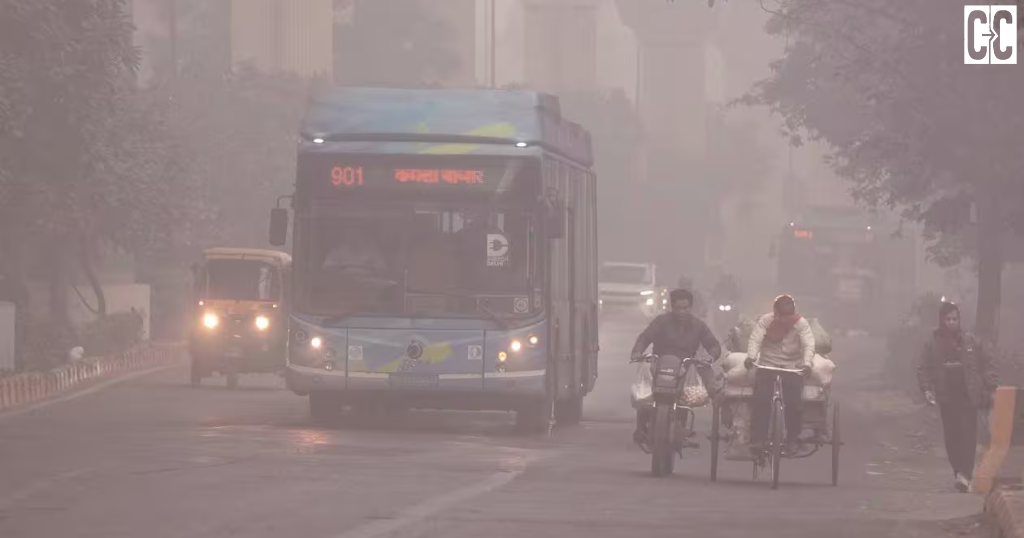
However, many Indian towns are having difficulty keeping up with the country’s rapid population increase. Traffic, water resource management, housing shortages, and a lack of basic facilities are all common challenges in most Indian cities today.
Furthermore, as illustrated by recent cases of major floods, droughts, and heatwaves that resulted in fatalities and property damage, climate change is worsening the difficulties confronting Indian cities. Examples include the 2015 Chennai floods, Bengaluru’s recurrent floods, Mumbai’s annual monsoon season disruptions, and some cities’ elevated water stress.
The issues are worsened by the surge of migrants into these vulnerable cities. To make a living in cities, low-income migrants frequently set up temporary shelters along waterways, close to rivers and other bodies of water, along the seashore, or in peri-urban areas lacking basic services such as clean water, sanitary facilities, housing, and medical treatment.
Building Climate-Resilient Cities
Climate migration must be managed using purposeful strategies rather than reactive ones.
First and foremost, urban growth strategies must include climate migration. Urban planning and other operations must consider the issue of population growth in relation to environmental pressures.
Second, there must be more safe housing options in cities. In addition to promoting social involvement and lowering risk, providing secure housing will prevent the establishment of informal settlements in dangerous areas.
Third, livelihoods should be enhanced. Creating jobs, skill-building activities, and local business growth are all ways to assist migrants integrate into cities and build resilience.
Fourth, it is critical to develop climate-resilient infrastructure. This includes transportation systems, heat response plans, water conservation programs, flood management infrastructure, and disaster warning systems.
Finally, cities must implement nature-based methods to mitigate climate migration. Nature-based solutions include urban forests, wetlands, green corridors, rainwater collection systems, and water-sensitive urban architecture.
Migration as a Pathway to Resilience
One key message from climate migration studies is that mobility does not always indicate a failure to adapt to climate change. In fact, it is one way for households to adapt and enhance their resilience.
When compared to non-migrants, migrant households in Bihar were shown to have greater access to information, technology, agricultural extension services, and even adaptation techniques, as well as better knowledge of climate change. Remittances, knowledge exchange, and social relationships developed during mobility all benefit migrants.
This finding is especially important for policymakers. They need to understand that they cannot just try to stop migration. Instead, they should focus on making migration dignified, safe, and productive. They can achieve this by preparing urban areas, diversifying jobs, and improving the resilience of rural households.
The Road Ahead
Climate migration will be one of the world’s most pressing problems in the years to come. These developments are linked to social fairness, urbanization, economic expansion, and climate change. The existence of the nation hinges on Indian communities’ ability to handle such a tragedy. Strong communities require more than just large buildings, well-connected roads, and adequate drainage. Cities must be resilient in order to respond to climate change, protect vulnerable populations, and generate employment opportunities. India’s social and economic landscape is evolving due to climate migration. Building cities that can adapt to change without leaving anyone behind is a challenge for Indian politicians.
Clear Cut Climate Desk
New Delhi, UPDATED: June 09, 2026 05:00 IST
Written By: Harsh Gautam