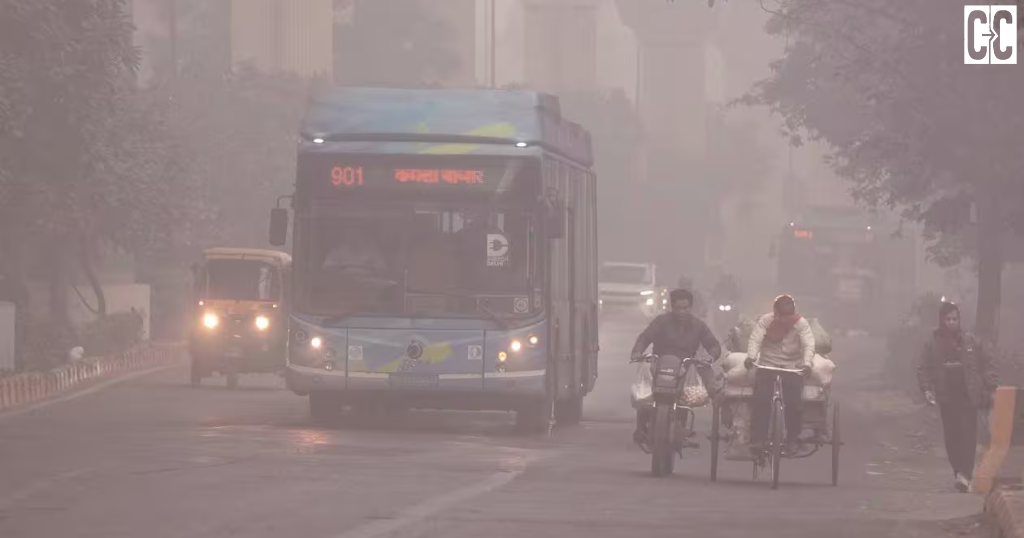

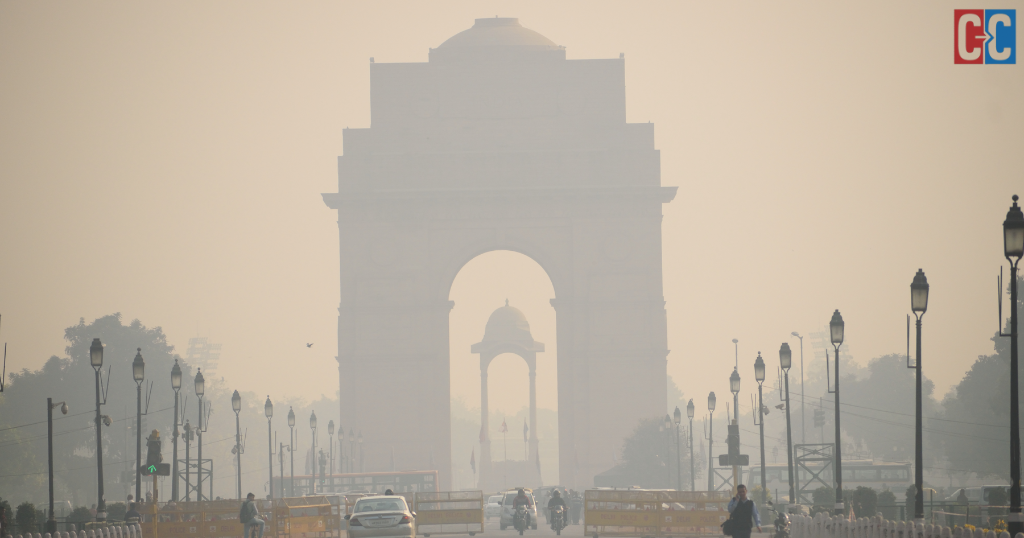
- Delhi’s AQI hit “unhealthy” levels by mid-August, before winter smog even starts.
- The 2026 action plan repeats old fixes: smart traffic hotspots, e-buses, industrial monitoring.
- Air pollution kills ~2 million Indians yearly; Delhi’s PM2.5 is 21.7x WHO limits.
- Corporate CSR barely touches urban air quality despite doubling environmental spend.
- Enforcement, not planning, is Delhi’s real failure — seen in the PUC/ANPR petrol pump crackdown.
By August 15, Delhi’s AQI was around the “unhealthy for sensitive people” mark–months before winter smog season even starts, and this now has to be treated as the normal state rather than an exception. Bhupender Yadav has asked municipalities across Delhi-NCR to provide their action plans for the year 2026, and a fresh committee of experts is to be formed by the Commission for Air Quality Management that will look into vehicle pollution. Another action plan, with almost the same provisions as in previous years, is being prepared yet again.
What the 2026 Action Plan Actually Contains
The directions from the Centre list the well-known as well as very specific interventions: A specific 62 traffic hotspots in Delhi will get “smart” traffic management systems, municipal bodies will deploy mechanical road-sweeper machines, and industries in Delhi-NCR must set up, at threat of closure, online continuous monitoring of their emissions, coupled with the use of air pollution control devices. The region has been pursuing the electrification of its public bus fleet – with as many as 3,400 electric buses already on the road and targeting 5,000 by March. Separate meetings have been lined up with Punjab and Haryana on stubble burning, the annual irritant to Delhi from across the borders that causes the worst air days for the capital.
The Persistent Health Toll
It is estimated that air pollution in India causes approximately two million deaths a year, and the nation reports the highest rate of premature mortality in the world for chronic obstructive pulmonary disease and asthma, according to the WHO. Delhi’s average PM2.5 concentration in 2024 was 108.3 micrograms per cubic meter, corresponding to an AQI of 178 (“unhealthy”) and approximately 21.7 times the WHO annual guideline of 5 micrograms per cubic meter. Those aren’t abstract numbers but a health crisis that has only become familiar through overexposure.
Where Corporate CSR Fits, and Where It Doesn’t
While national CSR investment in the environment has nearly doubled as a percentage of total corporate social investment, from 4% to 11% over the last decade or so, it addresses urban air quality intervention only on a very small scale, unlike afforestation or water preservation activities. An area to make CSR money really worthwhile for the last-mile delivery vehicle fleet’s electric transition, an urban air quality monitoring network funded by Corporates, and dust control retrofitting in industrial plants offer a real and comparably underdeveloped investment scope for corporates, given the scale of the health problem faced.
Accountability Gaps in Enforcement
Instead of planning, implementation has always been Delhi-NCR’s Achilles’ heel in the past. Past years’ action plans have included broadly similar pronouncements on controlling dust and industrial emissions and promoting public transport, yet air quality indices have crossed the ‘severe’ threshold for several days each subsequent winter. The Centre’s decision to introduce monthly and weekly targets for each component and hold weekly on-the-ground review meetings is an admission that these planning documents have not produced breathable air, and the implementation discipline and not more words in the policy document is the ‘bind’ constraint.
A Small Enforcement Experiment Worth Watching
One recent enforcement innovation offers a useful test case. Petrol pumps across Delhi have stopped dispensing fuel to vehicles without a valid Pollution Under Control certificate, with compliance monitored through camera-based automatic number-plate recognition systems rather than manual checks. It is a small, targeted measure, but it represents exactly the kind of automated, hard-to-evade enforcement mechanism that dust-control and industrial-emission commitments have historically lacked. If the CAQM’s 2026 action plan is genuinely serious about monthly compliance targets, similar automated verification, rather than self-reported industrial compliance, will need to extend across every commitment in the plan, not just fuel dispensing.
The Way Forward: Accountability and Action
Delhi does not suffer from a lack of action plans, only from a lack of political and institutional will to implement those that already exist. Genuine accountability would involve posting a monthly compliance score for each of the 62 so-called hotspots. It would involve publicising the names of the industrial units that ignore emission monitoring as a large-print headline, rather than a tiny tucked-away notice. It would involve redirecting the same flood of corporate CSR money into air quality infrastructure as it does into flood relief and rural water. No less than 20 million people in the Indian capital region should not have to treat the right to clean air as a seasonal amenity: available for a short while after the crisis has crested and the headlines have moved on, and then withdrawn till next time.
Clear Cut Climate Desk
New Delhi, UPDATED: August 21, 2026 18:30 IST
Written By: Tanmay J. Urs