
- Ayushman Bharat PM-JAY has achieved nationwide implementation across all States and Union Territories.
- The programme offers cashless health insurance to more than 55 crore eligible Indians.
- It has strengthened healthcare access while lowering families’ medical expenses.
- Gaps in hospital infrastructure, service delivery, and rural healthcare still persist.
- The scheme’s long-term impact will rely on better quality, transparency, and inclusive access.
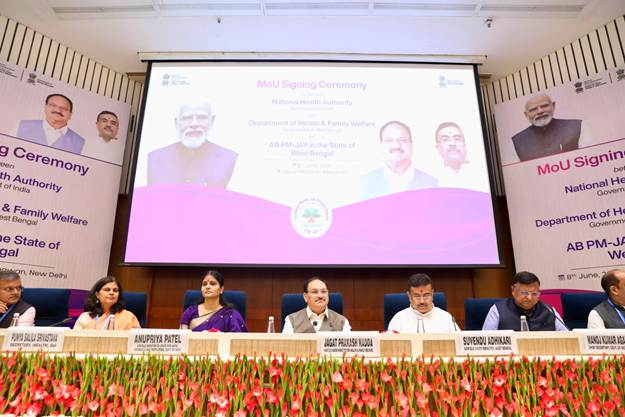
On June 8, 2026, West Bengal signed a Memorandum of Understanding (MoU) with the National Health Authority (NHA), becoming the final state to implement the Ayushman Bharat Pradhan Mantri Jan Arogya Yojana (AB-PMJAY). With this development, the scheme is now operational across all 28 States and 8 Union Territories, marking an important milestone in India’s journey toward universal public health insurance. Since its launch in September 2018 from Ranchi, Jharkhand, AB-PMJAY has evolved into the world’s largest government-funded health assurance programme, aiming to protect economically vulnerable households from catastrophic healthcare expenses.
The Scale of Universal Health Coverage
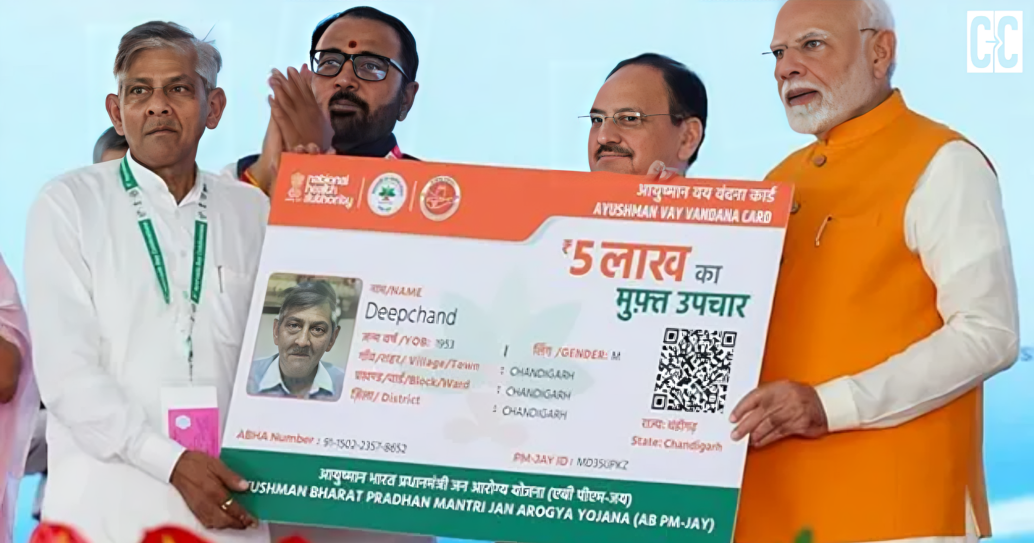
The scale of the programme’s implementation is unmatched by that of any other health assurance programme in the country. AB-PMJAY is the largest such government programme, under which eligible beneficiaries receive a cashless health cover of up to ₹5 lakh per family per year for secondary and tertiary hospitalization. An estimated 12.34 crore households/low-income families, covering over 55 crore people, predominantly identified through the Socio-Economic Caste Census (SECC) 2011 data, are included in the program. 1.43 crore additional families in West Bengal became eligible with the state joining the programme.
Over 7 crore hospitalisations have been approved since the scheme was launched. Nearly 49% of Ayushman cards have been issued to women beneficiaries, and nearly 49% of total hospital admissions have been undertaken by women beneficiaries under the scheme. With the Ayushman Vay Vandana scheme, there was a large-scale extension providing health insurance cover to all individuals aged 70 and above, without any conditions on income or social status. All senior citizens will now have health insurance. The move is poised to help over 6 crore senior citizens spread over 4.5 crore families. By mid-2026, more than 58 lakh citizens above the age of 70 would have registered under the schemes and availed more than 2.67 lakh cashless treatments worth Rs 496 crore.
Impact on healthcare access
Independent analyses have found AB-PMJAY has delivered meaningful gains in healthcare access. According to a research article in The Lancet, after six years, beneficiaries experienced a 36 percent jump in timely cancer diagnosis and treatment. Of the patients signed up for the plan, about 90 percent started treatment within 30 days of diagnosis, compared with roughly 30 percent of patients not covered by the plan.
(This, for context, is crucial in India, where a lack of money for health expenses is a common cause of widespread financial distress in low-income households.)
Health Ministry reports similarly point to a 21% drop in household out-of-pocket medical spending and an 8% reduction in the need for families to seek emergency loans for health care.
Continuing Challenges
Even though the scheme is already being implemented nationwide, it faces challenges in ensuring equitable access to health care for all. “A big problem has been with package rates-what is being compensated to appointed hospitals, it is, in most cases, much less than what hospitals lose in terms of treatment cost,” explains a senior official, “this has led to many appointed hospitals denying services to many beneficiaries, denying admitting the stated numbers, denying a few procedures.” Rural, tribal districts have very few appointed tertiary hospitals, and a beneficiary has to travel a very long distance, so in many cases, possessing a card does not mean access to quality healthcare whenever one needs it.
Strengthening the programme
Increasing awareness and establishing a regular review mechanism would make AB-PMJAY a far more effective tool. A publishable hospital-level registry detailing admission of beneficiaries, treatment of results, processing of claims and their settlement could significantly boost transparency and enhance accountability by also making it evident where service delivery is lagging, It could help to include private hospitals on a longer term: Through revision, every once in a while, of package reimbursement and rates following their periodic revision based on average cost incurred in treating, by increasing the share of empanelment of hospitals in rural and tribal pockets and strengthening mechanisms for patient referral and the patient transport system.
Conclusion
The national rollout of Ayushman Bharat-Pradhan Mantri Jan Arogya Yojana is a remarkable milestone in India’s public health system. Through its promise of financial risk protection against hospitalisation due to secondary or tertiary health conditions and of improving equity of access to high-quality services, the health insurance package has expanded the health security of poor households against major expenses. Future success will depend not only on achieving 100% coverage but also on providing inclusive access, delivering high-quality services, and improving health infrastructure across regions. Over time, the scheme will evolve further, and its ultimate test shall be to ensure that every beneficiary can receive necessary care without delay and without concern about incurring large health expenses.
Clear Cut Health Desk
New Delhi, UPDATED: August 06, 2026 16:30 IST
Written By: Tanmay J Urs