- Sambandh has worked across 18 districts of Odisha for 33 years, focusing on tribal women, children, and landless farmers.
- Its integrated work covers livelihoods, agriculture, climate adaptation, health, disaster relief, and social accountability.
- Sambandh’s long-term community presence shows how sustained local engagement can support lasting development in rural and tribal Odisha.
Development work in India often moves in cycles of enthusiasm: a project launches with fanfare, runs for three to five years, and quietly winds down when the grant ends. Sambandh, a non-profit based in Bhubaneswar, has taken the opposite approach since it began in 1992, treating community development in Odisha as a multi-decade commitment rather than a project timeline. Thirty-three years later, it works across 18 districts of the state, with its motto, ‘reaching the unreached,’ still describing exactly who it targets: tribal women, children, and landless farmers that most development funding passes over.
A deliberately wide, deliberately local mandate
Sambandh’s work spans health, agriculture, livelihoods, climate change adaptation, indigenous healthcare, social accountability, and disaster relief, an unusually broad mandate for a single organisation. That breadth is intentional: Sambandh’s own framing is that poverty in tribal Odisha is never caused by a single missing piece; it is caused by several missing pieces at once, and fixing only one rarely holds if the others remain broken. Its core stated goals include generating livelihood and employment specifically for indigenous farmers and the landless, groups that mainstream agricultural schemes frequently struggle to reach.
Turning small plots into harvest zones
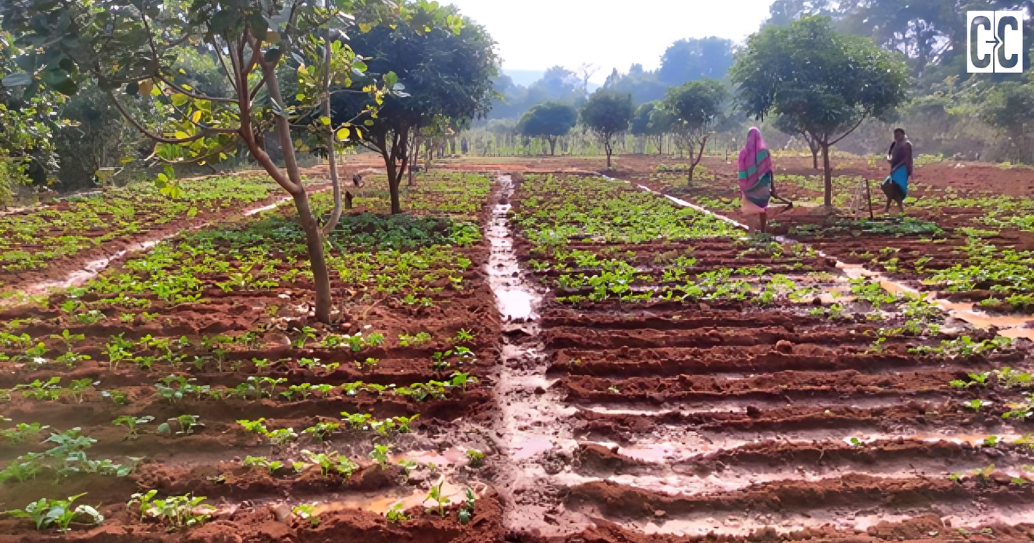
A core piece of Sambandh’s technical work is soil and water management aimed at maximising output on the small, often fragmented plots that indigenous and landless farmers in Odisha typically work with. Watershed management and livestock management sit alongside this, built on the recognition that in much of tribal Odisha, farming and livestock are not separate income streams but tightly linked parts of a single household economy.
ANNADA and the climate-smart village idea
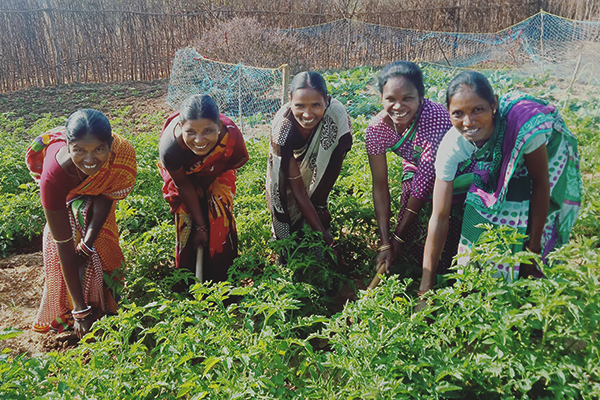
Sambandh’s ANNADA programme aims to build what it calls Climate Smart Villages, communities with food and nutritional security and a cleaner local environment, through integrated watershed management and climate-smart agricultural practices. The goal is not simply higher yields, but yields that can survive a bad monsoon or an unusually hot season without collapsing entirely, a distinction that matters enormously for farmers with no financial buffer to absorb a failed harvest.
Watching where public money goes
Alongside its direct development work, Sambandh runs a social accountability function focused on tracking poverty alleviation schemes and public expenditure. It monitors government welfare funds intended for the same tribal communities to ensure they are actually reaching them. This civic engagement piece is less visible than a new farm or health centre. Still, it is arguably where an organisation with three decades of local trust can do something a newer NGO cannot: hold local institutions accountable because the community already knows and trusts it.
A presence-built village office by village office
Sambandh’s reach is visible in something as simple as its own address list: project offices scattered across Mayurbhanj, Cuttack, Deogarh, Angul, and Balasore districts, each staffed with local contact numbers rather than a single distant head office fielding calls from across the state. That physical, on-the-ground footprint, built up slowly over three decades rather than opened all at once, is a large part of why communities in these districts treat Sambandh as a known, permanent presence rather than another visiting NGO.
Future perspective
Sambandh’s 33 years are themselves a finding worth paying attention to: real change in tribal, drought-prone, and historically neglected districts does not arrive on a three-year grant cycle; it arrives on a generational one. Funders who want lasting impact in places like rural Odisha should judge organisations on exactly this kind of endurance, not just on how quickly they can show results in a project’s first annual report. Odisha’s tribal villages have seen enough development projects come and go. What Sambandh’s history suggests is that the ones worth trusting are the ones still showing up, in the same 18 districts, three decades after they started.
Clear Cut Livelihood Desk
New Delhi, UPDATED: September 01, 2026 09:00 IST
Written By: Tanmay J. Urs