- Goonj, founded by Anshu Gupta, transforms discarded urban materials into resources for rural communities through dignity-focused initiatives like Cloth for Work.
- Its programmes support community development, menstrual health, and disaster relief while encouraging people to actively participate in solving local problems.
- Over 25 years, Goonj has impacted millions of lives and shown how material reuse can create sustainable community development.
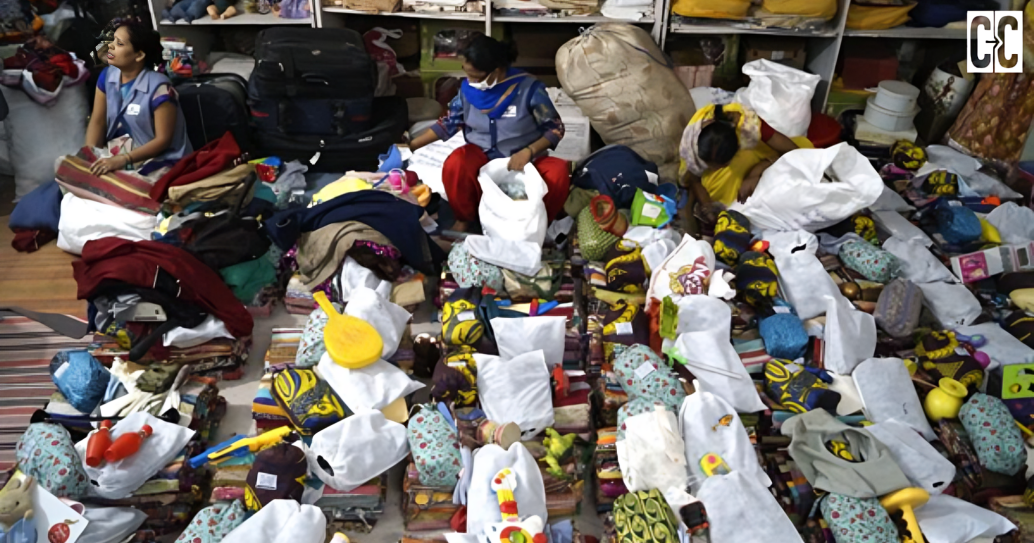
He had exactly 67 pieces of cloth when Anshu Gupta left his journalism career in 1999, and started Goonj with his wife Meenakshi in a single room in Delhi. Urban India discards enormous amounts of usable material that rural India desperately needs. Rerouting those materials seemed like charity; hence, Gupta believed it would strip recipients of their dignity. So, he built a barter. Cloth and goods in exchange for community labour on local development projects. A road, a drain, a school wall built by villagers who earned what they needed, rather than received what was given. 25 years later, Goonj operates in 28 states, runs over 8,000 community development projects annually. It has repurposed more than 63 million kgs of material over the past decade alone.

Cloth for work: Rewriting what development looks like
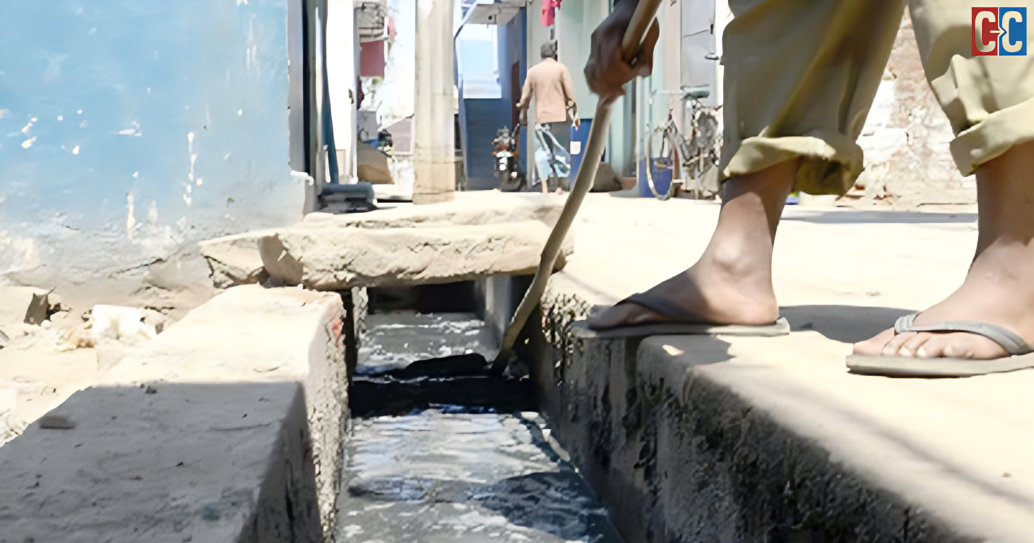
The Cloth for Work model is Goonj’s most distinctive contribution to Indian social enterprise. Under it, rural communities identify their own development needs such as building a path, desilting a pond, repairing a community space, and work together to complete them. In exchange, Goonj provides material equivalent to the labour invested: clothes for the whole family, household goods, school supplies. It is not waging. It is not welfare. It is a recognition that community time is as valuable as any other resource, and that the people closest to a problem are the most qualified to define what fixing it looks like. In 10 years, the model has created 1.6 million days of productive community work, equivalent to over 4,300 person-years.
Not just a piece of cloth: Menstrual health as dignity
Among Goonj’s most quietly radical programmes is its menstrual health initiative, called ‘Not Just a Piece of Cloth.’ Unable to access commercial sanitary napkins, rural women across India have historically managed menstruation with rags that pose infection risks and reinforce shame. Goonj began recycling cloth from its urban donations into low-cost, hygienic menstrual products distributed through its rural partner network, alongside ‘Chuppi Todo Baithakor’ — Break the Silence — meetings that bring women together to discuss menstrual health openly in communities where the subject is not spoken aloud. The intervention addresses access and stigma simultaneously, which is precisely why standalone pad-distribution programmes, without conversation, rarely achieve lasting behaviour change.
18 million lives and a Harvard case study
By most recent estimates, Goonj’s work has impacted approximately 18 million lives. Every year, it processes over 6 million kilograms of material through its collection and redistribution network, supported by 1,000-plus employees and a vast volunteer ecosystem. It has earned recognition as a Harvard Business School case study, a Ramon Magsaysay Award for Gupta personally, and an Ashoka Fellowship. Gupta has been listed among the top social entrepreneurs in India by multiple indices. But he is characteristically impatient with awards: ‘If you make a 100-metre road as a community, you’ll also make a 500-metre road later,’ he has said. ‘That is what we are really after — not the first road, but the confidence that makes the second one inevitable.’
Disaster relief with a different philosophy
In every major disaster — floods in Assam, earthquakes in Nepal, cyclones in Odisha — Goonj deploys not just material but its ‘Dignity Kits,’ packages assembled with hygiene products, clothes and basics chosen specifically to restore a sense of normalcy rather than merely address survival. The logic is Gupta’s consistent one: dignity is not a luxury to be addressed after food and shelter, it is part of what food and shelter are for. Several state governments have formally recognised Goonj’s disaster model, and its approach to material aid has influenced how a growing number of NGOs think about the difference between giving people what they need and giving people what makes donors feel generous.
Conclusion
Anshu Gupta’s most subversive act was not building Goonj. It was insisting that what already exists is sufficient to solve problems that philanthropy keeps treating as dependent on outside funding. That argument has an obvious policy implication: India’s urban local bodies should partner with organisations like Goonj to build formal, city-wide material-recovery systems that redirect usable goods toward rural development networks rather than landfills. The infrastructure cost would be a fraction of its social return. Goonj has proven the model works for 25 years. The question for municipal governments is no longer whether it can be done, but why they have not yet decided to fund it.
Clear Cut Livelihood Desk
New Delhi, UPDATED: September 15, 2026 15:00 IST
Written By: Tanmay J. Urs