
In a major push to secure India’s water future, the Government of India outlined strengthened measures to manage the country’s critical groundwater resources. The initiative seeks to address overextraction, quality degradation, and climate pressures that threaten water availability for agriculture, drinking and rural livelihoods.
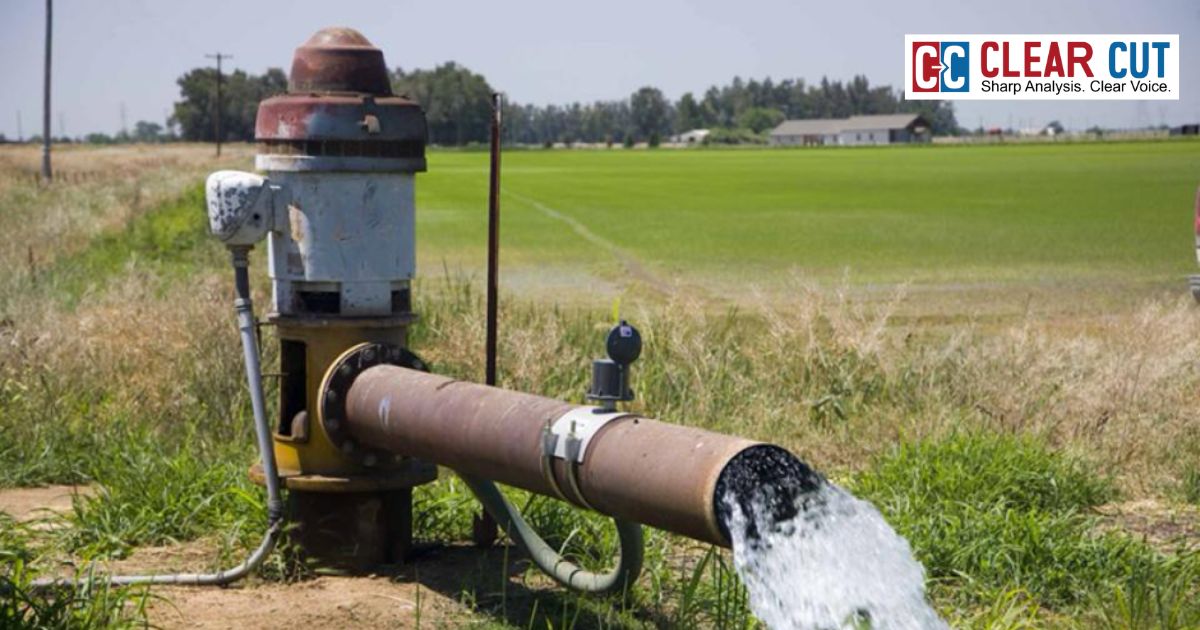
Groundwater is central to India’s water system. Nearly 62% of irrigation and about 85% of rural drinking water needs depend on it. Urban centres also draw roughly 50% of their water supplies from aquifers. But decades of unsustainable extraction have pushed many regions into critical or over-exploited conditions.
Policy Shift and Long-Term Planning
The Ministry of Jal Shakti’s recent report highlights a multi-layered strategy to strengthen groundwater governance. Central components include the Model Groundwater Regulation Bill, the Jal Shakti Abhiyan: Catch the Rain campaign, the Jal Sanchay Jan Bhagidari initiative, and expansions of the Atal Bhujal Yojana community scheme.
According to the press note, 21 States and Union Territories have already adopted the Model Bill framework, coordinating with the Centre on regulation and sustainable extraction. A network of 43,228 observation stations and more than 53,000 water quality monitoring sites now tracks groundwater trends nationwide.
Community Focus: Atal Bhujal Yojana in Action
Launched in late 2019, the Atal Bhujal Yojana (ABY) is a flagship groundwater management scheme. It partners local communities with scientific tools to improve recharge practices and governance.
A pilot of the programme in Karnataka showed measurable success. In 14 water-stressed districts, groundwater levels rose an average of 13.2 metres across monitored villages after community-led recharge works and monitoring systems were deployed.
The World Bank, which supports ABY, emphasizes the need for community engagement. In its assessment, the Bank calls it one of the world’s largest participatory groundwater management programmes, reaching 8,220 gram panchayats across seven states and cites the initiative as a model for bottom-up water governance.
Expert and International Warnings
Experts warn that time is running short. A United Nations University report signals that parts of India’s Indo-Gangetic basin may have already crossed the tipping point for groundwater depletion, with critically low levels expected to spread by 2025 if unaddressed.
Earlier analyses by the World Bank also noted that if current groundwater extraction trends continue, a majority of India’s aquifers could face dangerously low levels within decades threatening agriculture, rural drinking water and long-term economic growth.
Government Leadership and Public Participation
Union Jal Shakti Minister Gajendra Singh Shekhawat has stressed the urgency of treating water as a national priority. As quoted in public statements, “Water is a finite resource, and we must treat it as the most precious asset for our survival and future prosperity.”
Efforts are underway to expand rainwater harvesting, recharge zones and scientific awareness campaigns. Non-government actors like Paani Foundation and local water conservation leaders are also mobilizing villages around watershed management and recharge projects.
Looking Ahead
Sustainable groundwater management is now framed as both a scientific and civic challenge. With new monitoring infrastructure, legal frameworks and community programmes, India aims to reduce stress on its aquifers and build resilience under a changing climate. Success will depend on continued policy momentum, deeper public engagement, and better integration between national and local water systems.
Clear Cut Research Desk
New Delhi, UPDATED: Dec 26, 2025 11:40 IST
Written By: Ayushman Meena