

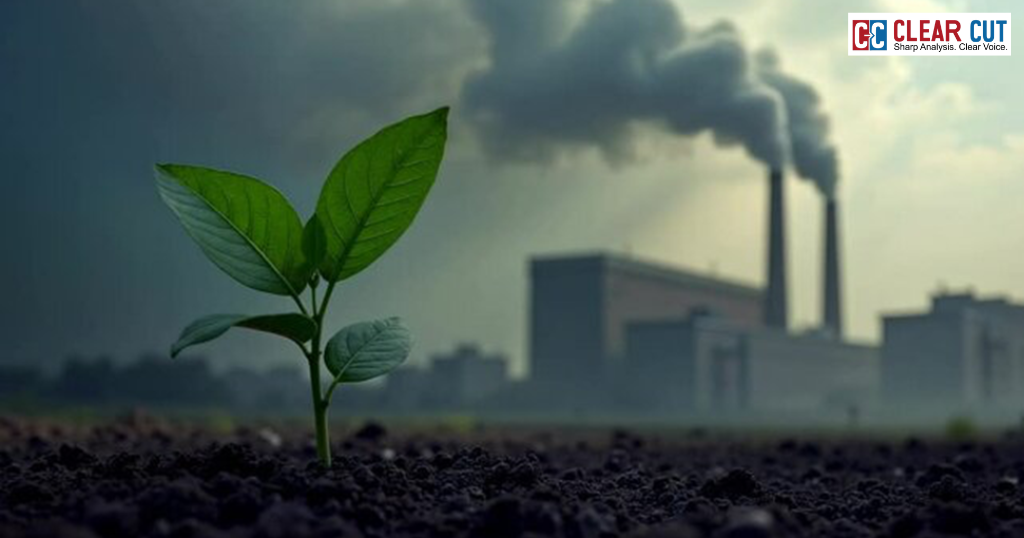
Greenwashing in India is rising as companies make misleading sustainability claims, despite stricter ESG regulations. Weak enforcement and fragmented oversight continue to undermine accountability and consumer trust.
Introduction
In the summer of 2023, a close friend of mine bought a well-known brand’s “eco-friendly” range of personal care products. She paid a premium. She chose them deliberately, because the packaging said they were sustainably sourced and carbon neutral. Six months later, she came across a report showing that the parent company’s overall carbon emissions had risen year-on-year, and that the “carbon neutral” claim applied only to the packaging, not the manufacturing process.
She felt cheated. Rightly so. What she had experienced has a name: greenwashing. And in India in 2025, it is no longer just an ethical concern. It is a legal one.
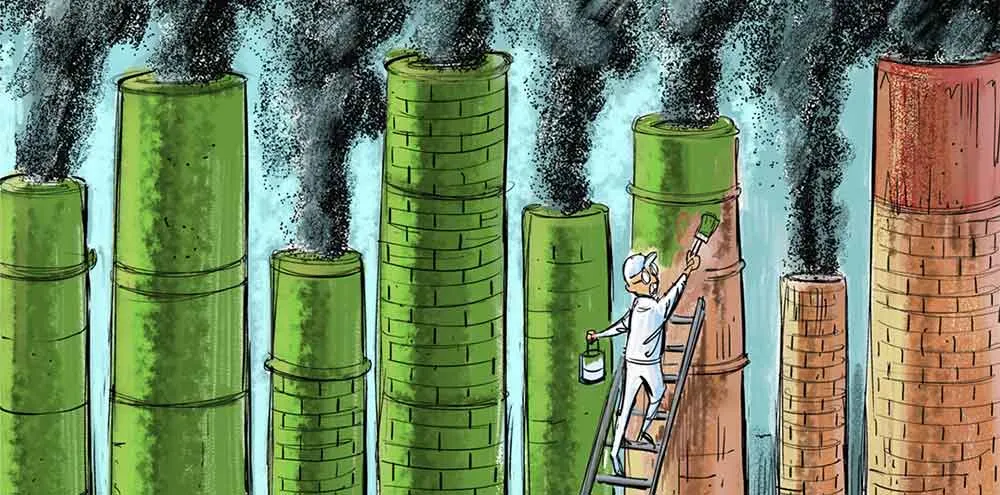
India’s corporate sustainability landscape is at a turning point. Billions of rupees are being pledged, ESG ratings are being sought, and green labels are proliferating. A YouGov study found that 71% of Indian consumers reported encountering greenwashing (Green with Stupefaction!, n.d.). Against this backdrop, regulators have moved. But the question is whether the new rules can outpace the incentive to deceive.
What Greenwashing Looks Like in Practice
Greenwashing is the practice of making unsubstantiated or misleading claims about the environmental benefits of a product, policy, or business practice (Greenwashing: Deceptive Advertising and Misleading Claims (Part 1), n.d.). It is not always deliberate. Sometimes it is the result of selective disclosure. A company highlighting its most sustainable project while remaining silent about its largest sources of emissions. Sometimes it is definitional ambiguity: terms like “green,” “eco-friendly,” and “natural” carry no legal precision in India’s marketing ecosystem, allowing companies to deploy them freely.
A 2025 analysis in India CSR examined sustainability awards in the country and found a pattern worth examining. Large conglomerates received Green Business Titan awards for sustainability initiatives, without any public evaluation of their overall environmental impact (Technology That Matters 2022-23, n.d.). When awards and certifications become popular, the analysis noted, there is a risk of “award-washing,” where recognition substitutes for accountability.
This is not an abstract concern. It shapes capital flows. Investors increasingly screen for ESG performance. If those screens are fed misleading data, money that should flow to genuinely sustainable businesses flows instead to those that have simply learned to speak sustainability’s language.
India’s Regulatory Response
India’s response to greenwashing is not negligible. It is, in fact, more comprehensive than many give it credit for. The problem is that it is fragmented across multiple regulatory bodies with overlapping but uncoordinated mandates.
The Securities and Exchange Board of India (SEBI) has been the most active architect of ESG accountability (India’s ESG Regulations: Transforming Corporate Accountability and Sustainability, n.d.). Its Business Responsibility and Sustainability Report (BRSR) framework now mandates that the top 1,000 listed companies by market capitalisation report detailed ESG data, including greenhouse gas intensity, water footprint, and social impact metrics (Sustainability & Business Responsibility & Sustainability Reporting(BRSR) Background Material on Sustainability and Business Responsibility and Sustainability Reporting (BRSR) (Revised Edition 2024), n.d.). BRSR Core, introduced in 2024, requires independent third-party verification and annual impact assessments for a subset of these indicators, a significant raising of the bar.

In June 2025, SEBI issued a formal framework for ESG-labelled debt securities, covering social bonds, green bonds, and sustainability-linked instruments. ESG rating agencies can now withdraw ratings from companies that fail to file their BRSR, a concrete enforcement tool. From the 2025-26 reporting cycle, the top 250 listed entities must also disclose ESG performance across their value chains, extending corporate responsibility beyond internal operations for the first time.
The Central Consumer Protection Authority (CCPA) issued its Guidelines for Prevention and Regulation of Greenwashing in 2024 (Press Release Page | Press Information Bureau, n.d.). India’s first statutory framework directly targeting misleading environmental claims in marketing. It prohibits use of terms like “eco-friendly” and “natural” without verifiable substantiation. It requires third-party certifications for companies making environmental claims and mandates disclosure of the methodology behind those claims.
The Advertising Standards Council of India (ASCI) has issued parallel guidelines requiring that sustainability claims in advertising be backed by credible evidence. The Companies Act, 2013, Section 166(2), holds directors personally liable for prioritising environmental and community interests alongside shareholder interests. The Consumer Protection Act, 2019 provides additional pathways for challenging deceptive claims (Guidelines for Advertisements Making Environmental/ Green Claims, n.d.).
The Enforcement Gap
Here is the problem. India’s greenwashing architecture has multiple laws, multiple regulators, and multiple guidelines. What it lacks is coherent enforcement. A 2025 legal analysis published in the Indian Journal of Law and Regulatory Policy described enforcement against greenwashing as “fragmented”, noting that overlapping jurisdiction among regulators, a lack of standardised ESG assurance, and limited investigative capacity collectively undermine accountability.
Consumer-product greenwashing attracts penalties because it is visible, provable, and close to the retail point of verification. Corporate-level greenwashing is far harder to detect. It took years to reveal that carbon credits sold globally by certification company Verra were overstating their environmental impact. Similar dynamics apply in India: sophisticated sustainability claims made in investor presentations or annual reports require significant technical expertise to challenge.
Critics also point out that without standardised weightage for ESG disclosures, companies can use selective language to obscure the scale of their environmental footprint. A company can accurately report that it planted 10,000 trees through its CSR programme while omitting that its manufacturing operations generated methane emissions equivalent to deforesting three times that area.
What The Data Tells Us
The market opportunity driving these sustainability claims is real. India’s green technology sector is projected to reach USD 8.6 billion by 2033. The eco-friendly home products market is projected to reach USD 28.44 billion by 2030 (Greenwashing in India: Unmasking False Environmental Claims. – TOWARDS SUSTAINABILITY, n.d.). Indian consumers are increasingly willing to pay premiums for products they believe are genuinely sustainable.
These numbers explain why greenwashing is profitable. They also explain why the stakes of allowing it to continue are high. If consumer trust in sustainability claims erodes, the market signal that should reward genuinely responsible businesses gets distorted. The companies that invest in real environmental transformation compete on an uneven field against those that simply invest in better copywriting.
Accountability Points: What Needs To Be Changed
Five things would materially improve the situation. First, unified enforcement: a single inter-regulatory task force bringing together SEBI, CCPA, MCA, and the Central Pollution Control Board would eliminate the jurisdictional gaps that currently allow sophisticated greenwashing to slip through.
Second, revenue-based penalties: fines should be calculated as a percentage of annual turnover — industry estimates suggest 2–5% for repeat offenders — rather than as fixed amounts that large companies can absorb as a cost of business.
Third, mandatory third-party ESG audits for all listed companies, not just the top 1,000. The BRSR framework is a good start. Its reach needs to extend.
Fourth, standardised ESG metrics with specific weightages. SEBI has published sector-specific BRSR Core standards. These should be expanded, mandated, and made comparable across industries so that investors and consumers can make genuinely informed comparisons.
Fifth, public enforcement reporting: an annual greenwashing enforcement report published jointly by SEBI and CCPA would maintain transparency, deter violations, and signal that the regulatory intent is serious.
Conclusion
My friend who bought the eco-friendly products is not a naive consumer. She read the label. She did her research. She made what she believed was an informed, responsible choice. The system failed her.
India’s sustainability story is not one of dishonest corporations and trusting citizens — it is more complex than that. Many companies are genuinely investing in environmental transformation. Infosys has committed to net-zero emissions by 2040. ITC’s watershed development projects have produced verified water-positive outcomes in drought-prone regions. These efforts are real and should be recognised.
But the existence of genuine leaders makes the behaviour of free-riders more damaging, not less. Every misleading claim erodes the credibility of the claims that are true. Every award given to a company for one green project, without scrutiny of its overall footprint, sends a signal that performance and narrative are interchangeable.
They are not. The planet does not respond to press releases. India’s corporate sector must ensure that green means what it says. Because if sustainability becomes a brand strategy rather than a business commitment, the country will have spent years measuring the wrong things while the climate measured the right ones.
References
Bharat CSR Performance Report. (n.d.).
Companies (CSR Policy) Amendment Rules, 2025. (n.d.). Retrieved April 18, 2026, from https://taxguru.in/company-law/companies-csr-policy-amendment-rules-2025.html
CSR spending by CPSEs surge 19% to Rs 4,911 cr, reaches 4-year high in FY24 | News – Business Standard. (n.d.). Retrieved April 18, 2026, from https://www.business-standard.com/industry/news/csr-spending-by-cpses-surge-19-to-rs-4-911-cr-reaches-4-year-high-in-fy24-124122600925_1.html
Eligibility, Laws, and Trends –. (n.d.). Retrieved April 18, 2026, from https://missionsustainability.org/blog/csr-in-india/
Green with stupefaction! (n.d.). Retrieved April 18, 2026, from https://timesofindia.indiatimes.com/blogs/adi-bytes/green-with-stupefaction/
Greenwashing: Deceptive advertising and misleading claims (Part 1). (n.d.). Retrieved April 18, 2026, from https://www.circularise.com/blogs/greenwashing-in-businesses-part-1
Greenwashing in India: Unmasking False Environmental Claims. – TOWARDS SUSTAINABILITY. (n.d.). Retrieved April 18, 2026, from https://sustainability17.com/greenwashing-in-india-unmasking-false-environmental-claims/
Guidelines for Advertisements Making Environmental/ Green Claims. (n.d.).
India’s ESG Regulations: Transforming Corporate Accountability and Sustainability. (n.d.). Retrieved April 18, 2026, from https://www.downtoearth.org.in/environment/indias-esg-rules-are-redefining-corporate-accountability
Maharashtra gets maximum among 10 states receiving 60% of total CSR spend by India Inc in FY24: Top CSR Initiatives – The CSR Journal. (n.d.). Retrieved April 18, 2026, from https://thecsrjournal.in/top-csr-maharashtra-corporate-social-responsibility-3/
Mizoram receives one of lowest shares of CSR funds in India: CM Lalduhoma | India News – Business Standard. (n.d.). Retrieved April 18, 2026, from https://www.business-standard.com/india-news/mizoram-receives-one-of-lowest-shares-of-csr-funds-in-india-cm-lalduhoma-125062701200_1.html
Press Release Page | Press Information Bureau. (n.d.). Retrieved April 18, 2026, from https://www.pib.gov.in/PressReleasePage.aspx?PRID=2064963®=3&lang=2
Sustainability & Business Responsibility & Sustainability Reporting(BRSR) Background Material on Sustainability and Business Responsibility and Sustainability Reporting (BRSR) (Revised Edition 2024). (n.d.).
Technology that Matters 2022-23. (n.d.). Retrieved April 18, 2026, from www.titancompany.in
Clear Cut CSR Desk
New Delhi, UPDATED: April 21, 2026 09:00 IST
Written By: Tanmay J Urs